

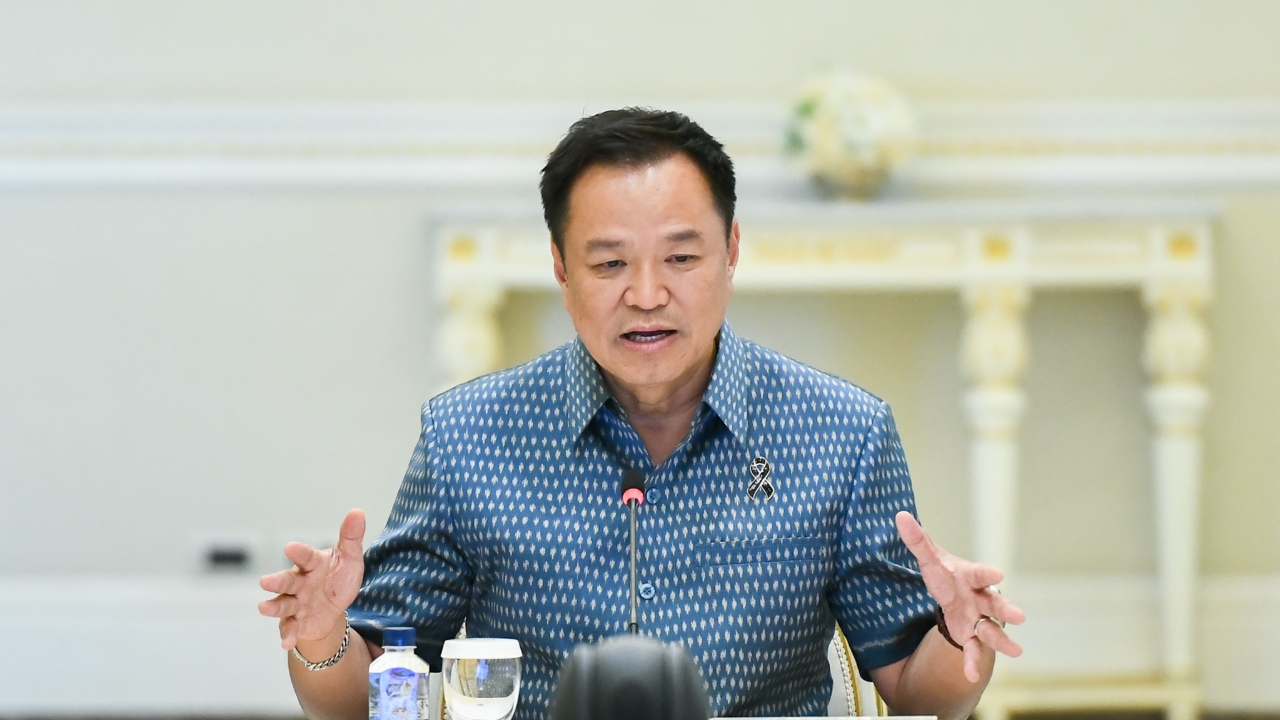
The Prime Minister ordered tightened airport measures after a flight attendant was caught smuggling heroin. Six drug trafficking cases have been detected in the first half of 2026. He urged urgent preventive measures to ensure the international community does not view Thailand as a weak link, questioning whether crew members and captains’ use of special channels complies with international standards.
On 3 July 2026, Prime Minister and Minister of Interior Anutin Charnvirakul chaired a meeting of the Narcotics Control Board (ONCB). He began by apologizing for the delay in starting the meeting due to multiple important issues needing discussion among various agencies. He prioritized resolving other matters first, such as the corruption scandal in the Department of Local Administration, to ensure participants could focus fully. He also thanked everyone for attending the meeting.


Anutin added that this ONCB meeting was the first for the current government under Article 10 of the Narcotics Act, which requires the board to meet at least four times annually. He had been briefed by the ONCB secretary on various agenda items the day before. He instructed that meetings should be held quarterly, but if urgent issues arise, additional meetings beyond the four required could be convened.
Anutin noted that while the prime minister typically supervises the ONCB, a deputy prime minister can also oversee it. However, he chose to personally supervise the agency, having just learned that no previous prime minister had done so. He expressed honor at working with everyone and leading the agency. Beyond following official procedures, he assured full support and cooperation with the ONCB board to resolve, combat, and eliminate drug problems within their mandate, emphasizing this as a national agenda requiring collective action and cooperation across government, private sector, and independent organizations.
He praised the full commitment of agencies including the Royal Thai Police, ONCB, military, local administration, and DSI, who regularly hold press conferences on arrests and prevention efforts, reporting kilograms and millions of pills seized nearly every month. The government’s role is to obstruct traffickers from reaching their destinations, though some smuggling inevitably slips through. Since they cannot yet eliminate drug trafficking at its source, he has consulted the military on how to address the root of the trade. Otherwise, law enforcement will continue to chase offenders without resolving the problem, wasting budget and manpower. Although clashes have fortunately caused few casualties, risking trained officials’ lives is unacceptable, especially against traffickers who have no official nationality. He reaffirmed his commitment to protect personnel and focus on eradicating drug trafficking at its origin.

The Prime Minister reflected on the past 10 months of collaboration, noting agencies’ dedicated efforts, especially senior officials who are united without internal divisions. He has met with teams, heard reports, considered suggestions, and issued directives, finding their work sincere and trustworthy. He acknowledged drug problems damage not only users but society broadly, harming Thailand’s reputation. Failure to resolve this could lead to Thai travelers facing extra scrutiny abroad or special visa restrictions, harming national dignity. Drug trafficking also fuels crime and social decay, deterring foreign investment. He emphasized there is no room for compromise with such trafficking activities.

He continued that this issue is urgent. Today, he invited all to review and discuss drug suppression strategies following an incident where a Thai Airways flight attendant was arrested in Australia for smuggling heroin hidden in a cloth bag. Reports indicate six commercial drug trafficking cases involving travelers from Thailand were recorded in the first half of 2026 alone. This is a significant number for a country like Australia and damages Thailand’s image. Therefore, preventive measures must demonstrate to the international community that Thailand is responding appropriately. He questioned whether current standards meet international requirements.
“Regarding outbound measures, no matter how strict our controls are, determined traffickers will find ways. We must assess how much we can prevent outbound smuggling. Inbound is less of a concern since most traffickers from Thailand are caught upon entering other countries. Our goal is to ensure other nations do not view Thailand as a weak link,” the Prime Minister said.
He noted that flights operated by Thai Airways, though no longer a government airline, are still regarded as the national carrier and depart from Thai airports. Flight crews enjoy certain privileges under this status.

He corrected a statement by the Minister of Transport who had emphasized respecting flight crews, suggesting the minister might have chosen his words poorly. He questioned whether it is standard practice internationally for crew members, captains, and pilots to have special channels, and whether such practices are common in other countries. He also raised concerns about other possible loopholes through which drugs could be smuggled. The Prime Minister called for joint solutions to confirm that Thailand fully complies with international standards in all procedures.