

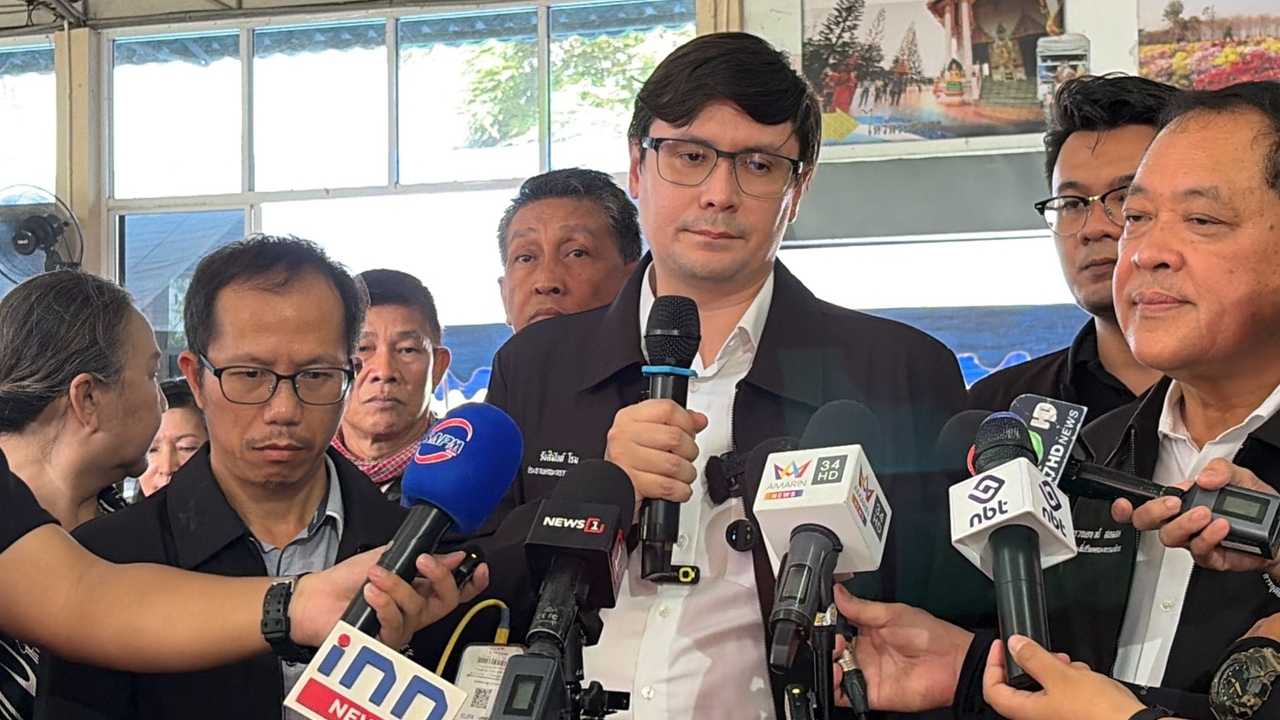
"Rome" led the legal committee to Thap Lan, affirming that villagers lived there before the forest and plans to promote "land case amnesty." Meanwhile, "Laofang" urged society to understand the issue accurately, noting that over 30,000 villagers suffer from the conflict.
On 3 July 2026, Rangsit Rome, a party-list MP from the People’s Party and chair of the Legal, Justice, and Human Rights Committee, led the committee to the area to hear directly from residents about the revocation of Thap Lan National Park and the return of land to the people.
Local residents reported that the problem stems from the 1981 declaration of Thap Lan National Park boundaries, which failed to survey that people had already settled there, supported by house registration and official documents. The overlapping park boundary led to construction being ordered demolished, resulting in legal battles and ongoing expenses, causing residents to worry about losing their homes and affecting the local economy.
In 2000, forestry officials revised the boundaries, which residents considered accurate as they did not affect pre-existing settlements.
Regarding the #SaveThapLan movement, locals believe it was influenced by some officials who never surveyed the area, asserting the land had not been forested even before the 1981 park declaration. This has led to misunderstandings that revoking the park area opens the door for investors to exploit the land.

At the consultation, a former Ombudsman representative revealed having investigated with residents alongside forestry officials and related agencies, concluding that the 2000 survey boundary should be used as a reference, clearly separating forest from community areas. However, this boundary has not been updated in the national park decree, so prosecutions against residents continue. The opposition to boundary adjustment may be due to misunderstandings about the facts, emphasizing many residents lived there before the park was declared and are ready to provide evidence to prove this.
After hearing the views, Rangsit said this visit is part of following up on land and community rights issues, aiming to hear facts from residents who brought documents confirming that the problem is not forest encroachment as some believe, but a mistake in the boundary declaration that overlaid villages and settlements, turning residents into legal offenders.
The impact is not only land disputes but also many residents facing lawsuits and fines. During the visit, villagers presented proof of fine payments from court rulings to the committee, noting the problem covers about 200,000 rai and affects over 30,000 people, who should not be criminalized for living on their original land.
Rangsit added the committee will gather all facts and include the issue for consideration in August, inviting relevant agencies to explain and suggest solutions, believing this 40-year-old problem should not continue as it worsens effects on local people.
He also expressed concern for over a thousand residents without clear support, warning that without comprehensive solutions, many could lose their homes. He said the state must guarantee housing security, not leave people fearing eviction.

Regarding solutions, Rangsit said they will push for amnesty legislation to help those affected by land cases related to boundary declarations, as the committee cannot intervene directly in court processes. He affirmed they will communicate the facts found and continue to drive concrete solutions, fully committed to restoring fairness to the people.
Laofang Bundit Therdsakul, a party-list MP from the People’s Party, said the Thap Lan National Park issue isn’t just about boundary lines but also miscommunication causing social misunderstanding, especially from #SaveThapLan, which misleads many into thinking the boundary revocation returns forest to encroachers, while in fact most areas are no longer forest but communities and farmland settled before the park declaration.
Most local residents are original settlers, with some arriving under state security policies, so they are not forest encroachers. Some have land allocated by the Agricultural Land Reform Office (ALRO). He confirmed the 2000 boundary was surveyed and set by government agencies, later approved by the Cabinet in 2023 as a guideline for boundary adjustment.
Laofang said the key to resolution lies in choosing the right legal tools for managing the area. Areas within ALRO jurisdiction likely won’t have problems, while those outside should be managed by ALRO. He suggested that using Section 64 of the National Park Act, which allows park authorities to permit land use, may reflect distrust in ALRO’s mechanisms.
He concluded that misunderstanding persists that all 200,000–260,000 rai are forest, fueling social conflict. The priority is to verify whether the land is truly forest before selecting appropriate legal tools. He emphasized that over 500 legal cases should not block the rights of over 30,000 people, and all cases deserve fair review.