

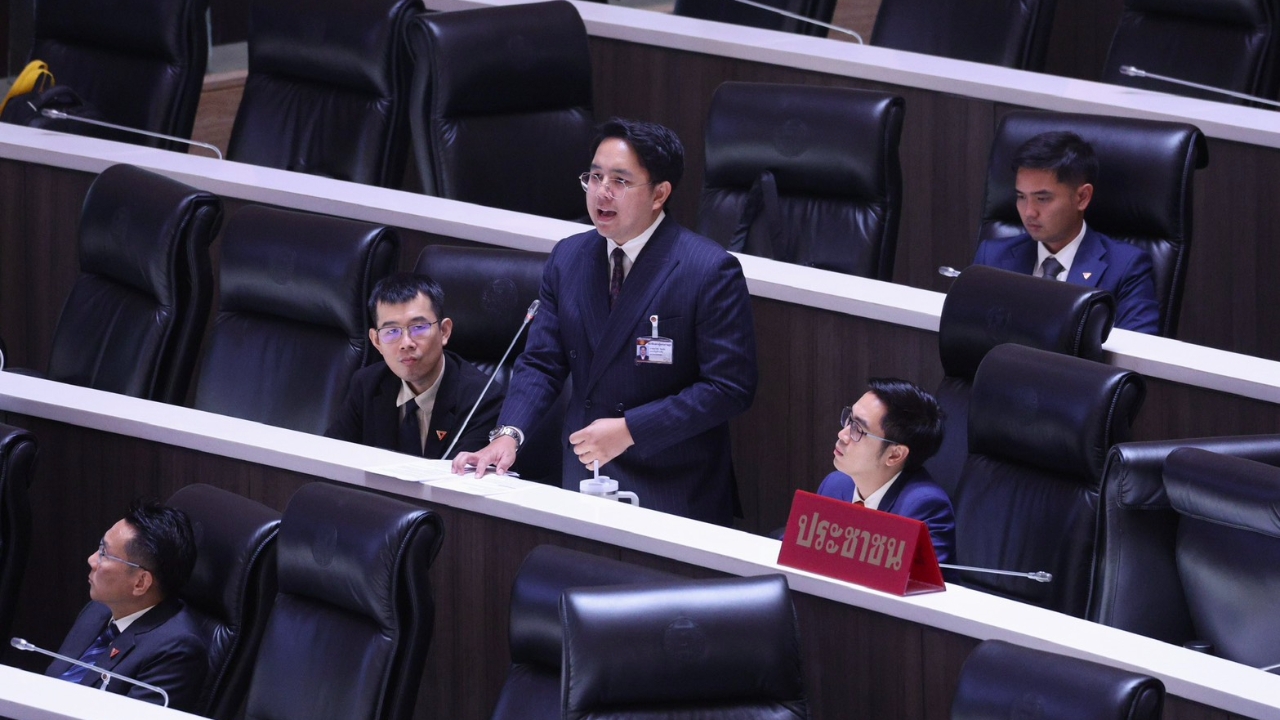
MP Suppachot Chaisat of the People’s Party urges the government to explain why global oil prices are falling but Thai consumers still pay high prices, revealing some groups receive special prices up to 5 baht cheaper than pump prices.
On 3 July 2026 GMT+7, MP Suppachot Chaisat of the People’s Party questioned the government's energy management. After tensions between the U.S. and Iran eased, global oil prices dropped below war-era levels. However, domestic oil prices in Thailand have not decreased sufficiently. Although the government needs to collect revenue through fuel prices to repay the fuel fund’s debt, which remains over 60 billion baht in deficit, this burden is spread across all consumers’ fuel bills. The key question is whether some groups are exempt from sharing these costs while the public bears the debt.
Suppachot revealed recent information indicating that certain middleman oil traders, or Jobbers, can purchase oil at prices nearly 5 baht per liter cheaper than the station pump price. This raises serious questions because during the recent energy crisis, government agencies clearly stated that Jobbers buy oil at the same price as pumps and receive no special privileges over the public.
The People’s Party MP further posed three questions to the government demanding fairness in the energy system: Is anyone avoiding this financial burden while the public repays the fuel fund debt? While citizens pay taxes and contributions to the fuel fund, does anyone receive privileges without paying their share? Who exactly is the public bearing these costs for?
Suppachot also revisited the "missing 57 million liters" oil case from March, where the government claimed a masked individual was behind it. He raised the issue in Parliament on 25 March 2026 GMT+7, presenting a diagram showing five blind spots that led to oil leakage. Yet, to date, the government has not clearly identified who this masked figure is.
“Otherwise, society will keep asking: When oil prices rose, the public faced masked speculators hoarding oil for profit, who remain at large. But now, even as prices fall, people still pay high prices, while some groups continue to receive special oil price discounts,” Suppachot concluded.