

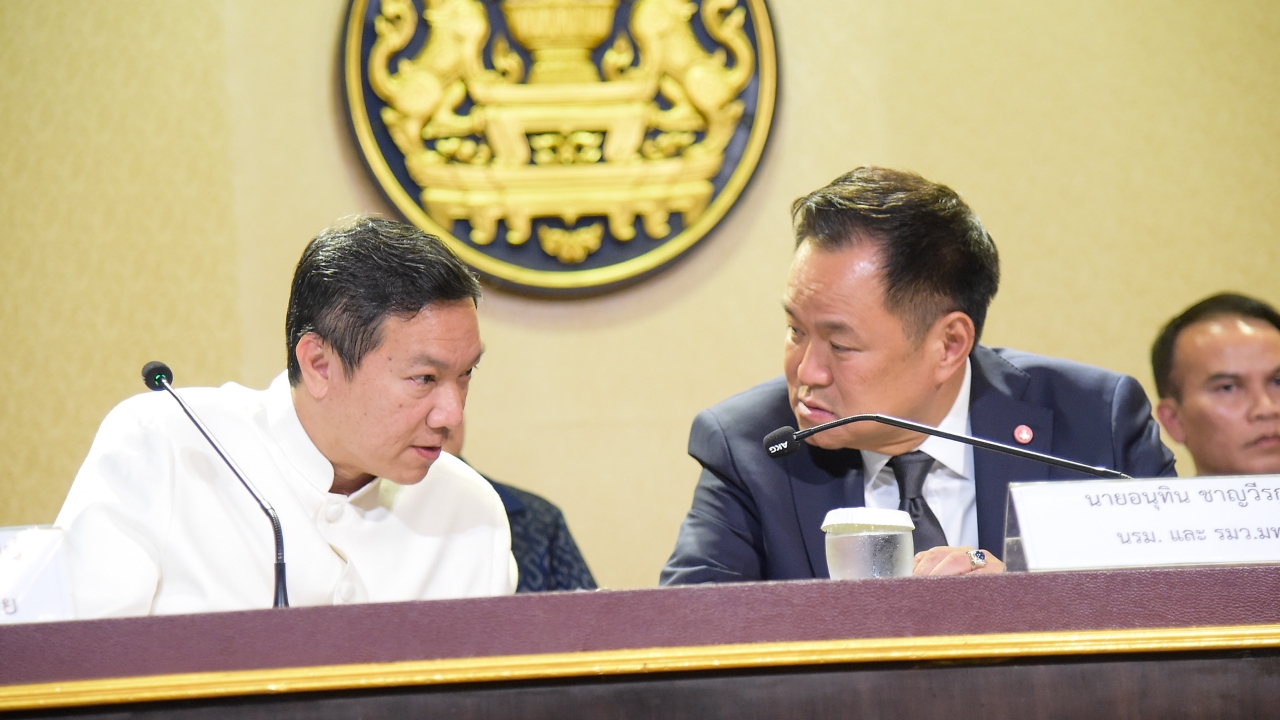
Prime Minister Anutin signed an order appointing the committee and subcommittee for OECD, assigning the Permanent Secretary of the Interior Ministry as chair to drive Thailand's membership by 2028.
On 5 July 2026 GMT+7, Mr. Arsit Sampantarat, Permanent Secretary of the Interior Ministry, revealed that Prime Minister and Interior Minister Anutin Charnvirakul signed the order appointing the “Steering Committee and Subcommittee for Thailand’s Accession to the Organisation for Economic Co-operation and Development (OECD)” under the Interior Ministry. The Permanent Secretary of the Interior Ministry will chair the committee, which includes related government agencies and state enterprises. The main aim is to jointly push Thailand toward becoming a member of the OECD, an international organization promoting economic growth, sustainable development, and improved quality of life through cooperation in economic, social, environmental, and governance policies among member countries.
Mr. Arsit stated that establishing this committee aims to support preparations and efforts for Thailand to join the OECD by 2028, in line with the government’s policy statement. The committee’s responsibilities cover setting policies, comprehensive planning, revising Thai laws and regulations to meet international standards, and coordinating internationally to garner support and foster good relations with member countries.
“Joining the OECD is a key government agenda as it serves as an important mechanism to drive reforms and elevate the country across multiple dimensions—economy, laws, regulations, governance, investment, competition, innovation, environment, and public sector efficiency—to meet international standards. This will strengthen investor confidence, enhance the country’s competitiveness, reduce regional disparities, and build capabilities across cities, regions, and rural areas of member countries, ultimately leading to sustainable improvements in citizens’ quality of life.”