

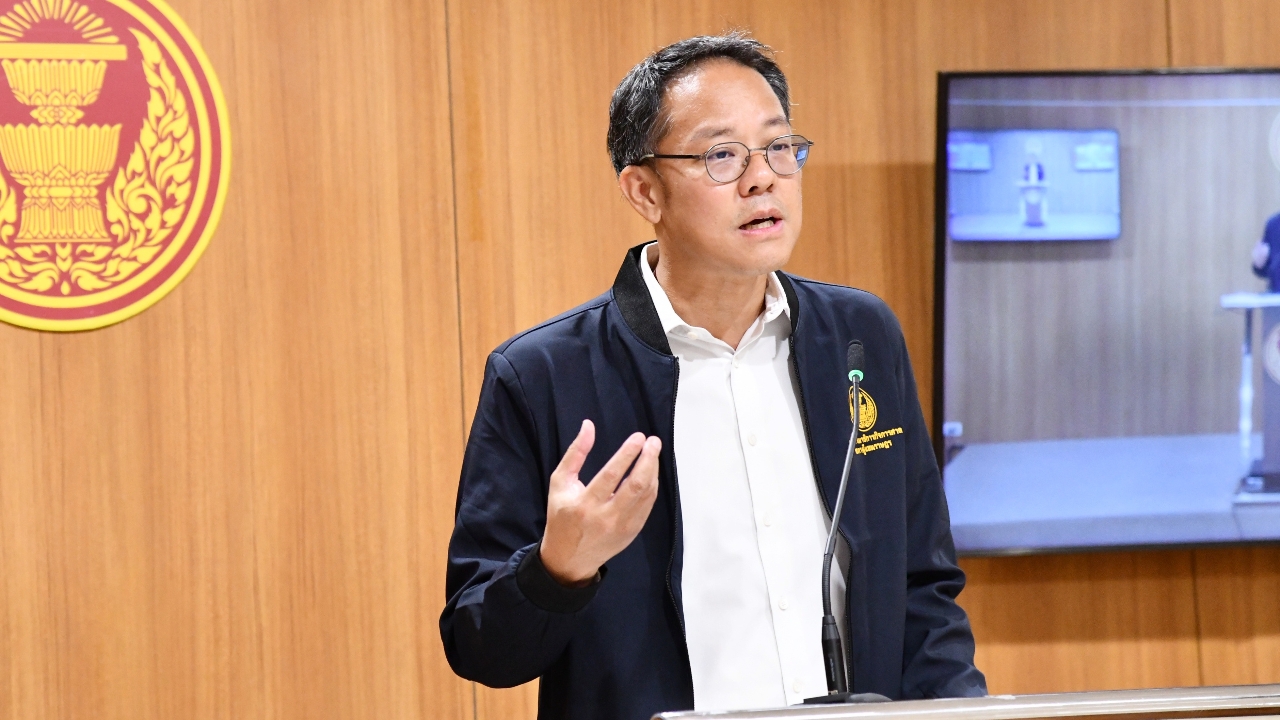
Phandil, People's Party MP, urges the government to review cannabis policy, pointing out weak regulatory controls that have enabled illegal exports and harmed national confidence. He notes widespread recreational cannabis use, easy access, and negative impacts on youth.
At 09:00 on 6 July 2026, in the press room on the first floor of the Parliament building, Phandil Nuamjerm, Member of Parliament for the People's Party, held a press conference calling on the government to reconsider cannabis policy after discovering extensive illegal exports of cannabis from Thailand abroad. He stated this issue reflects gaps in the regulatory system, which damages Thailand's image and credibility internationally.
Phandil said that although the Prime Minister clarified that non-medical cannabis products cannot be exported, the public’s key question is not whether export is prohibited by law—everyone is aware of the law—but why large quantities of cannabis continue to be smuggled abroad. This reveals weaknesses in the control system. The cannabis policy, initially promoting it as an economic crop and for medical use, has resulted in widespread recreational use. The number of shops selling cannabis flower has increased significantly, while control remains ineffective, leading to illegal exports that harm Thailand’s international reputation. He observed that many countries still classify cannabis as an illegal drug, so seizures of Thai-origin cannabis cause destination countries to question Thailand’s regulatory measures, potentially affecting future confidence and inspections of goods and travelers from Thailand. Although the original policy aimed to promote medical cannabis and herbal industries, in practice, recreational cannabis flower sales are widespread and easily accessible. There have also been public complaints about cannabis smoking in public and community areas, affecting children, youth, the elderly, and local residents.


Phandil questioned whether the government has fully considered the policy’s impacts, including production control, sales, traceability, prevention of illegal exports, and protection of children and youth. The problems indicate that cannabis deregulation occurred before the regulatory system was ready.
Data from the Customs Department between October 2025 and May 2026 show nearly 3,000 cases of illegal cannabis export seizures, with a total weight over 315,000 kilograms and an estimated value of about 4.045 billion baht. This led to new penalties imposing fines of 30,000 baht per kilogram plus confiscation of the seized goods, effective from 17 June 2026. The issue is not merely enforcement failure but stems from policy gaps that have created a gray market, recreational cannabis use, and illegal exports, burdening customs, drug enforcement agencies, and harming the country's image.
Phandil stated he does not oppose medical cannabis use; patients should receive treatment under medical supervision with traceability. However, he disagrees with selling cannabis flower for recreational use exploiting legal loopholes. He proposed four government actions:
1. Stop the sale and use of cannabis flower for recreational purposes and return cannabis flower use to strict control, limiting it to medical use under clear supervision.
2. Disclose information on licensed cannabis business operators—including shops, farms, shareholders, and ultimate beneficiaries—as allowed by law, so society can verify transparency and prevent abuse for improper gain.
3. Require the Office of the Narcotics Control Board (ONCB), Customs Department, Department of Thai Traditional and Alternative Medicine, and Royal Thai Police to report progress on illegal cannabis export cases to Parliament and investigate links to licensed cannabis operators to clarify and reassure the public.
4. Protect patients and legitimate business operators from impacts of law enforcement, while intensifying crackdowns on the black market, recreational cannabis use, and exploitation of legal loopholes for illegal activities.
He emphasized that he is not accusing any politician or political party of involvement in illegal cannabis exports. However, those who promoted the policy should clearly explain to society why a policy aimed at promoting cannabis as an economic crop has led to illegal exports, harmed trade partners, and damaged Thailand’s image. He urged the Prime Minister to provide clear and complete facts to the public.
