

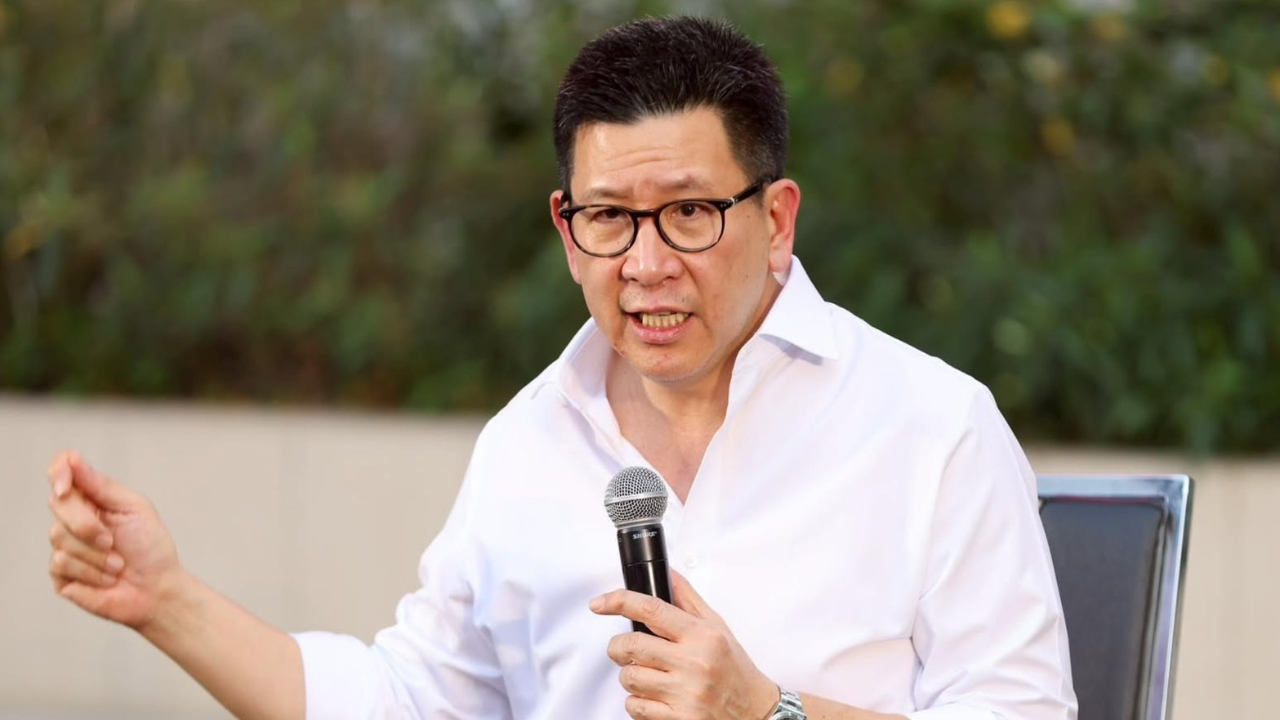
Ekniti has launched an official Facebook page, posting a lengthy statement about his work in the Anutin 2 government, declaring his intention to communicate economic policies directly to the public. He revealed that the government faces a Middle East crisis affecting people's livelihoods, making policy decisions never easy to make.
On 6 July 2026 GMT+7, reporters noted that Deputy Prime Minister and Finance Minister Ekniti Nittayothinprapas opened his official Facebook page named “Dr. Ekniti Nittayothinprapas.” He posted a message saying, "Hello, after intending for some time to create an official Facebook page as Deputy Prime Minister and Minister of Finance, I now have a platform to communicate and explain economic policy ideas and actions, to build public understanding about macroeconomics, fiscal matters, budgeting, finance, capital markets, and investment. Today, I present my first post as an overview."
Ekniti stated that he began his role in the Anutin 2 government in early April 2026, coinciding with an energy price crisis caused by Middle East conflicts. This crisis has caused ripple effects, from oil shortages and high prices to rising living costs, becoming a livelihood crisis. If these crises are not stopped, they will lead to compounded problems. This challenge occurs amid Thailand’s long-standing economic structural issues, such as growth below potential, declining competitiveness, chronic fiscal deficits with revenue failing to keep pace with spending, and outdated infrastructure investments, especially in clean energy, a key global infrastructure for the new era. If likened to a patient, Thailand suffers from a chronic cancer that remains incurable while being hit by complications.
With the country's limited budget, as the official overseeing overall revenues and expenditures and seeing all the figures, I must think thoroughly and cautiously to stabilize the short-term situation. Simultaneously, I must seize this opportunity to drive a transition and build a strong economic foundation for Thailand’s future growth. This is under a principle I call the 5 Ts: Target, Transition, Transform, Transparency, and Together. These aim to stabilize the economy today (Stabilize Today), turn crises into opportunities (Transition Now), and invest in the future to rebuild Thailand’s long-term strength (Transform for Tomorrow), all based on fiscal discipline.
Stabilizing Today: Supporting the economy through the global storm.
Ekniti explained that continuing the Quick Big Win policy, which helped Thailand’s economy recover concretely by the end of last year, the unexpected crisis forced the government to first steady the economy amid the global energy crisis that severely impacted Thailand. Thailand depends most on oil imports in ASEAN and ranks among the top in Asia. The government strives to prevent extreme oil price volatility and shortages seen in many countries. It managed to keep Thailand’s oil prices lower than many ASEAN countries between April and May. Using the Oil Fund as the main tool to manage oil prices helped avoid fiscal strain (which, as everyone knows from the recent budget debate, is very tight) and prevented a fiscal crisis like that of other ASEAN countries where foreign investors lost confidence and withdrew funds (which partly explains the inflow of foreign capital boosting the SET index close to 1600 points now). Additionally, on 11 April, relief measures were introduced for transport and agriculture sectors to delay the impact of rising oil costs from overly affecting other product costs. The government also implemented the 'Thai Helps Thai Plus' program and increased welfare payments to assist low-income people with living costs and support small shops during this period.
Transition Now: Transitioning to clean energy today to reduce vulnerabilities and build long-term security.
Ekniti emphasized the critical importance of transitioning to clean energy amid high global geopolitical volatility. Some might question the urgency, preferring to follow long-term plans with allocated budgets and not increase debt by issuing new loan acts. He used a simple example: if the transition does not start immediately, the country risks worsening compounded crises. Indeed, after Thailand faced high oil prices in April-May, the current account balance, which had been consistently positive, swung to a deficit of nearly 500 billion baht over two months. This partly reflects Thailand’s need to import large quantities of crude oil and natural gas at higher prices. If this continues and the war causing oil price volatility persists, the country could face a current account deficit crisis as in the past.
Accelerating the transition now involves promoting clean-energy vehicles, especially in public transport, encouraging households to install solar panels with full buyback schemes, and investing in upgrading transmission lines, which are crucial infrastructure for smart grids. However, these efforts are not yet nationwide due to limited annual budgets. Acting quickly on these fronts will solve the country’s long-term problems. While the 200-billion-baht loan may be insufficient to complete nationwide clean energy transition, it is intended as a catalyst to accelerate this urgent transformation concretely, ensuring energy and economic security.
Transform for Tomorrow: Reshaping the economy through investment.
One key structural problem in Thailand is chronic underinvestment, both public and private. This year, the government declared it the Year of Investment, focusing on infrastructure, technology, and human capital investments to boost long-term growth potential. Legal reforms have also been made to ease investment processes. This aims to make investment the main engine of growth again (investment-led growth), targeting an investment-to-GDP ratio gradually returning to about 30%, enhancing Thailand’s economic capacity long-term. However, this new wave of investment must not just replicate old patterns but transform the economic structure and prepare the country for future industries.
As explained during the budget debate, public investment through government budgets is only one tool for national development. There is also investment by state enterprises, public-private partnerships (PPP), and other funding mechanisms such as the Thailand Future Fund. Crucially, FDI investment is accelerated through the Thailand FastPass mechanism, expected to channel about 900 billion baht into the economy in 2026. But our goal is not only to increase investment numbers or FDI value; a more important question is how these investments benefit Thailand and connect Thai businesses, especially SMEs, into modern global supply chains, create jobs, and improve labor quality. These considerations shape new BOI incentive strategies.
All that I have mentioned is part of work already done, ongoing, and planned. Many other issues require joint efforts with the private sector via the Joint Public-Private Sector Committee (JPP). The government also needs extensive reforms, especially in budgeting and fiscal management. We are fully aware of these problems and are planning comprehensive reforms of the budget and fiscal systems. Our first step is to increase transparency by opening data, exposing issues, and conducting live budget committee sessions. We believe further steps will follow because if we do not act now, we may lose the opportunity forever.
Macroeconomic policy decisions as Deputy Prime Minister and Finance Minister are never easy and cannot please everyone. However, I believe that adhering to principles and acting sincerely and earnestly for the country will surely bring long-term success.
Ekniti said teamwork is crucial; he cannot do everything alone. Support from all sectors is vital—from the government, civil servants in all relevant agencies, the private sector, and the strong team supporting the Deputy Prime Minister and Minister of Finance. He sincerely thanked everyone.
He said he will try to regularly update on various matters, possibly with the page’s admin team summarizing his activities, sharing knowledge, and answering questions during times he is occupied. "Stay tuned, and thank you."