

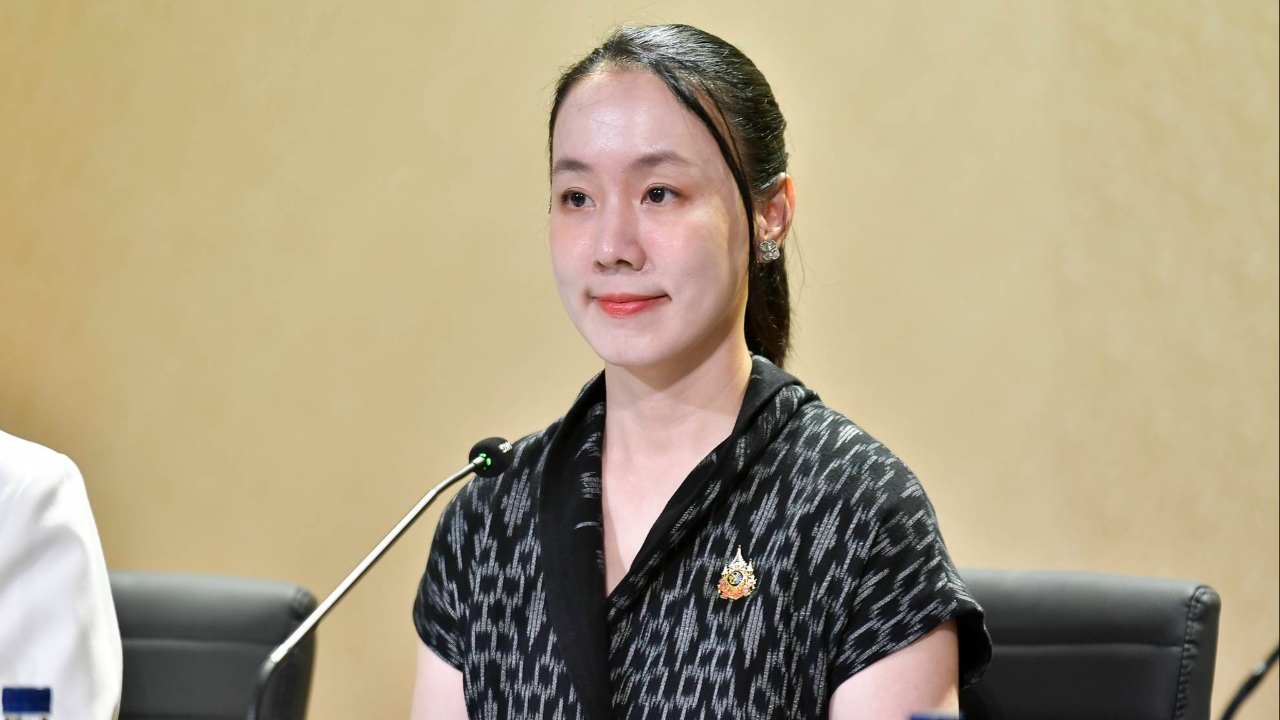
At the Cabinet meeting on 7 Jul 2026, approval was given to reduce the fund contribution rate for specialized financial institutions to 0.0625% for 2026, supporting BAAC, Government Savings Bank, GH Bank, and TISCO Bank in delivering assistance to grassroots debtors.
On 7 July 2026, Ms. Lalida Pertvivattana, Deputy Spokesperson of the Prime Minister's Office, revealed that The Cabinet approved a draft Ministry of Finance announcement setting the fund contribution rate for the development fund of specialized financial institutions for 2026. The rate reduction applies to four institutions: Bank for Agriculture and Agricultural Cooperatives (BAAC), Government Savings Bank, Government Housing Bank (GH Bank), and Islamic Bank of Thailand for the 2026 contribution period.
The Deputy Government Spokesperson added, The draft announcement lowers the contribution rate from 0.25% per year to 0.0625% per year of the funds received from the public, effective from 1 January to 31 December 2026. Contributions will be made in two installments, each at 0.03125%, to reduce the financial burden on the specialized institutions and enable them to effectively pass on assistance to debtors. This measure aligns with Thailand's ongoing economic volatility stemming from global trade policies, geopolitics, natural disasters, and Middle East tensions. Many debtors of these specialized institutions are retail customers, vulnerable groups, grassroots economy participants, and small entrepreneurs who still face liquidity risks and repayment challenges.
The government expects these specialized financial institutions to use the reduced costs to support debtor assistance measures, debt restructuring, and new loans to capable small entrepreneurs and SMEs, thereby injecting liquidity into the economy. This will be closely monitored to ensure genuine help reaches the people without harming financial discipline or encouraging unnecessary loan defaults. "The government is advancing the use of specialized financial institutions as tools to support grassroots people, reduce financial costs, help debtors stabilize and recover, and support new loans for capable entrepreneurs to sustain steady and fair economic progress," the spokesperson said.

Meanwhile, Ms. Ploytale Laksamee Sangchan, Deputy Spokesperson of the Prime Minister's Office, disclosed that The Cabinet approved in principle a draft Prime Minister's Office regulation concerning the committee managing problems of foreign goods and foreign businesses violating laws in 2025. This draft regulation follows the resolution of the committee managing problems of foreign goods and businesses violating laws, which establishes such a committee chaired by the Deputy Prime Minister appointed by the Prime Minister, with the Director-General of the Department of Foreign Trade and the Director-General of the Department of Business Development as members and secretaries.
The committee's duties and powers include setting policies, master plans, and measures to manage problems related to foreign goods and businesses; coordinating with government agencies and the private sector to manage and enforce laws regarding foreign goods and businesses; and promoting awareness and discipline among the public and entrepreneurs to prevent violations involving foreign goods and businesses, ensuring commercial discipline and setting operational guidelines under this regulation as necessary and appropriate.
The Department of Foreign Trade and the Department of Business Development are designated as joint secretariats of this committee, responsible for administrative, academic, meeting, and secretarial tasks. This replaces the previous committee under the Prime Minister's Office order under Section 11 (6) of the State Administration Act B.E. 2534 with a committee under the Prime Minister's Office regulation under Section 11 (8) of the same act.
This regulation aims to provide clear operational guidelines for state agencies in policy and measure development to manage issues related to foreign goods and businesses efficiently and orderly, fostering fair trade, raising awareness among the public and entrepreneurs to prevent legal violations, and effectively resolving problems and protecting the interests of Thai consumers and entrepreneurs. It also aligns with recommendations from the Ombudsman concerning the issue of land or property holdings by foreign nominees, mandating a Prime Minister's Office regulation to address disguised transactions on behalf of foreigners. The Cabinet acknowledged this on 24 June 2025.