

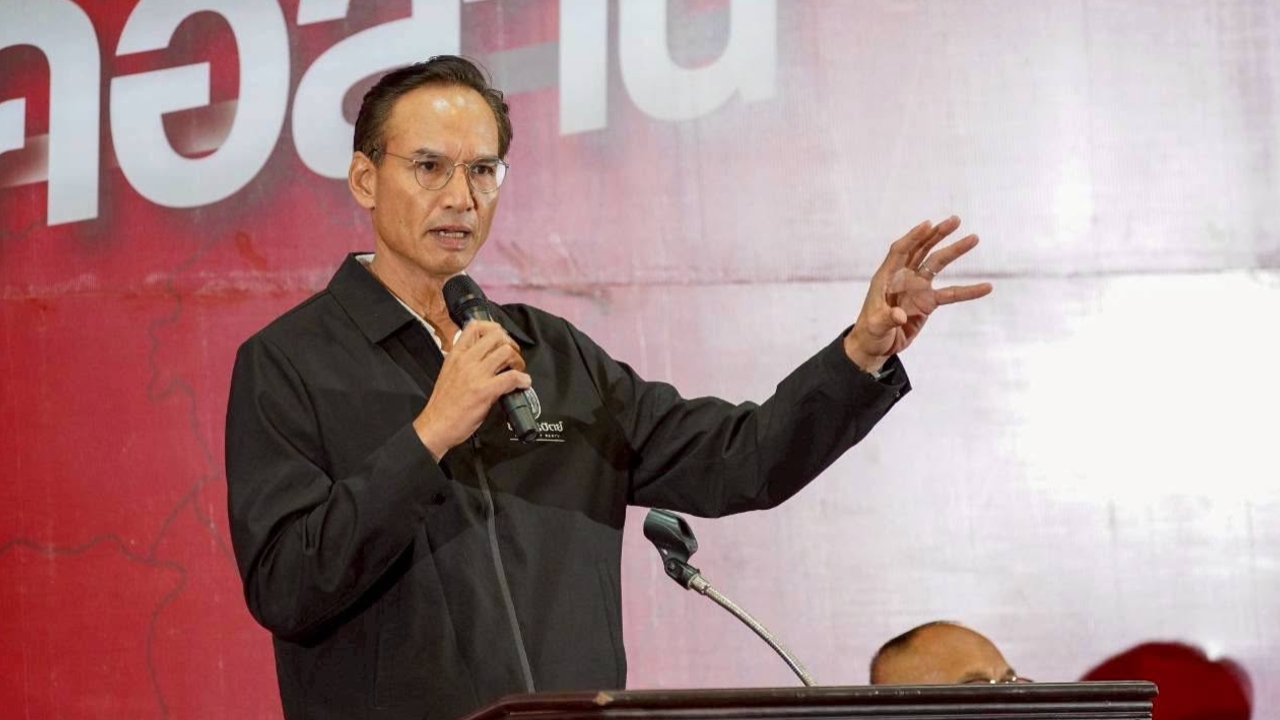
Korn points out that the oil price reduction measure following the Prime Minister's order uses public money through the oil fund, ultimately becoming debt that the people must repay themselves. The Energy Minister explains that excess funds from refineries are being used to compensate the price difference.
On 8 July 2026, Korn Jatikavanich, a party-list MP and deputy leader of the Democrat Party, posted on Facebook that in the morning, the Prime Minister ordered the Energy Minister to reduce oil prices, and by evening an announcement was made to cut prices starting the next morning. However, the reduction did not come from adjusting the price calculation formula to be fairer, as had been promised months ago.
Nor did it come from lowering the tax burden on the public. Instead, it came from using the people's own money through the oil fund, which today has accumulated debt exceeding 57 billion baht—a debt that the public must directly repay.
For the diesel group, more oil fund money is needed to compensate (B7 increased from 0.19 baht per liter to 2.90 baht, B20 increased from 5.79 baht to 8.46 baht), while the gasoline/ethanol group reduces contributions to the fund (for example, E95/E91 ethanol fuels now contribute only 0.42 baht to the fund, down from 2.49 baht).
Korn said that the oil fund is currently in a state of “over 57 billion baht in accumulated negative balance” due to previous price controls. This is the main reason why when global oil prices fall, Thai consumers do not immediately benefit from cheaper fuel, because funds must be sent to “pay off old debts” of the fund.
The minister kindly explained to me that there is a parallel measure involving negotiation for refinery discounts that were previously collected but are now waived, which will be announced in the Royal Gazette tomorrow. This will bring in a lump sum from refineries to reduce reliance on the oil fund.
I consider this positive, but it is still a stopgap management approach (relying on the 1973 Oil Shortage Prevention Act) rather than a reform that produces sustainable, fair, and more transparent results for all parties.
Following the post, Energy Minister Aeknat Promphan commented, “Brother Korn might not have received complete information. The Energy Policy Administration Committee (EPAC) met to draw nearly 2 billion baht more, totaling about 10 billion baht from refineries, to compensate the price difference. The announcement in the Royal Gazette will take effect tomorrow. The fund will receive money in one day, allowing prices to drop quickly.”
Korn replied to Aeknat's comment, thanking him for the clarification and expressing appreciation for sharing the burden with operators to assist the fund. However, he said the discount previously collected and partially returning tomorrow is a short-term fix. What the public awaits is the consideration of adjusting the price calculation formula fairly, as previously discussed in Parliament.
He added, “I do not want you or future ministers to have to rely on powers under the 1973 Act, which was not designed to solve structural problems.”