

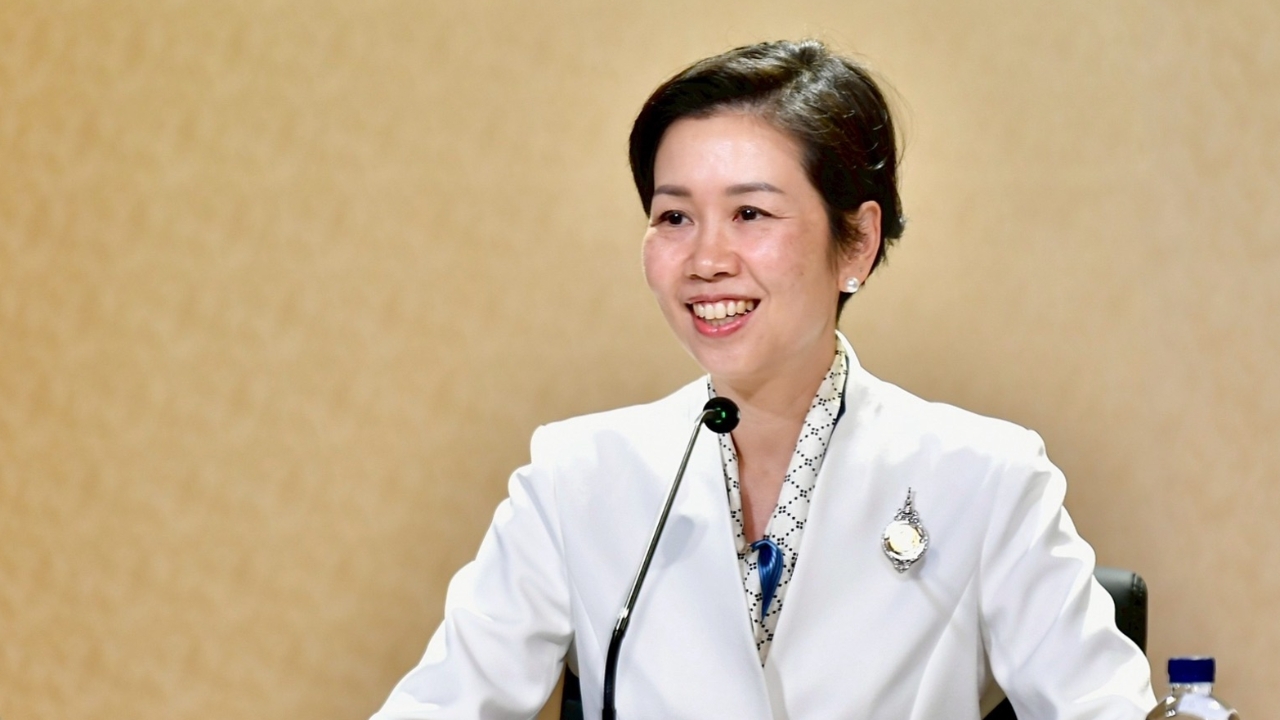
The government spokesperson revealed World Bank data indicating Thailand still has a strong economic base in ASEAN, with Gross National Income (GNI) for 2025 increasing by nearly $50 billion. The government is accelerating the Joint Public-Private Sector Committee (JPP) mechanism to advance investment.
On 8 July 2026, Ms. Ratchada Thanadirek, spokesperson for the Office of the Prime Minister, disclosed that the World Bank recently reported on the Gross National Income (GNI) of various countries, including Thailand and ASEAN member states, showing that Thailand remains among those with a strong economic base in the region.
GNI refers to the total income earned by the people and businesses of a country, whether from work, production, business operations, or investments both domestically and abroad. It is an important indicator commonly used to assess a country's development level and reflects the overall size of its economic income.
World Bank data shows that in 2025, Thailand's GNI was $562.1 billion, an increase of approximately $49.6 billion from 2024. This places Thailand among the highest GNI economies in ASEAN. The 2025 GNI figures for 11 ASEAN countries are: Indonesia $1,407.2 billion; Thailand $562.1 billion; the Philippines $559.9 billion; Singapore $501.8 billion; Vietnam $500.2 billion; Malaysia $456.0 billion; Myanmar $80.0 billion; Cambodia $50.4 billion; Laos $17.3 billion; Brunei $15.5 billion; and Timor-Leste $2.0 billion.
The spokesperson said these figures reflect that Thailand still has a strong economic base in the region across manufacturing, services, tourism, agriculture and food, infrastructure, logistics, automotive, electronics, healthcare, and supply chains linked to the ASEAN economy.
However, the government is not complacent and aims to accelerate growth. Economic policy under Prime Minister and Minister of Interior Anutin Charnvirakul focuses on transforming Thailand’s existing economic capital into new growth engines, including new investments, clean energy, digital sectors, semiconductors, trade, wellness services, and high-value industries.
Ms. Ratchada said the government is driving economic upgrades in close cooperation with the private sector through the Joint Public-Private Sector Committee (JPP) to solve economic problems. The first meeting was held on 22 June 2026, with a second scheduled for 8 July, where key agendas will include reviewing private sector proposals, addressing economic bottlenecks, and accelerating Thailand's potential into tangible results.
At the first JPP meeting, it was agreed in principle to appoint four subcommittees focused on new investment development, trade, tourism and community economy, human resource enhancement and technology development, and business facilitation. Deputy Prime Ministers overseeing each area will chair the subcommittees, tasked with strategizing and prioritizing actions to systematically push for effective implementation. Each subcommittee is expected to report progress at tomorrow's meeting.
"The government's goal is to make Thailand's economy grow faster, more inclusive, and higher in value by leveraging the country's strengths as a foundation to create new investments, jobs, income, and opportunities for the people," she said.