

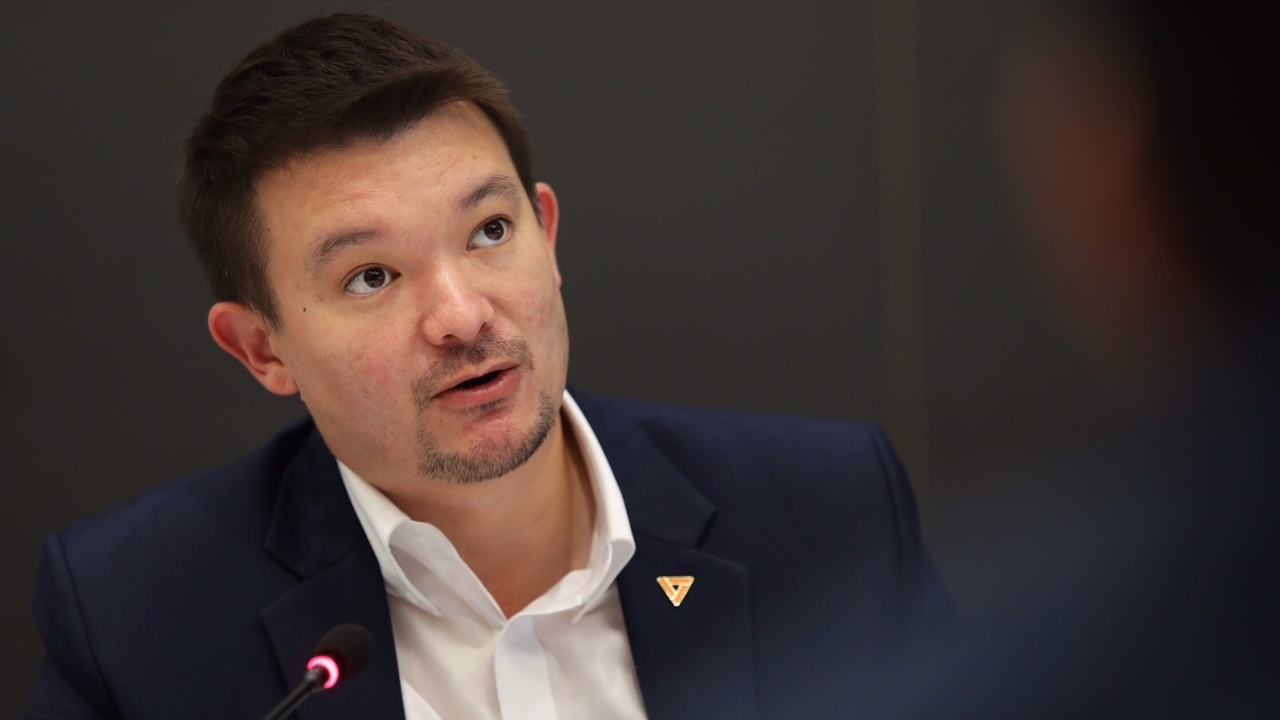
“Phattharaphong-Pisan” urge the government to stop idling and employ diplomatic measures to solve transboundary toxic pollution in six rivers, warning that failure to act swiftly this year will worsen the situation.
On 8 July 2026, Mr. Phattharaphong Leelaphat, Member of Parliament from the Prachachon Party in Chiang Mai, and Mr. Pisan Manawapat spoke after a shadow Cabinet meeting. They called on the government to urgently address cross-border toxic contamination from mining affecting six rivers, noting the worsening situation has been neglected by authorities. They also demanded accountability from three responsible agencies.
Mr. Phattharaphong stated that the contamination affects the entire chain—from water, sediment, agricultural soil, fish, to crops—posing dangerous risks to residents along six rivers: Kok, Sai, Ruak, Mekong, Salween, and Kraburi. The government has yet to resolve the issue. Health assessments found carcinogenic heavy metals including arsenic, lead, and mercury, posing high health risks. Economically, over 80% of riverfront tourism businesses have closed, and Japan has canceled imports of agricultural products from Mae Ai District due to contamination concerns.
Call for the government to act on three fronts.
Mr. Phattharaphong criticized the government's past measures as reactive and ineffective, urging action on three specific areas.
1. Domestic management: Since the 2027 budget draft allocates no funds for this issue, urgent central budget allocation is needed for systematic inspections covering all areas, assistance for farmers with contaminated soil through soil and water remediation, and transitioning to crops less sensitive to heavy metals. A national database should be established to support international negotiations.
2. Mining management within the country: Full supply chain monitoring is necessary—from mining sites to export destinations—to prevent Thailand from becoming a transit route for toxic minerals.
3. Addressing the root cause through proactive environmental diplomacy: Thailand has not seriously used international forums, resulting in citizen movements and conflicts in Chiang Mai last Monday.
Advise thorough data preparation.
Before starting international negotiations, Mr. Phattharaphong urged the government to prepare domestic groundwork, especially clear reference data. However, environmental efforts have been slow. The National Environment Committee has met only once without discussing this issue. Likewise, Deputy Prime Minister and committee chairman Songsak Thongsri has yet to comment. The Ministry of Natural Resources and Environment, under Suchart Chomklin, last held a monitoring working group meeting in April. The Ministry of Foreign Affairs, led by Minister Sihasak Puangketkaew, has not convened its international negotiation working group since its formation last year.
Advise Ministry of Foreign Affairs not to limit to MOU 44.
Mr. Pisan suggested that the Thai government, especially the Deputy Prime Minister and Foreign Minister, should not focus solely on MOU 44 or ASEAN meetings to legitimize Myanmar’s government. Instead, diplomatic expertise should be used to directly benefit grassroots people affected by toxic water discharges from rare mineral mines in neighboring countries. He proposed three key points.
1. The Ministry of Foreign Affairs should lead the water pollution issue, rather than following the Ministry of Natural Resources and Environment, because other ministers lack the geopolitical expertise of Minister Sihasak. Thailand should leverage its strengths to negotiate with major countries both in and outside the region.
2. Negotiations need not be with Myanmar’s government alone, as it lacks control over ethnic territories where polluted water is discharged. Instead, direct talks with China are essential, as UN data shows China holds 90% of shares in the mining company. Diplomatic communication should emphasize that the feelings of Thai people must not be overlooked, highlighting that China would benefit more by improving its image and winning the goodwill of all Thai citizens.
3. If China is uncooperative, the Ministry of Foreign Affairs should elevate cooperation frameworks within the Mekong subregion, involving Japan, Australia, South Korea, and the United Kingdom, who are already supportive. These countries’ ambassadors should be invited to discuss collaboration using advanced technology to restore the environment, ensuring health and safety for people in the subregion.