

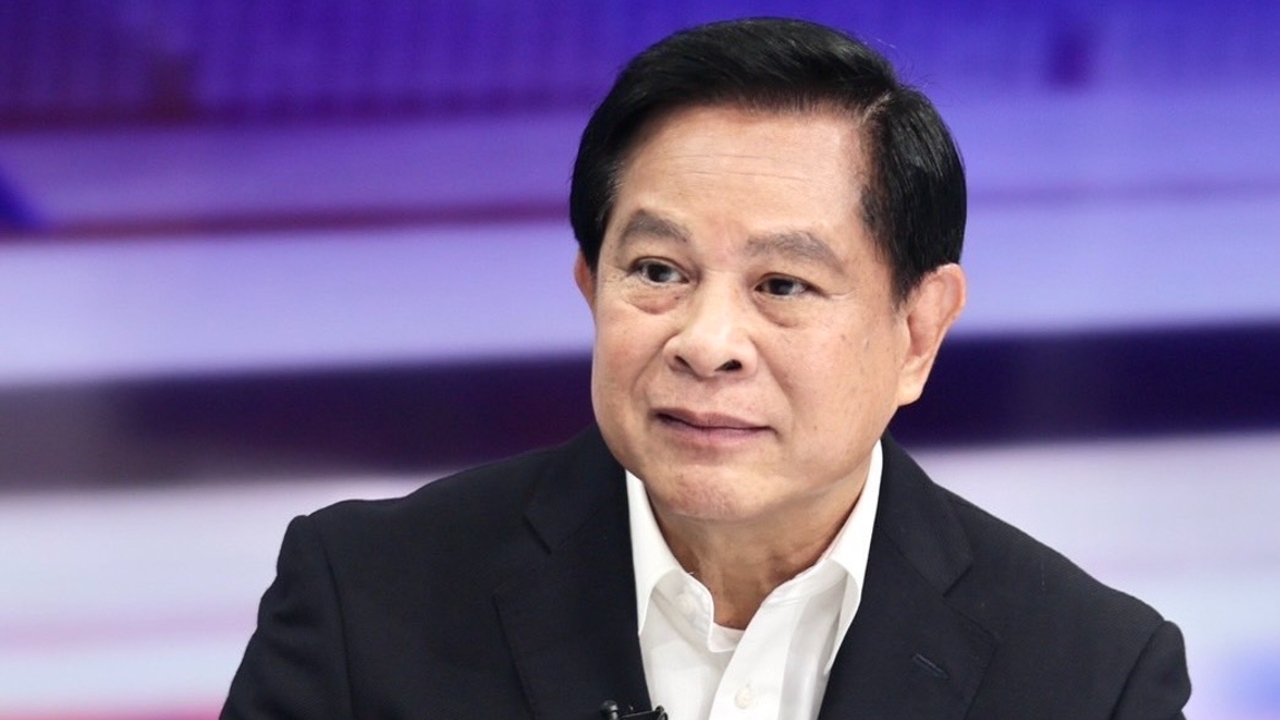
Peerapun stresses that amending private power plant contracts must be comprehensive, urging the government to renegotiate contracts and capacity payment (AP) fees related to large power plants, which affect electricity costs more significantly. He reiterated that the Cabinet resolution dated 1 April 2025 remains binding.
On 8 July 2026, Peerapun Salirutvipak, leader of the United Thai Nation Party, commented on the resolution of the committee addressing power purchase problems from private producers, chaired by Deputy Prime Minister Pakorn Nilprapunt. He said it is positive and beneficial to the public to amend power purchase contracts from small private power plants, including reducing purchase prices and canceling automatic renewal or perpetual contracts.
Peerapun observed that when Pakorn served as Secretary-General of the Council of State, Pakorn's representatives at the National Energy Policy Council (NEPC) and various working groups opposed attempts to address this issue, maintaining that contract terms must be renegotiated and that NEPC resolutions could not unilaterally cancel or amend contracts.
Peerapun said that as Minister of Energy at that time, he assigned the Electricity Generating Authority of Thailand (EGAT) to negotiate with over 500 private power plant contracts and to coordinate with the Metropolitan Electricity Authority (MEA) and Provincial Electricity Authority (PEA) for further action. He found it puzzling that the approach once opposed has now been implemented.
He added that the burden from small power plant contracts impacts electricity costs by just over 10 satang per unit, whereas the capacity payment (AP) in contracts with large private power plants affects costs by no less than 50-60 satang per unit. There are also many unfair conditions, yet the government and the committee have not outlined plans to cancel or renegotiate them.
Regarding resolving capacity payment contract issues, Peerapun emphasized that this matter was brought to the Cabinet meeting on 1 April 2025, which resolved that the executive branch, EGAT’s board, and the Energy Regulatory Commission (ERC) jointly negotiate solutions with large private power plants. They proposed three approaches.
First, to find ways to amend power purchase contracts, including additional purchase price components (adder) and feed-in tariffs (FIT), and the terms that allow contracts to continue indefinitely without a fixed end date.
Second, to find solutions for capacity payment (AP), energy payment (EP), and other contract terms in power purchase agreements (PPAs) with independent power producers (IPPs) that disadvantage EGAT or the state or impose excessive or unreasonable costs.
Third, to address obstacles in power purchase agreements that prevent the System Operator (SO) from managing electricity production orders efficiently to reduce EGAT’s production costs.
Peerapun said that despite subsequent government changes, the Cabinet resolution remains in effect. It is the direct responsibility of the current government and the committee chaired by Pakorn to follow up and expedite negotiations according to the 1 April 2025 Cabinet resolution, rather than letting the matter fade away.
“The question society deserves an answer to is why the government and relevant parties only act on small private power plants while neglecting contracts that disadvantage the state with large private power plants, even though it is clear that high electricity costs mainly stem from the terms in large private power plant contracts rather than smaller ones,” Peerapun said. .
He added that although there are many small private power plants, their total capacity is only in the thousands of megawatts, whereas just over a dozen large private plants have a combined capacity exceeding 18,000 megawatts. The capacity payment (AP) that consumers pay through electricity bills, without actual electricity production, accounts for a significantly higher share than the adder fees of hundreds of small private plants.
“If the NEPC proposes amending contracts on this issue, it must include large private power plants as well. Doing so is necessary to genuinely reduce the public's electricity burden and aligns with the longstanding binding Cabinet resolution. Addressing only half the problem cannot truly be called a solution for the people,” Peerapun said. Peerapun concluded.