

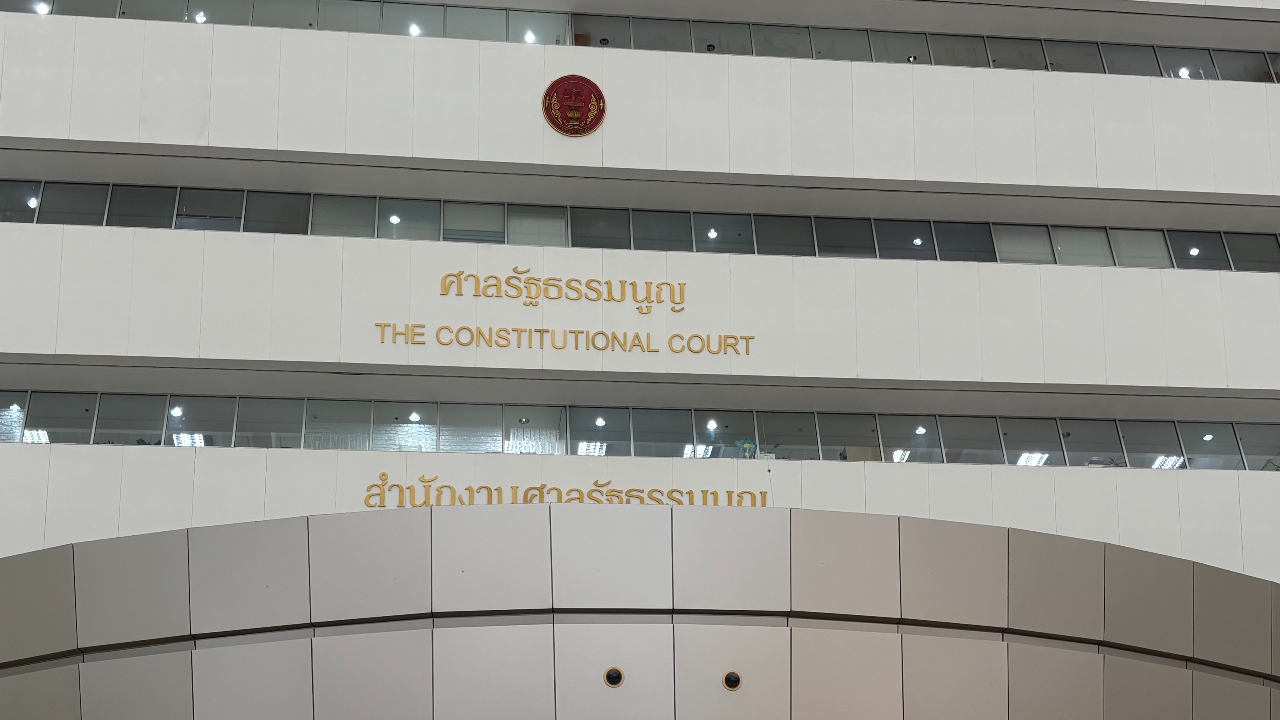
The Constitutional Court has begun its session to decide whether the 400 billion baht loan decree complies with the constitution, with anticipation over three possible verdict scenarios that could affect the government.
On 9 Jul 2026 at 09:00, the Constitutional Court commenced a verbal hearing, consultation, and voting to rule on a case brought by 133 members of the House of Representatives, representing no less than one-fifth of all members. They petitioned the Speaker, claiming that the Emergency Decree granting the Ministry of Finance authority to borrow funds to address the energy crisis and support the country's energy transition in 2026 violates Section 172, paragraph one of the constitution. They requested the Constitutional Court to rule on the matter under Section 173, paragraph one.
Today, media gathered around the Constitutional Court office awaiting the verdict. The court's ruling may follow one of three paths: 1. The court finds no constitutional violation, recognizing the energy crisis as an urgent emergency under Section 172 of the constitution.
The decree would remain effective, allowing the government to proceed with projects and borrowing immediately, thus maintaining government stability.
2. The court finds that the reasons for issuing the loan decree do not meet urgent necessity criteria, and therefore the proper process would have been to enact a regular law. This would annul the loan decree, requiring the government to restart the legislative process, potentially undermining government confidence and stability.
3. The court finds the decree partially unconstitutional, since some energy projects are long-term and do not qualify as urgent. The court may permit only the emergency relief measures to proceed under the decree, while other parts would need to be passed through the standard legislative process.
The court will not deliver the ruling from the bench today; instead, after voting and ruling, it will issue an official press release explaining the decision to the public.