

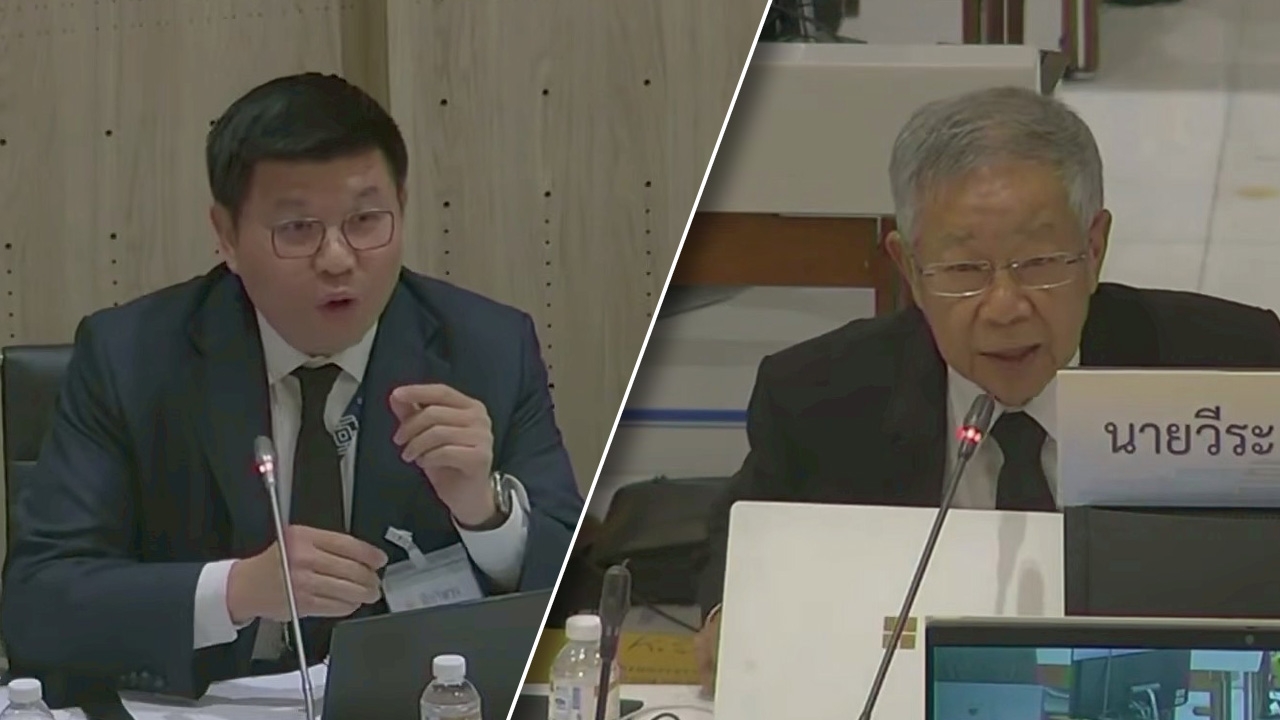
"Veera" was alarmed that state revenue pending transfer to the Treasury abroad reached as high as 23,966 million baht, viewing the amount as excessive and suggesting more should be allocated for domestic use. The Foreign Ministry explained this is to reduce exchange rate burden.
At 13:08 on 9 Jul 2026 GMT+7, in the committee meeting room of the Parliament building, Mr. Veera Theeraphatranont, a committee member, raised observations and questions during the special committee session reviewing the 2027 budget bill regarding the Foreign Ministry budget. He noted that half the expenses relate to personnel, and given overseas staff and missions, cutting these costs might not be appropriate.
He acknowledged the Foreign Ministry’s limited spending authority but highlighted an item needing clarity: state revenue pending transfer to the Treasury within the country was 116 million baht, whereas abroad it was as high as 23,966 million baht at fiscal year-end 2025. Notes stated this overseas revenue must be submitted to the Treasury as state revenue. The Treasury permits agencies to retain these funds in foreign deposit accounts with separate accounting. These are state revenues that cannot be spent except to offset overseas budget expenditures in the next period.
He questioned where such a large sum—about 800 million US dollars—is currently held, whether it can be repatriated for domestic use, and whether it is effectively left idle abroad. He requested details on the Treasury’s directives for managing this money and wanted to know exactly where nearly 24 billion baht is held.
Then, Mr. Thanop Panyapattanakul, Ambassador-at-Large at the Ministry, explained that the funds are held at several embassies and consulates, used to offset budgets instead of transferring money, thus reducing exchange rate fee burdens. When funds are drawn and offset, the Ministry’s budgeted funds are recorded as state revenue and reconciled accordingly.
Mr. Veera pressed further on how this budget portion is managed, noting it represents a standing balance or buffer. He questioned if such a large amount is truly necessary, reasoning that if budget funds are insufficient, additional budget requests would be exchanged into foreign currency and added to this pool. Given this system, he believed the roughly 800 million US dollars held is excessive.
He added, “Normally, no one scrutinizes this in detail, but this year’s budget is insufficient. With such a large amount held, I want 10 years of historical data and to know what an appropriate amount for this budget item should be.”
Mr. Thanop replied that some consular fee revenue is deducted to be used as off-budget funds approved by the Treasury. The remainder is held overseas, which the Foreign Ministry cannot use. For example, if the Ministry budgets 100 baht to send to country A, instead of exchanging money, the embassy draws from the pending transfer funds. The Ministry’s budget then records that 100 baht as state revenue, not as a foreign deposit. The funds are held in deposit accounts, and any interest earned cannot be used by the Ministry but must be remitted as state revenue.
Mr. Veera asked if profit and loss statements for this fund are prepared, since there is income but no Treasury transfer, implying off-budget income and expenditures annually. He also asked if the fund’s value has increased or decreased. Mr. Thanop said it has decreased. Finally, Mr. Pradorn Prissanantakul, as committee chairman, instructed the Foreign Ministry to prepare a detailed explanatory document and respond to Mr. Veera outside the session.