

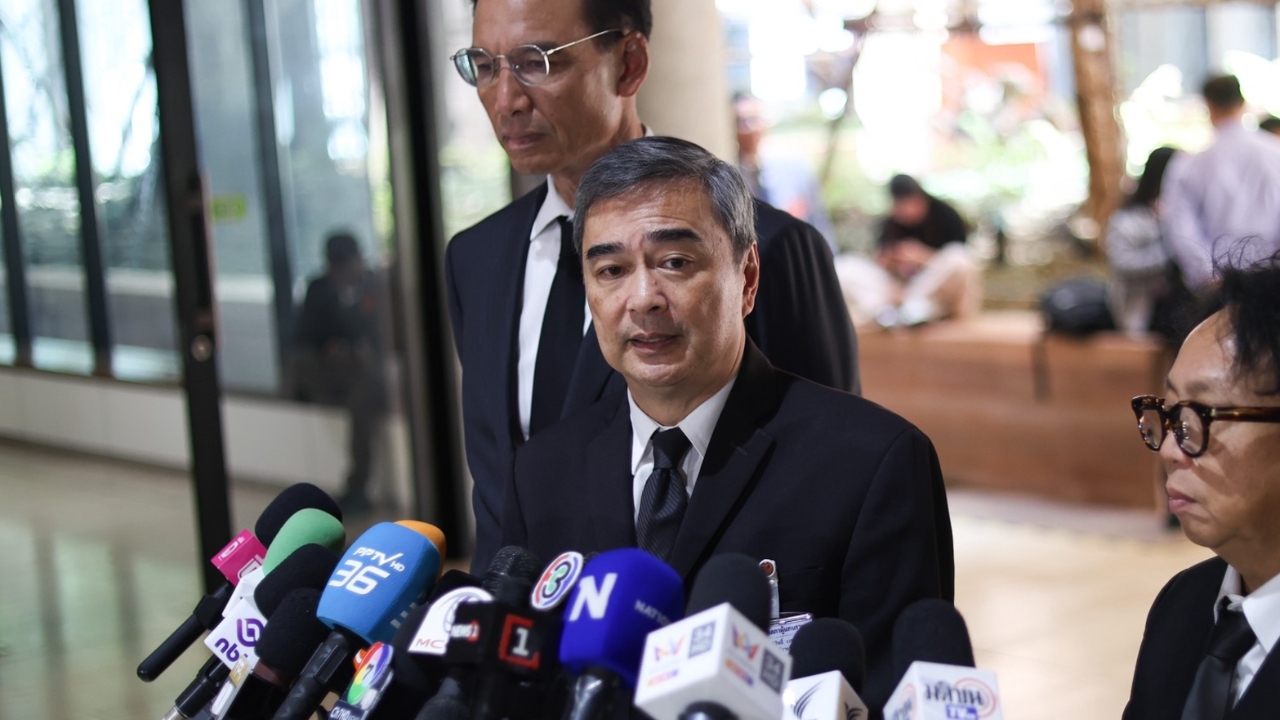
Abhisit reaffirmed his previous stance opposing amnesty for Section 112, corruption cases, and serious criminal offenses. He recommended listening to the full discussion, emphasizing that blocking youth does not strengthen the institution. He also preemptively addressed concerns over alleged collusion in Senate elections, warning that if those involved in voting are implicated, it would be unconstitutional due to conflicts of interest.
On 9 Jul 2026 GMT+7 at the parliament, Abhisit Vejjajiva, party-list MP and leader of the Democrat Party, addressed the debate on the draft law to promote a peaceful society, also known as the amnesty bill, which faced heavy criticism on social media. He said that his support for amnesty for youth involved in Section 112 criminal cases is often misunderstood. He urged people to listen to his full explanation, noting two main issues: some do not listen fully, and others misunderstand or deliberately spread false interpretations. He stressed the need to establish a joint committee from both houses because this concerns youth and is not about granting amnesty. The original House of Representatives had approved that youth would not receive amnesty if found guilty under Section 112 of the Criminal Code. Instead, they have the right to request rehabilitation, following the same principles as juvenile courts, but there is no special process leading to the amnesty committee's involvement. He viewed blocking this channel as not strengthening the institution or improving relationships between youth involved with the institution. The youth must request rehabilitation; if they do not, the prosecution proceeds. Such requests signal a willingness to undergo rehabilitation. He questioned why this channel should be blocked, acknowledging varied opinions in parliament but stating that closing this path does not resolve youth relations issues.
Abhisit continued that regarding the proposal to include the Senate election law in the appendix of the amnesty bill, with a statement that it does not relate to the collusion case, questions remain unanswered about which cases arise under this law. Some offenses, such as political party involvement in Senate elections, might be interpreted as not related to election fraud, which could mean they would receive amnesty. He said this is incorrect. Furthermore, if such incidents occur, anyone in the political party involved in voting would be violating the constitution due to conflicts of interest. For those awaiting amnesty benefits, the Democrat Party sympathizes and does not oppose the law but believes these two issues could be resolved in the short term by setting up a joint committee. The party has no intention of changing its principle for amnesty aimed at peacebuilding, which excludes corruption, Section 112, and serious criminal cases.
Meanwhile, Satit Wongnongtoey, party-list MP from the Democrat Party, added that as he has a conflict of interest, he abstained from voting on this matter in the parliamentary session.