

On his first day as governor, Chadchart ordered solutions to four urgent issues: scrutinizing foreign grey capital, inspecting old buildings to prevent collapses, controlling landfill odors, and setting a 7-day deadline to investigate 17 suspected corruption projects.
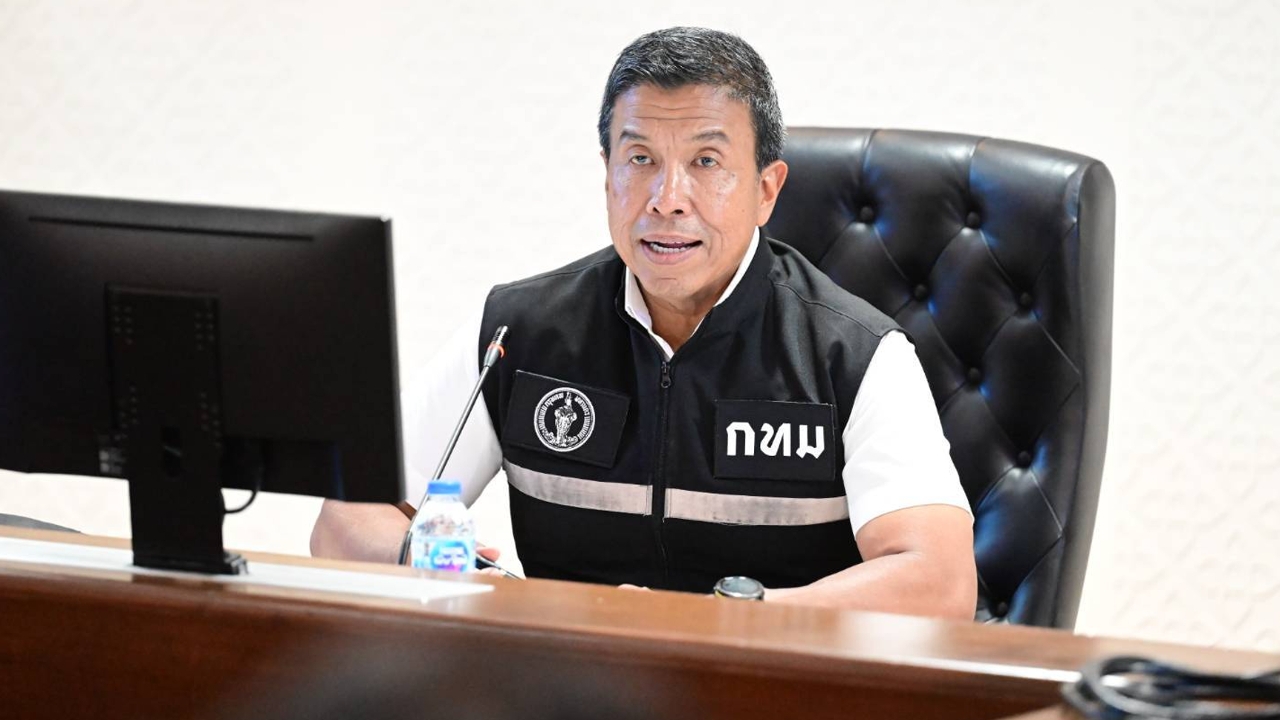
At 13:45 on 9 Jul 2026 GMT+7, Chadchart Sitthiphan, Governor of Bangkok, held an urgent meeting addressing four key issues: managing illegal foreign businesses, old building management, waste problem management, and anti-corruption measures. The meeting involved Bangkok executives and related agencies at the 8th floor conference room, Thanee Nopparat Building, Bangkok City Hall, Din Daeng.
After the meeting, Chadchart said the first issue was translating policy into strategic plans. The Strategy and Evaluation Office has developed clear KPIs for all agencies to start work immediately, expected to be completed within 1-2 days, enabling agencies to coordinate work plans and clearly define outcomes within 100 days.
First day following up on four key issues.
Today's meeting followed up on four ongoing issues pushed since the election campaign. The first involves foreign businesses, migrant workers, and grey capital. Relevant agencies—including the Internal Security Operations Command, Bangkok Metropolitan Administration, and district directors—were invited. A key directive was strict enforcement by BMA where directly responsible, especially for migrant workers engaged in selling goods, street vending, or activities prohibited by law. For foreigners, BMA lacks direct arrest authority, so cases must be referred to police for prosecution or deportation follow-up. Advisor Adisorn was assigned to oversee and report on arrests and actions across districts to provide an overall picture of managing illegal migrant workers.
Investigate foreign businesses.
Chadchart added that another issue is inspecting foreign businesses, which are increasingly complex. BMA will scrutinize all areas to identify suspicious enterprises, even if some have legal permits or public health licenses. BMA cannot verify shareholder structures or proxy use, so each district must gather information on suspicious businesses locally. For example, Bang Rak district has detailed data on both non-suspicious and suspicious businesses. The focus is not on any specific nationality but covers all, as business characteristics vary by area, such as Huai Khwang and Sukhumvit. All districts must complete data collection within one month, then convene with agencies like the Internal Security Operations Command, Ministry of Commerce, and others, using BMA data as a basis for further action. Additionally, authorities must strictly enforce laws, especially inspecting illegal building modifications for unlawful businesses such as illegal entertainment venues, with the Department of Public Works and district offices conducting thorough inspections within their powers.

Inspect old buildings.
The second issue concerns inspecting old buildings and building safety following a canopy collapse in Samphanthawong district. Instructions were given for three parts: first, surveying old shophouses totaling about 278,246 buildings—435 over 91 years old, 65,210 aged 51-90 years, and 212,601 aged 1-50 years. The initial focus is on buildings over 50 years old, totaling 65,645. Owners must inspect their buildings, assess risks, and report results within two weeks. A checklist will be provided for residents and operators to self-assess, with weekly progress monitoring. Special attention is given to buildings adjacent to public spaces like roads and sidewalks, as incidents there directly impact the public. Second, about 16,400 tall and large buildings that legally require major inspections every five years and annual inspections including evacuation drills must be monitored to ensure full compliance.
Third, inspecting construction sites on roads and public areas managed by external agencies—such as electric rail projects, Metropolitan Electricity Authority works, and various pits—must be mapped with designated responsible parties and ongoing safety checks. Particularly on Sathorn Road, New Phetchaburi Road, and areas with Metropolitan Electricity Authority excavations, some sites are unsafe and require urgent correction. Overall, the work divides into three parts: old shophouses, tall and large buildings, and public area construction sites, overseen by the Deputy Permanent Secretary supervising the Department of Public Works.
Odor problem at On Nut landfill.
The third issue is On Nut landfill. Although overall conditions, especially odor problems, have improved per local feedback, strict enforcement of contract terms is ordered. Violations must be fined according to contracts, even though one factory's contract ends this year. Odor-monitoring data from the E-Nose system must be publicly disclosed to allow transparent public monitoring, along with CCTV footage from permissible locations to enable public oversight of the facility's operations. Additionally, officials will regularly meet with residents near the landfill to hear concerns about odors and collaboratively resolve issues. In the long term, On Nut landfill will be developed into a green area alongside a quality waste management system, following a predetermined plan.
Preventing and combating corruption.
The final issue concerns anti-corruption efforts. Transparency was emphasized. Despite overall improvements, many issues still require follow-up. For the running track corruption case, the Permanent Secretary was instructed to continuously monitor progress. Similarly, for 17 other projects not yet reported to the governor, progress reports on appointing fact-finding committees must be submitted within seven days. If committees are ordered to reinvestigate, rapid action addressing observations and prompt reporting on new committee appointments are required.
Furthermore, progress monitoring with the National Anti-Corruption Commission (NACC) was mandated, as BMA referred cases early upon suspicion of corruption. Follow-up on investigation stages is essential since the NACC has thorough authority and procedures. All these matters critically affect public trust, requiring earnest and expedited action to ensure that the misconduct of a few does not harm the many or erode citizens' confidence in Bangkok Metropolitan Administration.