

Democrat Party, monarchy, Section 112, amnesty, youth rehabilitation, Peaceful Society Promotion Act, Abhisit Vejjajiva, political debate, social media misinformation
At 08:38 on 10 July 2026 GMT+7. Ms. Radklao Intawong Suwankiri, List MP and Deputy Leader of the Democrat Party. She posted a message viaFacebook.Following the Democrat Party’s vote against the draft Peaceful Society Promotion Act, Ms. Radklao said, "It has gone too far to say 'Democrats do not love the monarchy.' We expected that the recent House vote on this act would lead to such misunderstandings and perceptions."
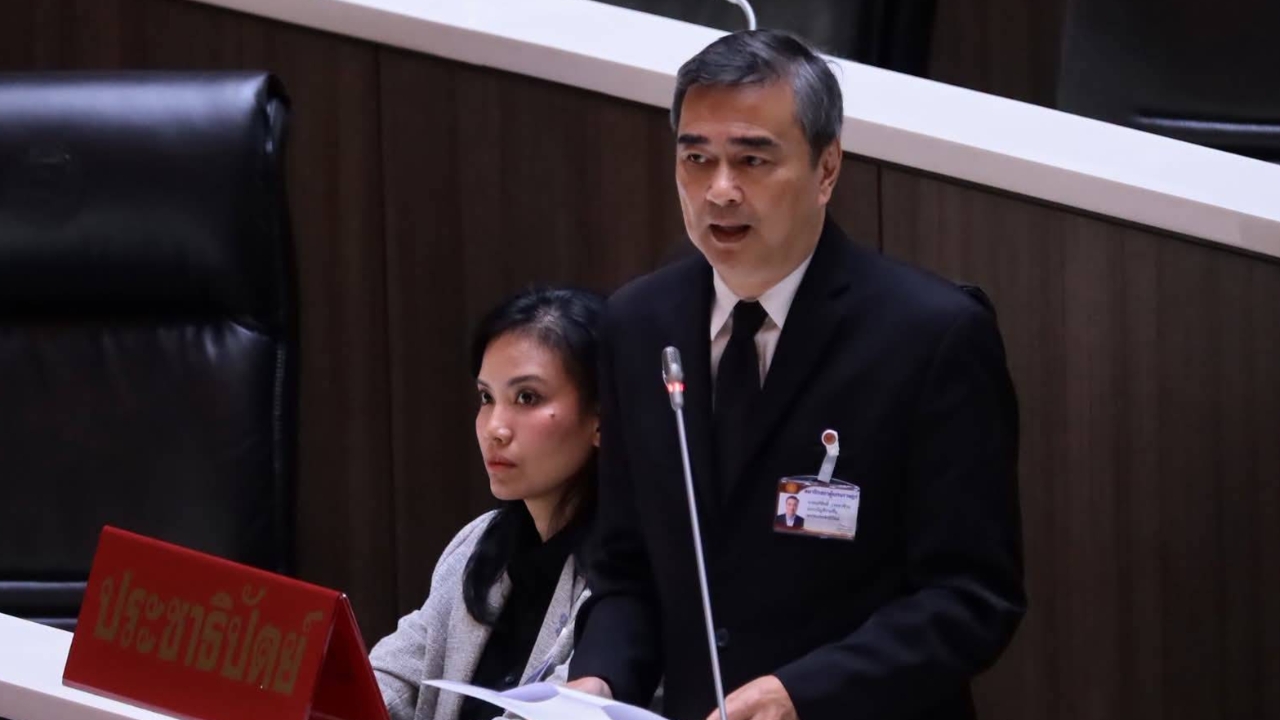
Ms. Radklao further stated, "I was sitting next to Abhisit Vejjajiva, List MP and party leader, while he was debating. His points were clear and straightforward, distinctly separating 'amnesty' from 'youth rehabilitation measures.' This demonstrated our intent for the younger generation to grow up with a strong positive relationship with the monarchy."
"However, since misunderstandings exist, I want to clarify that anyone who has followed me knows my loyalty and readiness to protect the monarchy, a legacy inherited from the Suwankiri family line, from my ancestors to my father, Trirong, and now myself. I explain this based on two principles."
Principle 1: Democracy and loyalty to the monarchy are not mutually exclusive. - At the Democrat Party MP meeting reviewing the draft Peaceful Society Promotion Act, often called the 'amnesty law,' we had intense debates. My heart felt torn. On one side, I deeply love and value the monarchy. Those who violate Section 112 trample on Thai people’s faith. While some may see it as freedom of expression, democracy requires everyone to respect others' beliefs. Everyone has rights, but also a duty to protect others' faith.
I have marched with the people, criticized groups like the 'Thalu Wang' protesters who disrupted royal processions because I believe Section 112 is crucial to maintaining the monarchy’s role in our democratic system. Violators are not merely breaking laws but threatening our constitutional monarchy. This stance remains firm.
On the other hand, the phrase 'children are still children' applies. Even if some youths act aggressively or disrespectfully, some may have been influenced or manipulated. Over time, they might realize their mistakes and want to reintegrate into society with respect for the monarchy. Offering some youths a chance to improve their understanding of the monarchy has value. (Those who intentionally refuse to repent, or exploit rehabilitation plans to evade punishment and reoffend, will lose such opportunities.)"
Building a strong democratic Thai society should follow the principle of leaving no one behind, rather than rigid black-and-white judgments. Fostering respect for the monarchy among youth should emphasize compassion and chances for reform, not harsh punishments meant to intimidate others into compliance.
"In response to social media criticisms suggesting we should target the adults behind the 'Three-Finger Mob,' this misleads people to view the Democrat Party negatively. Whether this arises from personal opinions or orchestrated agitation, I cannot say. But I urge readers to stay focused and not be swayed by such manipulation."
The agenda on Wednesday, 8 July 2026 GMT+7, did not specifically address the 'Three-Finger Mob' protests but was about considering the Peaceful Society Promotion Act (the amnesty law). Therefore, Abhisit's focus on Section 11, which limits youth rehabilitation requests, without mentioning ways to deal with adults behind political unrest among youth, is unsurprising. What is surprising is the expectation that Abhisit would address that issue at this time. Rest assured, when it comes time to address those behind political agitation involving youths, we will fully engage in that role.
Principle 2: Legally, those guilty under Section 112 do not receive amnesty. - The law’s background is important. Without understanding the timeline, one might misinterpret parts and exaggerate issues. Here is the correct sequence for clarity.
1. On 16 July 2025 GMT+7, the House of Representatives approved the principle of this bill, aiming to offer equal amnesty to politically opposed groups from 2005 to 2025, including yellow shirts, red shirts, PDRC, and anti-junta protesters. It clearly excluded amnesty for Section 112 offenders but allowed rehabilitation for youths under 18.
2. In 2025, after passing the first reading in the House, the bill went to the Senate for the second reading. The Senate’s committee amended it by removing youth rehabilitation opportunities (Section 11) and adding provisions that could lead to amnesty for those involved in election fraud related to Senate seats.
3. On 8 July 2026, the amended bill returned to the House for the final reading. The Democrat Party opposed the Senate’s two key amendments but supported the original bill’s principles: no amnesty for Section 112 offenders, rehabilitation allowed for youths, and no amnesty for election fraud perpetrators.
"Ultimately, despite our opposition, the bill passed by majority vote. We accept the democratic process. Therefore, I emphasize that the Democrat Party’s vote should not be misconstrued as support for amnesty of Section 112 offenders. As someone who loves and respects the monarchy as much as anyone, we can love the monarchy and uphold Section 112 with mindfulness. We must not let love blind us to hidden irregularities."