

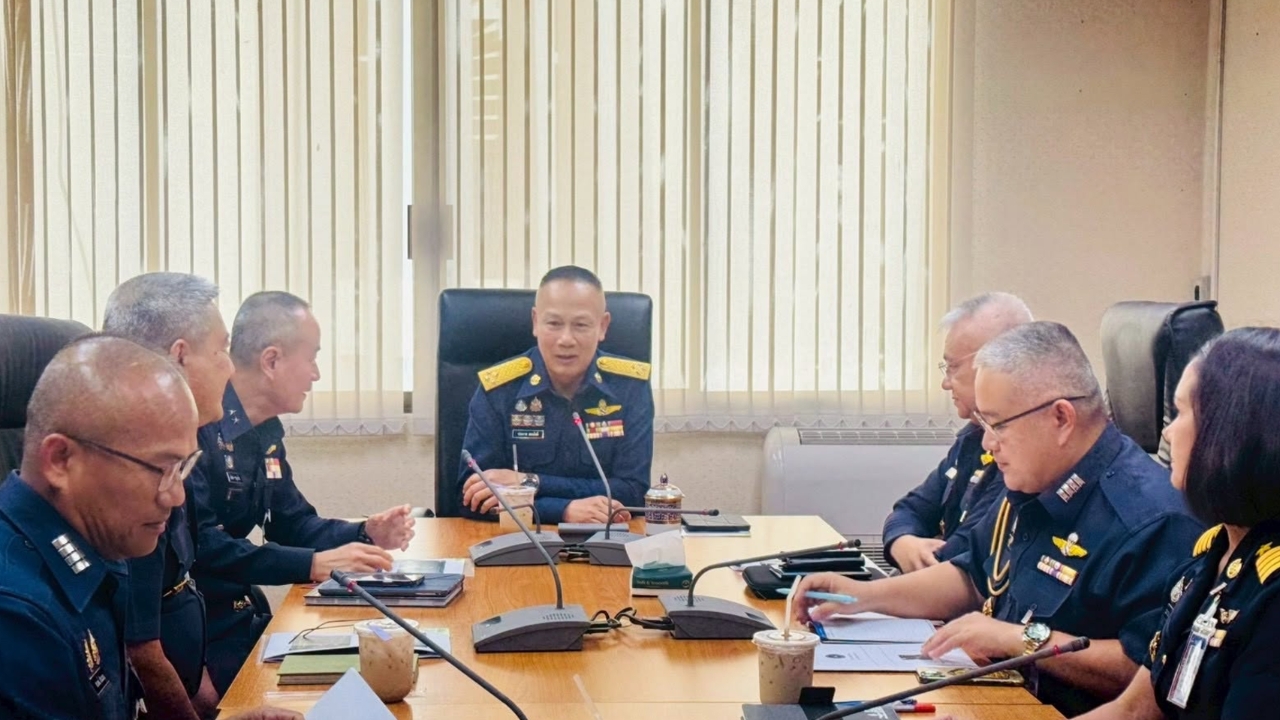
Thailand counters Cambodia's claims of sovereignty violation, emphasizing troop deployment in accordance with the joint GBC agreement and urging talks through bilateral mechanisms while calling for an end to one-sided accusations.
On 11 July 2026, Air Chief Marshal Praphas Sonjaidee, Director of the Thai-Cambodia Situation Information Center (JIC), issued an official statement responding to the Cambodian Ministry of Foreign Affairs and International Cooperation's press release accusing and criticizing Thailand of violating Cambodia's sovereignty and territorial integrity due to Thai personnel movements and operations along the border area recently.
The Thai-Cambodia Situation Information Center firmly confirmed that Thailand's actions in the area fully comply with the frameworks, agreements, and guidelines mutually agreed upon by both countries, especially the Joint Statement from the third special session of the Joint Border Committee (GBC) on 27 December 2025. This statement clearly mandates maintaining troop positions as they were. Therefore, Thailand's measures aim to control the situation, ensure safety, reduce tensions, and prevent confrontations between the two sides' forces. These actions help maintain stability in the border area and do not affect the border survey or demarcation process between the two countries. Thailand therefore wholly rejects Cambodia's unilateral accusations.
“Thailand remains committed to adhering to the joint agreements, resolving issues peacefully, and prioritizing the security of people along the border. We call on all parties to respect the joint statements and agreed mechanisms and avoid distorting or unilaterally interpreting facts, which would undermine the atmosphere for reducing border tensions,” Air Chief Marshal Praphas said.
Additionally, the Thai JIC suggested that both Thailand and Cambodia return to using the bilateral international mechanisms that both countries have signed and agreed upon. This includes opening the discussion table, conducting on-site fact-finding, and collaboratively resolving issues constructively. This approach is more appropriate and effective than presenting unilateral information or accusations to the public and international community, which only unnecessarily destabilizes bilateral relations.