

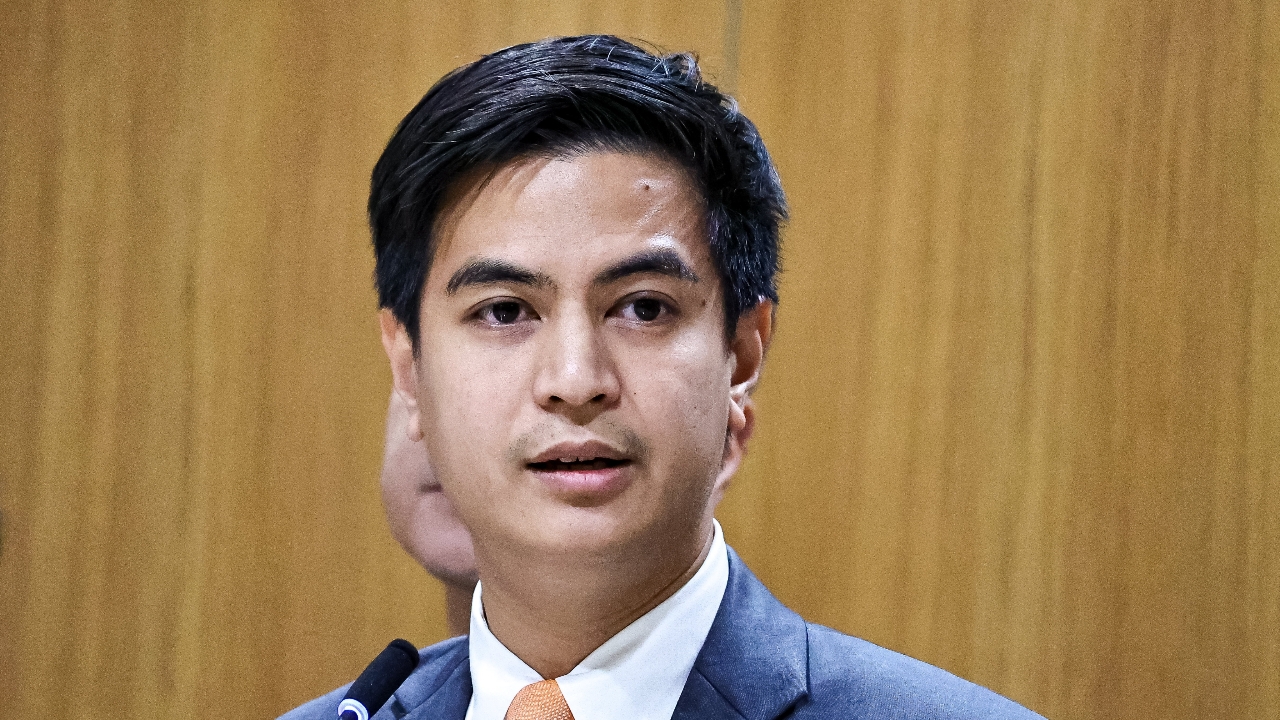
Parit expressed concern that the EC and DSI might be cutting short the Senate vote-rigging case to protect political networks. He called for thorough investigation to reach the chief masterminds and advised society to question why the case has not been sent to court.
On 12 July 2026 at the Parliament building, Parit Watcharasindhu, party-list MP from the Prachachon Party and chairman of the opposition coalition coordination committee (opposition whip), spoke about the event marking the '2nd Anniversary of the Senate Election - In-depth Evidence of the Senate Vote-Rigging Case,' aimed at presenting and examining evidence to inform the public of the facts.
Parit said society often calls this the Senate vote-rigging case, but the proper term is Senate election fraud, as evidence shows money and benefits were used to hire candidates and votes to illegitimately gain state power. This case is crucial for Thailand's political future, as if some senators gain power unlawfully, questions arise over legitimacy in lawmaking, constitutional amendments, or approval of independent agency officials.
The 2017 constitution still allows loopholes for Senate election fraud leading to a collusive political system. If political groups interfere to control many votes, this could affect the approval of independent agency positions and weaken oversight mechanisms.
Currently, the case is under the EC’s consideration, which must decide by early September whether to refer it to court, following the 16th investigative panel’s finding of probable guilt in 229 people, and the DSI’s investigation on charges of being a criminal gang and money laundering. Society worries the case might not reach court if these agencies curtail the investigation process.
Regarding the DSI, after a lengthy investigation, it submitted charges against only 8 individuals, and when prosecutors returned the case in early 2024, it appears the DSI has been idle awaiting the EC's decision. There is speculation that if the EC decides not to send the case to court, the DSI might use that as justification for its inaction. Furthermore, the recent replacement of the permanent secretary of the Ministry of Justice, involved in DSI personnel transfers, raises concerns about possible impacts on the case handling.
Parit added that evidence from 4-5 provinces previously presented in Parliament was just part of the data received by the opposition whip, which is significant but believed to be less than what investigators can access, such as hotel CCTV footage or flight ticket payment records of candidates. Since his evidence is strong, official evidence should be even more substantial, prompting society to question why the case might not be sent to court.
Parit emphasized that revealing evidence is meant to allow public monitoring of investigators' work. He affirmed that if the EC and DSI perform their duties honestly, they should not send only some individuals to court or prosecute just 10-20 senators. Instead, they must link evidence to the political networks or parties behind the case to prevent scapegoating individuals to protect those near power centers.