

“Warawut” visits community enterprises and SME D Bank clients to support innovative food industry enhancing value of Thai agricultural products toward sustainability, tags:[
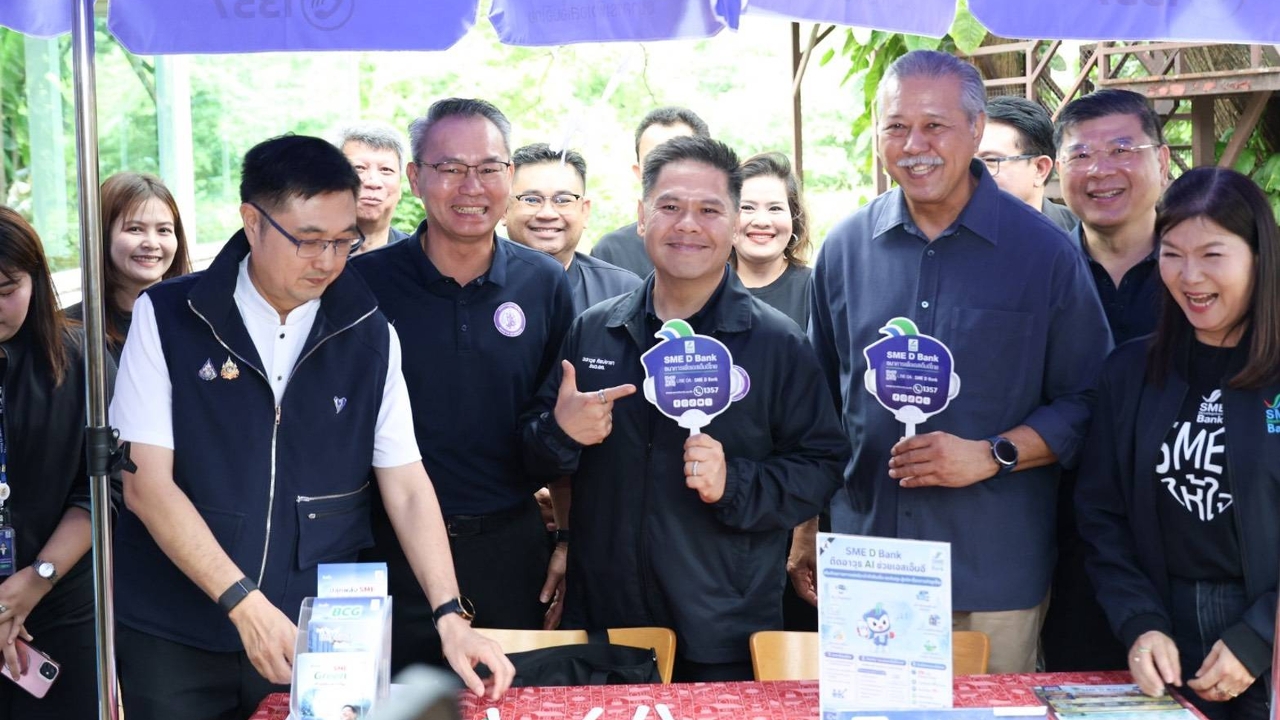
On 12 July 2026 in Nakhon Ratchasima Province, Mr. Warawut Silpa-archa, Minister of Industry, accompanied by Mr. Sorachat Sujit, MP for Suphanburi District 1 from the Bhumjaithai Party, Mr. Thanetphon Thanabunyawat, Secretary to the Minister of Industry, Mrs. Atsadaporn Kraipanont, the Minister’s advisor, and senior officials from the Ministry of Industry, visited SME product shops and community enterprise products, areas that create market opportunities for local entrepreneurs. They also toured an organic dairy demonstration farm operated under sustainable production standards by Dairy Home Social Enterprise Company Limited in Pak Chong District, Nakhon Ratchasima. Dairy Home is a leading organic milk producer in Thailand focusing on innovative products addressing consumer health while conducting environmentally friendly business and creating shared value with the community. The Minister observed the production process through the factory’s glass gallery to study the organic milk production using technology and internationally standardized systems, ensuring consumer confidence in product quality and food safety. Mr. Prut Kerdchoochuen, Chairman of Dairy Home Social Enterprise, welcomed the delegation.
Mr. Warawut stated that the Ministry of Industry prioritizes upgrading Thailand’s food industry to higher value-added production, especially promoting entrepreneurs developing innovative products alongside business practices aligned with green economy and circular economy principles. This aligns with the ONE MIND policy aimed at balanced growth of Thailand’s industrial sector economically, socially, and environmentally. Dairy Home has participated in incubation programs from the Ministry of Industry, including the Department of Industrial Promotion and the Nakhon Ratchasima Provincial Industry Office, while also being a client of the Small and Medium Enterprise Development Bank of Thailand (SME D Bank).
Dairy Home is a social enterprise serving as a model entrepreneur integrating organic agriculture, innovation, and sustainability in its operations. It has received multiple international certifications such as Organic Thailand, Halal, ISO 22000, GHPs & HACCP, ISO 14001, Green Industry Level 5, and Carbon Footprint for Organization. The company targets achieving Net Zero by 2050, reflecting its role as an organic milk producer that adds value and benefits consumers, farmers, communities, and the environment sustainably.
“Today's visit to Dairy Home’s operations is a clear example of applying the circular economy model (BCG) and sustainable business development concepts (ESG). Another commendable achievement is their elevation to Green Industry certification Level 5, which involves creating a green network across the supply chain and a clear Net Zero goal. This demonstrates that enterprises can grow through innovation and standards. The Ministry of Industry, affiliated agencies, and SME D Bank will continue supporting funding, marketing knowledge, standards, and cluster development to cultivate agro-industrial entrepreneurs nationwide to sustain the grassroots economy,” said Mr. Warawut. Mr. Warawut added.

Subsequently, Mr. Warawut visited a major integrated chicken meat processing plant to monitor and promote industrial development under an economic model emphasizing food safety and internationally standardized environmental management. The visit was to CPF (Thailand) Public Company Limited’s Chokchai branch in Chok Chai District, Nakhon Ratchasima. Mr. Chomkitti Sirikul, Executive Vice President – Government Sustainability and Public Relations, Charoen Pokphand Group, and Mr. Panawat Niampram, Director-General of Integrated Broiler-Duck Business, welcomed and briefed the Minister on company operations.
Executives guided the visit through the slaughterhouse, cutting, and processing plants, where advanced technology is used to enhance production efficiency and maintain product quality. They also showed the factory’s wastewater and environmental management systems, emphasizing the industry’s responsibility to ensure effective wastewater treatment to prevent any adverse impacts on the environment and surrounding communities.
