

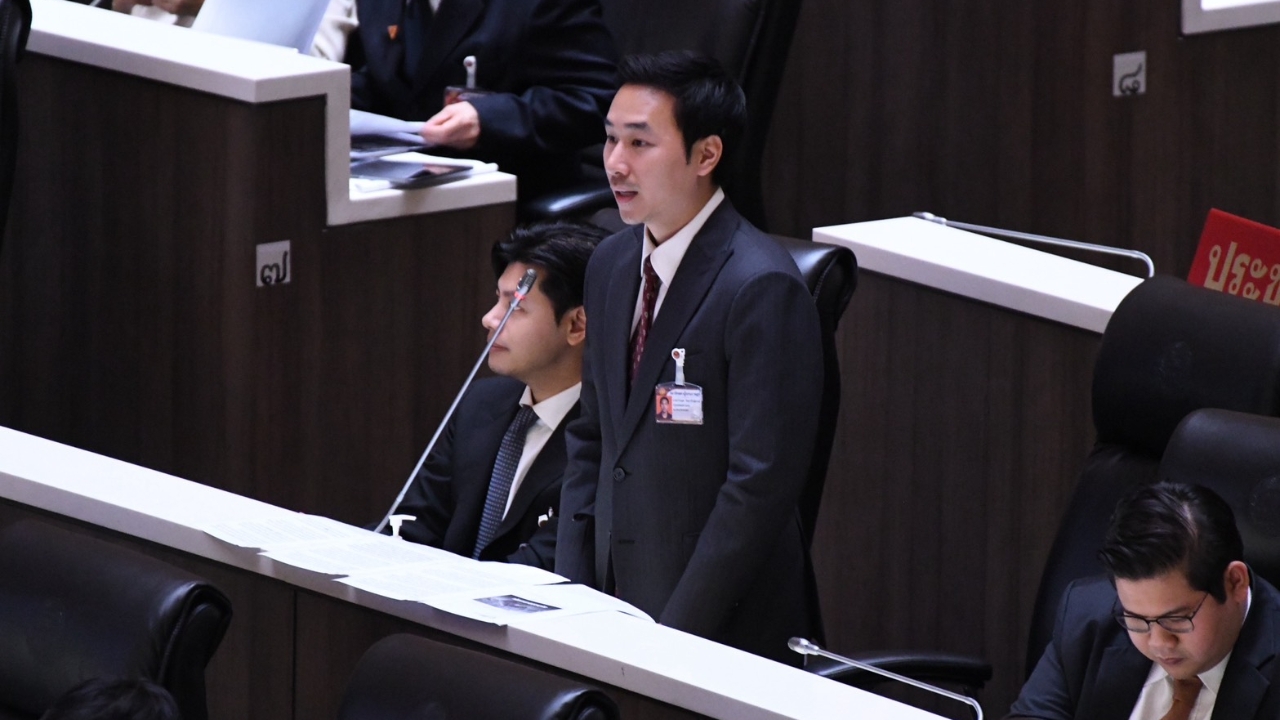
People's Party MP exposes that the 2009 zoning law for entertainment venues is outdated, submitting three urgent proposals to inspect clubs and bars across the capital to prevent repeat incidents.
Following the major tragedy on the night of 12 July 2026, when a fire broke out at "Brewery at Lat Phrao," causing many deaths, public scrutiny of safety standards in Thailand's entertainment venues resurfaced. Paramet Witthayaraksan, Bangkok MP from the People's Party and former deputy chair of the subcommittee reviewing the 1966 Entertainment Venue Act, said this tragedy highlights not only immediate safety measures but also long-standing systemic and structural issues, especially concerning the zoning of entertainment venues in Bangkok.
Paramet explained that under the 2002 Royal Decree defining zones for entertainment venue licenses in Bangkok, only three main areas are allowed: Patpong district, New Phetchaburi–Makkasan area, and Ratchadaphisek district. However, in reality, bars and clubs are scattered across major cities. This mismatch causes widespread legal evasion.
Commonly seen is that business owners register as "establishments similar to entertainment venues" or "restaurants selling alcohol" instead. Even if they want to register correctly as entertainment venues, they cannot due to location restrictions outside zoning areas. Registered entertainment venues face strict Building Control Act requirements: use of fire-resistant or non-flammable decoration and soundproof materials, smoke ventilation systems, sprinklers, and emergency exit sizes proportional to occupant numbers.
If registered as "semi-clubs" or restaurants, they fall under general restaurant building standards without soundproof material requirements. Operators often use cheap foam sound absorbers, which become excellent fuel for rapid fire spread, and legal penalties are far lighter.
Paramet pointed out that adjusting zoning laws to reflect reality is not to benefit operators but to bring these venues into the system, allowing government agencies to inspect, regulate, and strictly enforce architectural safety standards effectively.
Currently, there is an effort to amend the Entertainment Venue Act to transfer zoning authority from the Minister of Interior to local administrative bodies. If successful, in Bangkok, the governor will have the power to manage zoning appropriately. He urged relevant agencies to accelerate this structural legal reform.
Besides long-term plans, the People's Party MP proposed urgent measures for authorities to conduct sweeping inspections of establishments, restaurants, clubs, and bars across Bangkok focusing on three key points: entrances, exits, and emergency routes must be sufficiently wide, exit signs clear and unobstructed during operating hours; firefighting equipment and alarm systems must be fully operational; and strict law enforcement against unlicensed venues or those illegally modifying structures or using flammable decorations inside buildings.
"The lives of both patrons and staff are too precious to be risked on lax venue management or outdated laws. I sincerely hope this costly lesson leads to transparent inspections and real improvements in safety practices and legal enforcement," Paramet concluded.