

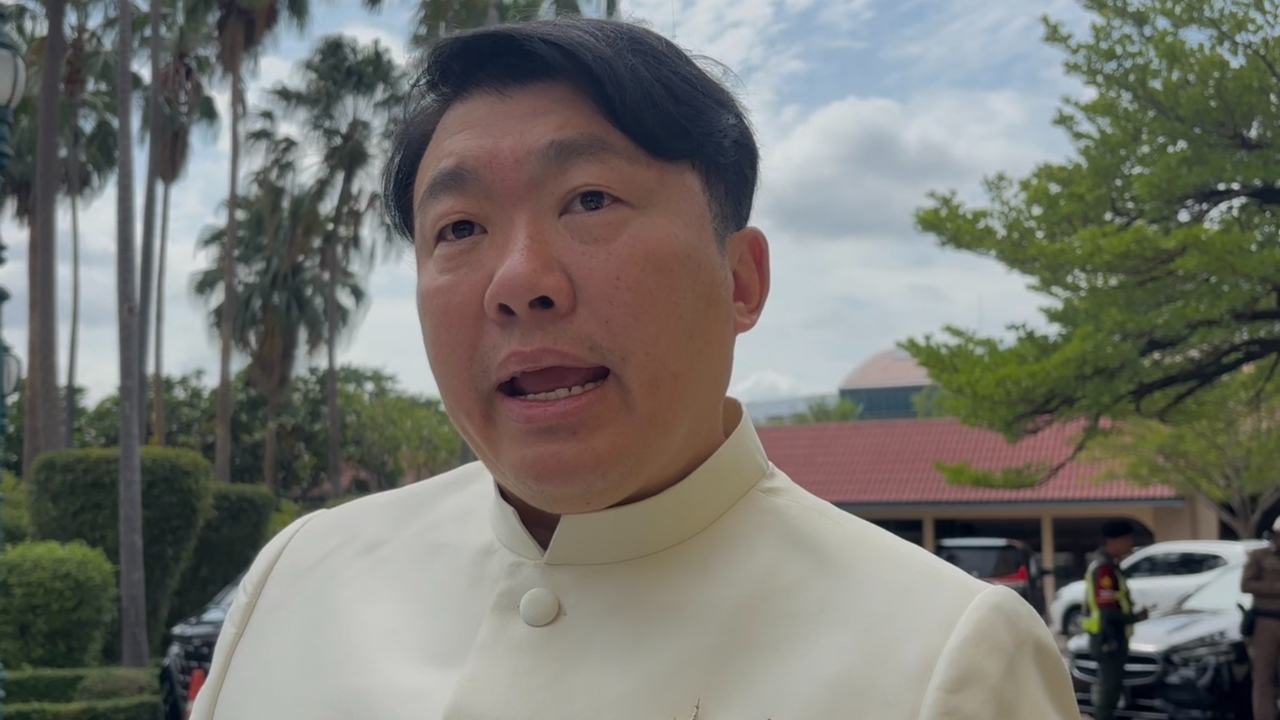
Siripong insists there is no conclusion yet on the termination of the 3-airport rail contract and that a proposal is pending for the EEC Board's decision. He stressed the need to protect state interests as much as possible. Meanwhile, Pakorn pointed out that the main contract must be examined.
On 14 Jul 2026 at 10:00 at the Government House, Siripong Angkasagulkiat, Deputy Minister of Transport, addressed reports that the ministry plans to propose contract termination options for the 3-airport high-speed rail project (Don Mueang, Suvarnabhumi, U-Tapao) to the Eastern Economic Corridor (EEC) Board.
The Deputy Minister clarified that no conclusion has been reached yet; contract termination is only one option to present for the EEC Board’s consideration. Since construction costs and figures have changed, it is necessary to determine how to complete the project connecting the three airports from Bangkok to the EEC fully. Other options may be considered, but no final decision has been made as budget, suitability, and investment value must first be evaluated.
Therefore, options such as the Missing Link rail or continuing with the high-speed rail must also be presented for consideration, as multiple alternatives need to be reviewed.
Regarding whether measures would be taken against private parties if the contract ends, Siripong stated that any contract breaches or reasons for termination must be examined to identify who is at fault. He believes it will not be resolved easily, as both government and private sectors are unlikely to concede, meaning legal battles are expected.
When asked if compensation claims would be necessary, Siripong emphasized that this must be assessed but acknowledged that compensation is likely.
On whether a list of future state contracts for the private sector is needed, the Deputy Minister said ultimately legal arguments will determine the cause. Initially, the Ministry of Transport could not deliver some land, which is true, but solutions like MOUs have addressed how to proceed. Some private parties have debt burdens they have not paid, also true, with MOUs allowing delayed debt payments with interest during early operations. Thus, both sides may have contract breaches, and responsibility for compensation must be determined. Siripong reaffirmed that the state’s interests must be maximized.
Meanwhile, Pakorn Nilprapunt, Deputy Prime Minister for Legal Affairs, said he has not yet seen any details about terminating the joint venture contract. The matter is still with the State Railway of Thailand and has not yet been submitted by the Ministry of Transport.
When asked if contract termination is possible, the government’s legal representative emphasized he has not seen details and that the main contract and its specifics must be reviewed carefully before proceeding.