

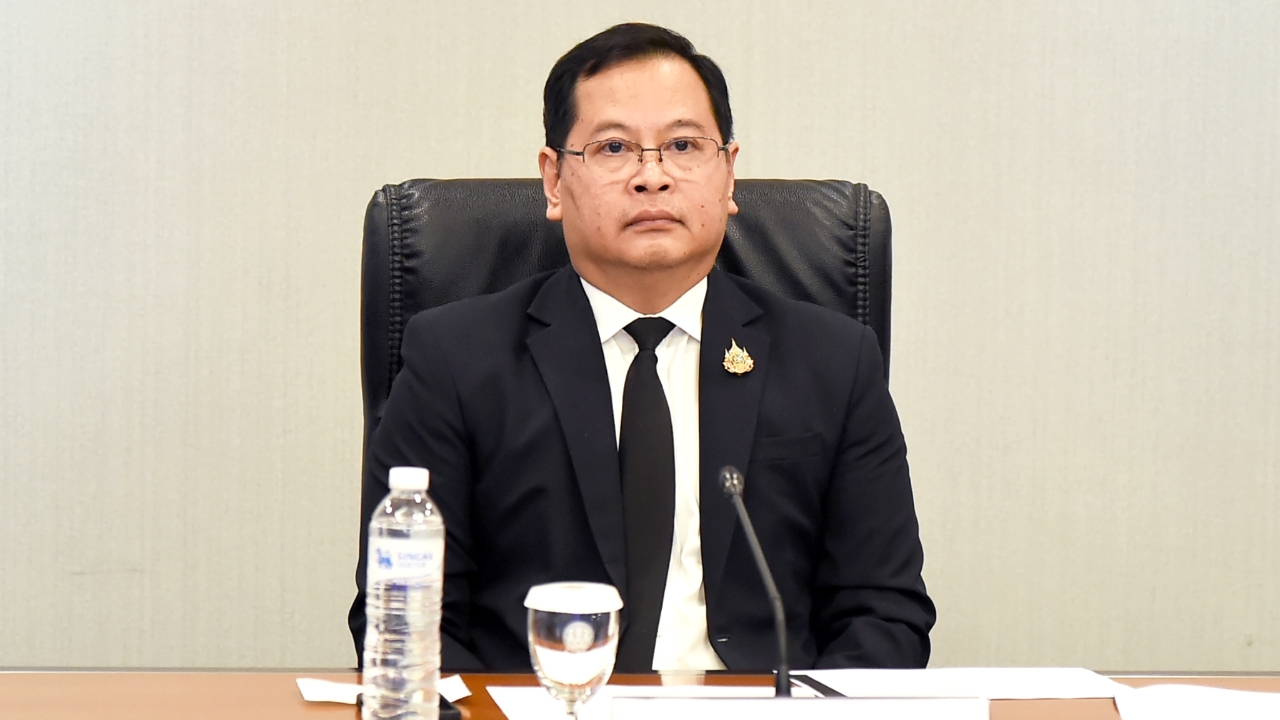
Deputy Prime Minister Pakorn revealed the government’s concept of "disaster insurance," involving private sector co-payment to reduce fiscal burdens. He pointed out the advantages include a clear framework and faster payments to the public, based on the Japanese model, with plans to expedite submission to the Cabinet as soon as possible.
On 15 July 2026 at the Government House, Deputy Prime Minister Pakorn Nilprapunt commented on the increasing severity and frequency of disasters. He said the government has been monitoring and seeking measures on this issue for some time. The Cabinet assigned the Ministry of Interior to study ways to assist the public beyond just subsidies, aiming to increase compensation amounts. The discussion includes private sector cooperation on disaster insurance, considering how private companies can support. The Ministry of Interior has studied this with the Ministry of Finance, the Office of Insurance Commission, and the Thai General Insurance Association. The basic principle follows Japan’s model for earthquakes, floods, and storms. If companies accept insurance, it will reduce the budget burden. Also, if criteria are met, private companies can pay out faster than the government. This concept aligns with private sector interest and helps victims receive quicker, larger payments. For example, if the government orders a payment of 9,000 baht, it is clearly insufficient for home repairs, and it is impossible for the government to cover full costs. Hence the disaster insurance idea: in Japan, insurance companies pay promptly after earthquake damage. Insurance premiums vary by area risk levels. The advantage of private company involvement is rapid payment once conditions are met.
Currently, budget disbursement is complicated and sometimes delayed, causing hardship and minimal compensation for victims because government payments are broad but limited. Insurance-like payments have set ceilings: how much to pay normally or additionally. If costs exceed that, insurance companies do not cover it, and government support is considered, but usually at a lower amount. This reduces fiscal burden. He confirmed this concept does not mean the government neglects its duties; rather, it offers more beneficial support. Agencies assigned have held preliminary talks and are finalizing figures to propose the principle to the Cabinet using Japan’s model. Efforts are accelerated to present the proposal to the Cabinet meeting as soon as possible.