

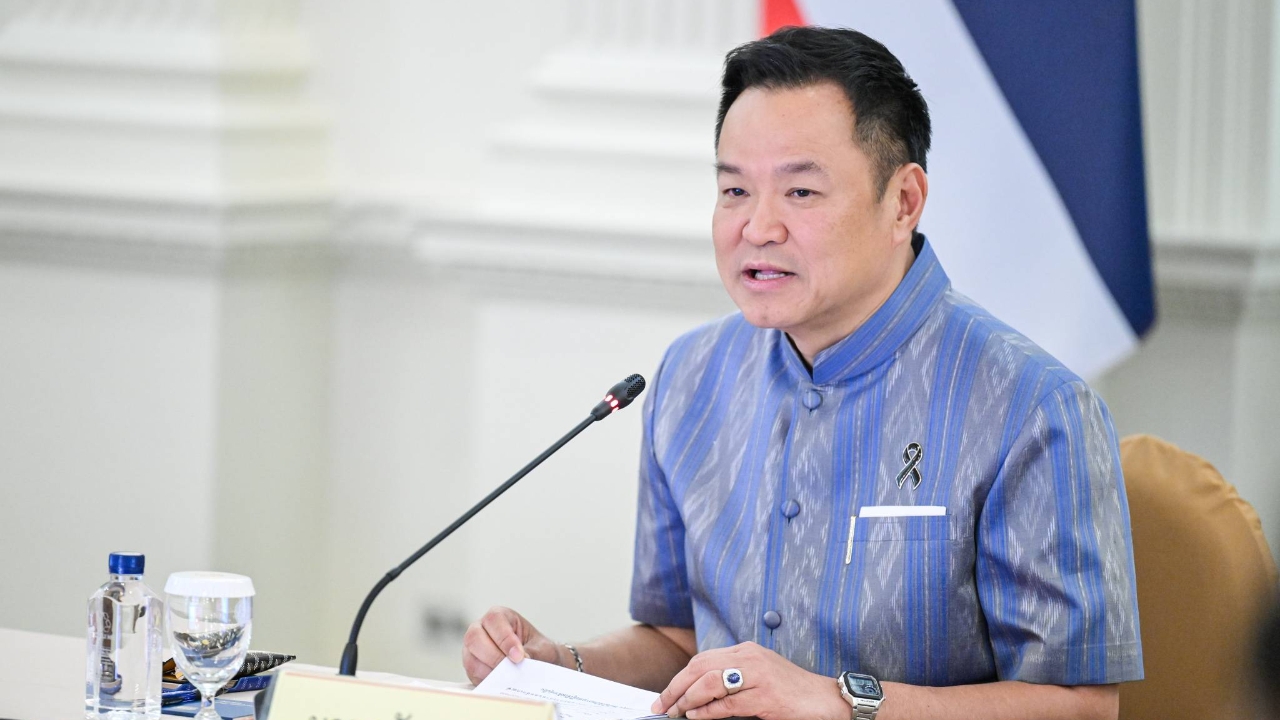
“Anutin” supports dormitory, apartment, and unregistered home residents by letting them pay residential electricity rates and removes the “streetlight fee” from household bills.,
On 15 July 2026, Ms. Ratchada Thanadirek, spokesperson for the Prime Minister's Office, announced the results of the National Energy Policy Committee (NEPC) meeting chaired by Prime Minister and Minister of Interior Anutin Charnvirakul. The committee approved a major reform of electricity rates to reduce living costs for the public and support future industrial investment. The three key measures include cutting residential electricity rates to 3 baht, supporting grassroots people and dormitory tenants, and removing the "streetlight fee" from bills.
The NEPC approved Thailand’s electricity rate structure policy for 2026–2030, reducing the progressive electricity rates for residential use. For the first 200 units consumed, the price will be lowered to just 3 baht per unit (units above 200 will remain at the current rate), benefiting consumers at all usage levels.
Additionally, the policy promotes fairness by expanding the definition of residential electricity users to include tenants in rental houses, dormitories, apartments, and unregistered homes. Previously, these groups paid temporary, higher electricity rates. Now, they will pay regular residential rates to help students and laborers.
Importantly, the NEPC board ordered that public electricity costs (such as street lighting) be strictly separated from individual household electricity bills. A new specific rate will be set, and the Energy Regulatory Commission (ERC) has been tasked with revising laws to redirect funds into the Electricity Development Fund from new sources as compensation.
The government spokesperson added that to support mega technology investment projects, the NEPC has set strict criteria for Data Center businesses planning to invest. They must provide guarantees for electricity network usage to confirm readiness and genuine investment intent, preventing unnecessary government spending on expanding electricity systems that would burden general consumers. They must also submit water management plans due to the high water usage of cooling systems, to prevent conflicts over water resources with the public and agriculture.
Furthermore, the meeting resolved to unlock direct power purchase agreements (Direct PPA) for renewable energy through third-party access (TPA) to the electricity network. This applies to both Data Centers and industrial sectors, allowing operators to purchase clean energy directly from producers, aligning with international trade measures and moving toward a free energy market.
"The government has assigned the Ministry of Energy and related agencies to review the electricity rate structure to reflect actual costs transparently and fairly. It must support new investments without affecting the stability of the electricity system or increasing living costs for the people," Prime Minister Anutin Charnvirakul emphasized at the meeting.