

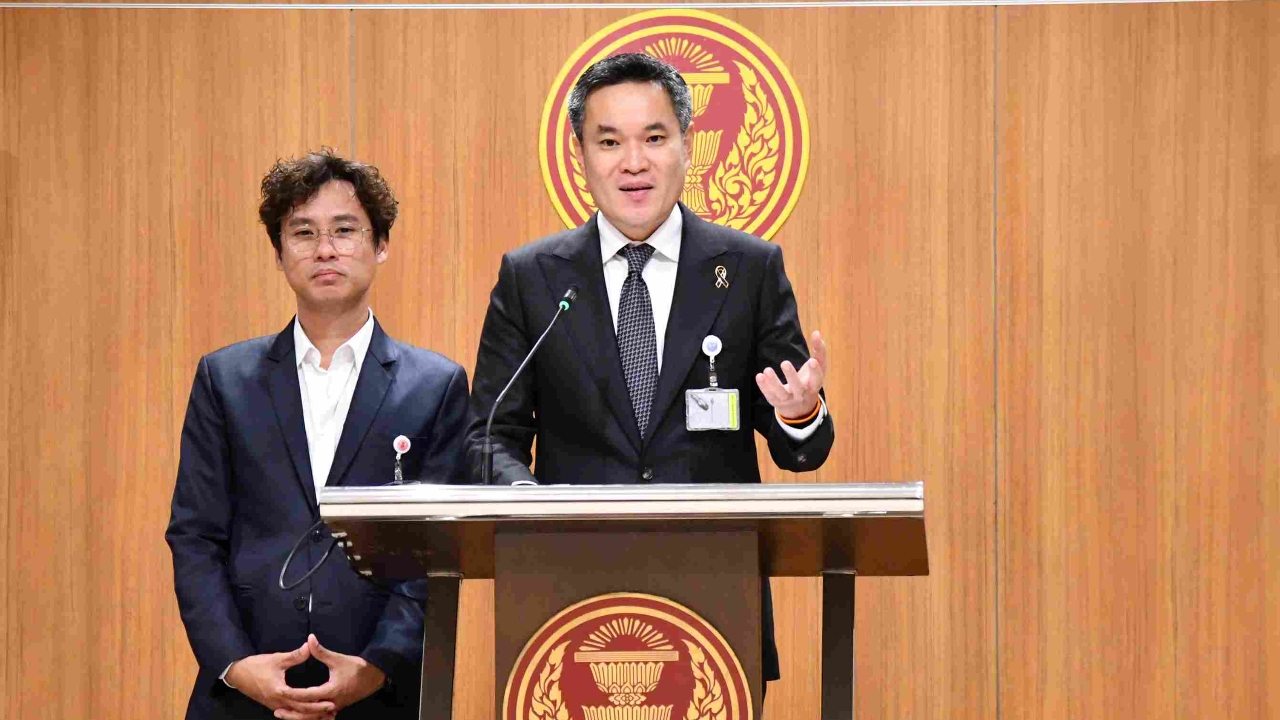
The Parliamentary Anti-Corruption Commission (ACC) panel resolved to request additional information and documents from relevant agencies regarding corruption in the local civil service exam. They also plan to invite the ACC, the Office of Public Sector Anti-Corruption Commission (OPAC), the Anti-Money Laundering Office (AMLO), the Crime Suppression Division, and the Anti-Corruption Division to a meeting next week to discuss the matter further.
At 14:20 on 16 July 2026 GMT+7. Mr. Asapol Santraiphop, Chairman of the Parliamentary Committee on Prevention and Suppression of Corruption. The House of Representatives, together with Mr. Thanathorn Pramulpong, spokesperson for the committee, held a press conference at the parliament. The issue concerns state officials involved in corruption related to the recruitment exam for local government civil servants or employees.
Today, the committee summoned related agencies for information, spending over three hours questioning about the list of more than 15,000 candidates who passed the local civil service exam and whose names were publicly posted. Questions arose over who uploaded this list to the Department of Local Administration's (DLA) website. It was answered that DLA staff were responsible. The department published the passing candidates online. However, the Ministry of Interior’s verification found discrepancies between the scores and the original answer sheets for parts A and B, as examined by the Ministry. Srinakharinwirot University (SWU) was contracted to conduct the exam, while DLA was the client. The Terms of Reference clearly stated that the contractor must deliver the flash drive containing exam data to the client, represented by a deputy director-general who received it and stored it in a safe in the director-general’s office.
The committee asked whether the flash drive data containing exam papers for over 400,000 candidates nationwide matched the scores posted on the department’s website. It was found that the flash drive data in the director-general’s office matched the posted passing list but included scores inflated above the actual exam results. This indicates score tampering, adjusting names and scores so candidates who originally failed were marked as passing.
The director of SWU’s Testing Office explained to the committee last week that the authentic data is on the flash drive held by the National Anti-Corruption Commission (NACC). This flash drive is accurate and unaltered. Meanwhile, the flash drive held by DLA contained altered data that did not correspond to actual scores, confirming that tampering occurred.
DLA explained that the flash drive in the director-general’s office lacked SWU’s official seal of certification. Uploading to the website requires this seal because DLA officials communicated with the contractor via the Line app to exchange data. The director’s computer contained the list of passing candidates uploaded to the website. This explains why the contractor stamped the university’s seal and sent data via Line. This clarification came from DLA’s legal division director to the committee.
Another question was who made the alterations. The contractor stated last week that they delivered the flash drive to DLA, but they do not know what happened afterward. After DLA received it, communication between client and contractor occurred, with DLA requesting SWU to stamp the university’s seal to certify authenticity, which SWU did. This is a critical gap: once the flash drive was delivered into the safe in the director-general’s office, no one knows who accessed or modified the data because the safe is in a secured room. Additionally, the flash drive was not encrypted; it is a standard USB drive that can be accessed by plugging it into a computer.
. The committee resolved to request additional information and documents from related agencies for further consideration. They will invite the National Anti-Corruption Commission (NACC), the Office of Public Sector Anti-Corruption Commission (OPAC), the Anti-Money Laundering Office (AMLO), the Crime Suppression Division, and the Anti-Corruption Division to join a meeting next week.