

"Yotsanan" unveils the P.Y.P. 2026 policy to break down silos and drive three major agendas, promoting the ‘Space Economy’ and Siam Silica project to transform nature into a new form of currency.
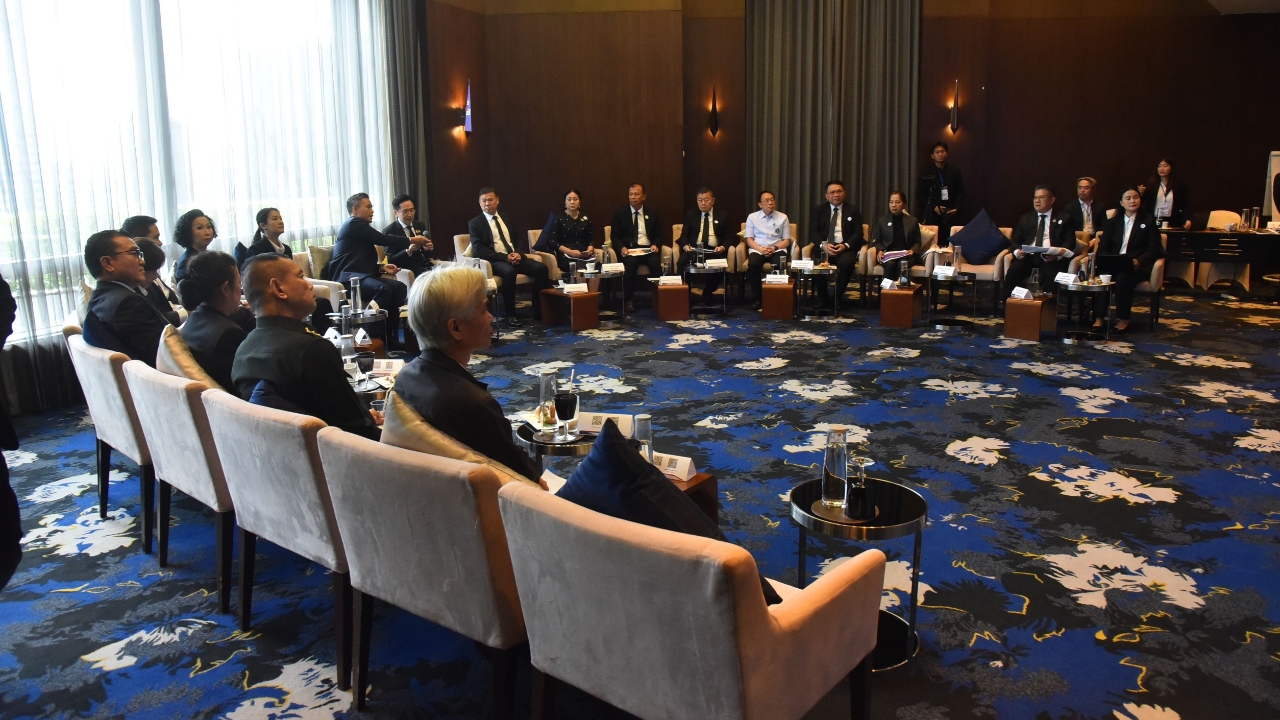
On 16 July 2026 at Centara Grand at CentralWorld Hotel, the Office for National Reform, National Strategy, and Unity Promotion (Office of P.Y.P.) held an orientation and policy briefing for the 2026 Executive Development Program for Change Leaders (P.Y.P. program). Mr. Yotsanan Wongsawat, Deputy Prime Minister and Minister of Higher Education, Science, Research and Innovation (MHESI), acting as the overseer of the Office of P.Y.P., presided over the event.
This joint effort integrates 17 government agencies at the permanent secretary and department head levels through the Policy Innovation Lab process to shift senior executives' mindset from managing separate ministries to collaboratively governing the country. The initiative focuses on three main integration challenges: developing human capital for the future, applying science and AI with good governance, and restoring natural capital to create sustainable growth.
Mr. Yotsanan highlighted the critical need to develop a "Space Economy" so that Thailand can have "its own eyes in the sky," reducing dependence on foreign satellite data. He addressed societal criticism questioning the relevance of space efforts amid poverty, explaining that space relates to data sovereignty and precision agriculture, which can involve Thailand’s automotive supply chain in driving this forward.
Additionally, he announced the promotion of the national-level "Siam Silica" project, a strategy to establish Thailand’s semiconductor and AI technology foundations to prevent foreign technology monopolies. Alongside this, the vision includes applying advanced genomics technology to restore biodiversity in Thai soil, water, and seas. The ambitious goal is to "turn nature into a new currency" to gain substantial economic advantage. In the AI era, leaders are not those who know everything but those who can engage experts to collaborate.
The Deputy Prime Minister also proposed shifting the government’s role from a dictator to a facilitator, dismantling siloed operations and restructuring financial mechanisms to attract venture capitalists to drive innovation in startups and scale-ups within health and wellness, financial technology (Fintech), and defense industries. He emphasized continuous support for research and development (R&D) to prevent intellectual losses among researchers, which would be a significant setback for the country.