

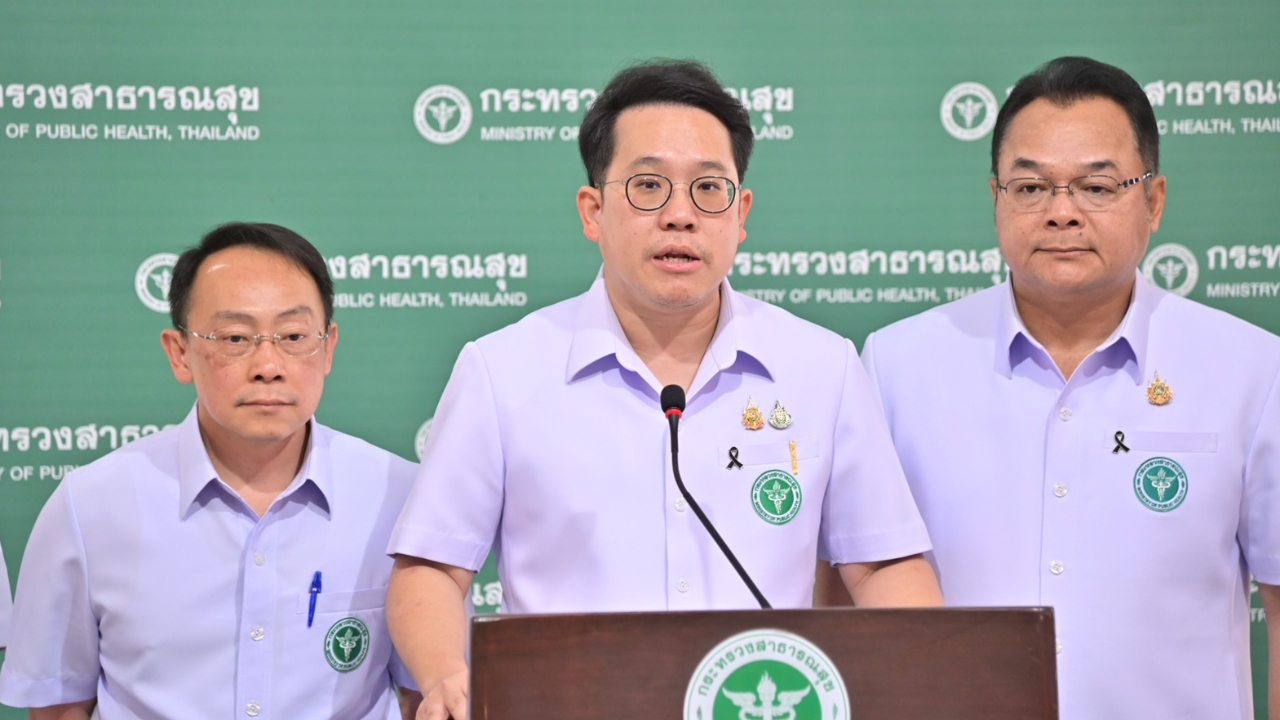
The Minister of Public Health revealed that the ministry is preparing to expedite the appointment of 4,252 professional nurses as civil servants this September. He confirmed that the hiring of 7,256 community nurse volunteers is intended only as supplementary staff to care for four vulnerable groups within communities, ensuring their work does not overlap.
On 17 July 2026, Mr. Patthana Prompat, Minister of Public Health, addressed widespread public criticism concerning the ministry's plan to recruit and train 7,256 individuals as “community nurse volunteers” (อาสาพยาบาลชุมชน, อสพ.) while over 7,000 professional nurses remain temporary employees in the ministry. He emphasized that the recruitment of community nurse volunteers is not meant to replace professional nurses but to strengthen the healthcare team by enhancing continuous essential support for community care. The number of volunteers should not be compared directly with professional nurse appointments. The community nurse volunteers primarily focus on four groups: bedridden and dependent patients, those with non-communicable chronic diseases (NCDs), mothers and children, and patients with mental health or substance abuse issues, to ensure prompt and systematic community care.
Regarding selection criteria, candidates with a general bachelor's degree must be under 65 years old and complete 240 hours of training; those with a health-related bachelor's degree must be under 65 and undergo 120 hours of training; licensed health professionals such as nurses, medical practitioners, or community public health workers up to age 70 require 30 hours of training. A provincial subcommittee, including representatives from various sectors, reviews qualifications and conducts annual evaluations. Those ranking in the top 10% in assessments receive additional benefits, such as opportunities for further nursing studies. Volunteers in the bottom 10% receive warnings, and after two years of service may have their contracts terminated. These are not positions tied to individuals; the selection and evaluation processes prioritize quality and transparency.
Addressing concerns from professional nurses still awaiting appointments, Dr. Supachok Vejpanya Phaesat, Chief Inspector of the Ministry of Public Health, affirmed that the ministry has established systematic, multi-dimensional measures to resolve the issue. The plan includes accelerating the appointment of over 5,842 medical and professional nursing staff to secure career stability and reduce the proportion of temporary or daily wage nurses. Specifically, 4,525 professional nurses are to be appointed, with agencies urged to complete appointments by September 2026. Currently, over 40% of appointments have been completed. Additionally, the ministry is in the process of requesting 8,642 new civil service positions.
Discussions with the Office of the Civil Service Commission (OCSC) are progressing well. The OCSC has requested the Ministry of Public Health to provide additional data for consideration by the Government Personnel Planning and Policy Committee (GPPPC), including information on the distribution of professional nursing staff across health regions, statistics on nurse production and attrition over the past five years, and updates on job classifications and higher-level professional nursing career tracks.