

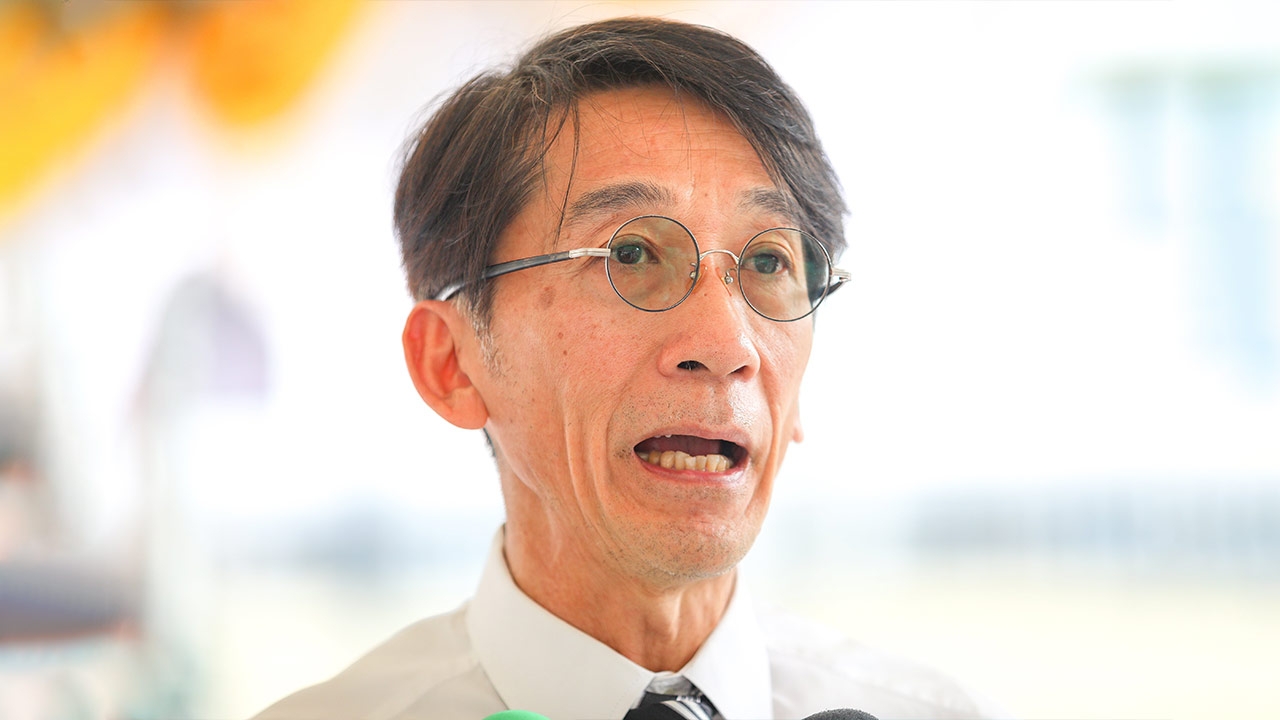
Parinya declares the NBTC chairman’s position is concluded, citing four legal provisions mandating removal. He warns the Prime Minister that ignoring the royal submission process risks violating Section 157. Meanwhile, Supinya urges Dr. Sorn to show spirit by immediately ceasing his duties.
On 18 Jul 2026 GMT+7, reporters reported that after the NBTC Selection Committee unanimously voted 4-0 that Dr. Sorn Boonbaichaiyapruk, chairman of the NBTC, has a disqualifying characteristic under Section 8(2) of the Radio Frequency Allocation Act B.E. 2553 (2010), the Consumer Council initiated public discussion on what Dr. Sorn’s disqualification means and what follows, referencing the 17 Jul 2026 GMT+7 decision.
Ms. Supinya Klangnarong, chair of the Consumer Council’s subcommittee on communication, telecommunications, and information technology and a former NBTC member, said the NBTC commissioner is a high-level post requiring royal appointment. Although de facto Dr. Sorn has lacked NBTC status from day one due to the selection committee’s ruling, de jure his name was published in the Royal Gazette. Thus, his formal removal requires the Prime Minister to submit for royal endorsement to be republished officially.
She compared it to her own past experience with political legal challenges regarding qualifications, where she chose to immediately cease duties the same afternoon the court ruled, returning official vehicles and sending a clear letter to the NBTC secretary-general. She said this was to prevent operational difficulties for the NBTC office, even though legally she remained in position awaiting a one-year ruling from the Council of State.
Won the administrative court case but must stop performing duties.
The former NBTC member emphasized that the best way to resolve all confusion is for Dr. Sorn himself to act. If the chairman does not clearly accept the decision, it will make NBTC operations difficult, especially regarding salary disbursement and continuity of various missions.
“The entire industry and all operations now rest on one person. Therefore, the best thing he can do for himself is to stop performing his duties and notify the office, which can then continue its work. If Dr. Sorn wishes to file a lawsuit with the administrative court to contest, that is his right, but he should cease duties first to avoid complications and adverse effects on both the organization and himself.”
There must be “official documents” for the Prime Minister to submit to the royal office.
Ms. Supinya said it is necessary for an agency to formally prepare and send documents through official channels, whether the NBTC office or the Selection Committee, someone must submit paperwork to the Prime Minister because bureaucracy and law rely on documentation, not just verbal acknowledgment.
Focus on six remaining NBTC board members handling the “hot potato.”
Ms. Supinya also noted that the six remaining NBTC commissioners can still hold meetings, elect a temporary chair, and continue decision-making immediately even if the chairman ceases duties, with no legal issues. Previously, the board operated with only four members. The critical issue now falls to the remaining commissioners, as public expectations are high: once unblocked, they must accelerate work that was previously stalled due to the chairman's position.
Parinya points out the NBTC chairman’s position is legally ended.
Associate Professor Dr. Parinya Dewanaritkul, law faculty at Thammasat University, stated the matter is legally concluded with no room for dispute, according to the NBTC Act.
1. Section 8(2) stipulates that NBTC commissioners must not be employees or staff of any government agency. Since Dr. Sorn was a paid hourly physician, he clearly held employee status.
2. Section 18 requires those with disqualifying characteristics to resign and provide evidence to the Senate president within a specified time before the Prime Minister submits a royal command for removal. The Senate president set a deadline of 10 Jan 2021, but Dr. Sorn remained an employee until 12 Apr 2021, thus lacking qualifications and forfeiting rights before taking office.
3. Section 20(5) states that violating Section 8 results in removal from office, which must be formalized by royal command.
4. Section 5 designates the Prime Minister as responsible under this Act; thus, the Prime Minister must submit the removal request for royal endorsement.
Status compared to a “mango waiting to be picked.”
Dr. Parinya explained that the law does not declare the initial royal appointment void. Legally, Dr. Sorn became chairman, but removal under Section 20 paragraph 2 must be retroactive to the date of disqualification, which in this case was before his appointment, thus fully fulfilling removal conditions.
“It’s like a ripe mango just waiting to be picked. It’s over now; we’re just waiting for the Prime Minister to submit for the official royal command.”
Warning to the Prime Minister: ignoring this risks violating Section 157.
Dr. Parinya said the next step is for the NBTC Selection Committee to officially notify the Prime Minister of the resolution. If the Prime Minister acknowledges but fails to submit for royal removal, it constitutes dereliction of duty. This differs from the case of former PM Srettha Thavisin, which involved ethical violations needing Constitutional Court interpretation. Dr. Sorn’s case clearly violates employee status under Section 8 without ambiguity.
Concerns that “four years of resolutions” may impact the entire system.
Dr. Parinya expressed concern beyond salary and benefits refund issues, noting a bigger problem: if legally Dr. Sorn’s removal is retroactive, all NBTC resolutions he participated in as chairman over the past four years must be reconsidered and invalidated, as if they never existed, severely affecting practical outcomes and external parties.