

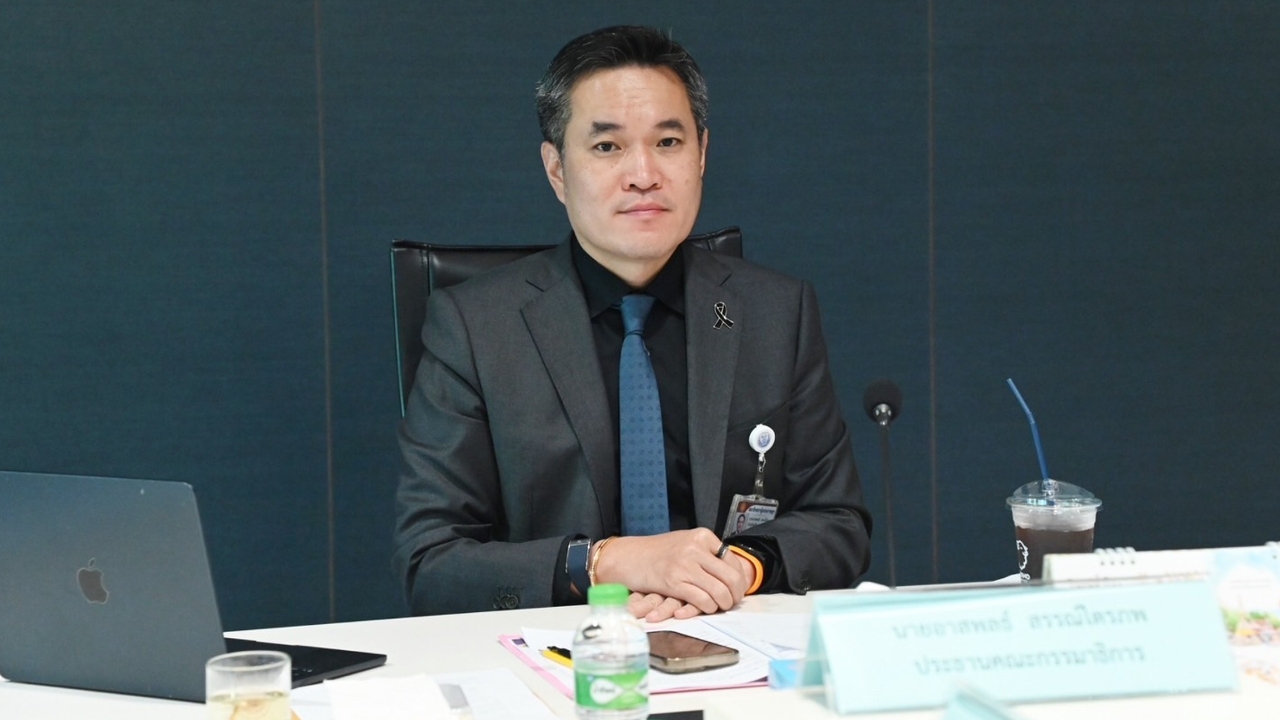
Asapol is confident there has been no data cutting in the crackdown on local exam fraud. He revealed that a Bhumjaithai MP also wants to know who the "Big Boss" mastermind behind it is, confident it is a systematic operation.
On 20 Jul 2026 GMT+7, Mr. Asapol Santraiphop, Member of Parliament for Sisaket Province from Bhumjaithai Party and chairman of the parliamentary committee on anti-corruption (chairman of the PACC committee), appeared on the program "Sharp and Clear," in an episode titled "Cracking Down on 'Exam Fraud'—Who Is the Mastermind at Large?" He said the committee has invited related agencies to provide information at the House of Representatives. The data used for the investigation and corrections came from the computer of the division head at the Department of Local Administration (DLA) via LINE. He confirmed there was no data cutting and that the opposition was given the opportunity to question the DLA employer and the chairman of the Local Administration Commission (LAC) for transparency. After questioning, it was revealed that the flash drive given by the contractor to the LAC chairman was later entrusted to the DLA deputy director-general, who confirmed in the committee room that the flash drive he received had not been altered. The deputy director-general then stored the flash drive in the director-general's safe. The employer stated that after delivering the flash drive, they no longer knew what was done with it.
Later, the PACC committee questioned the contractor and found that the flash drive was stored in the director-general's safe. The safe was opened to retrieve the flash drive to verify if the data met the TOR requirements, though not all data was checked. However, many questions arose in the committee about who contacted Srinakharinwirot University regarding the list of passing candidates. The inquiry revealed communication between the division head at the DLA and the contractor. The reason for contact was that some names and positions were misspelled, requiring correction. Thus, there was communication between the employer and contractor. The question is: where did they get these files from when the flash drive containing the most confidential data remained in the director-general's safe?
The PACC chairman said that after extensive questioning, it was found that the data resided on the division head's computer at the DLA, who communicated with the contractor via LINE. Eventually, the corrections were completed, and the contractor was asked to get university certification. The division head then presented the university-certified file to the chairman — the DLA deputy director-general — who submitted it to the LAC for announcement on the DLA website. It was previously understood that the passing data came solely from the flash drive, but this turned out not to be the case. When the fraud was discovered, the Ministry of Interior opened the safe to retrieve the flash drive for verification. The official passing list with university certification posted on the DLA website matched the list on the flash drive in the director-general's safe. However, the flash drive in the safe did not bear the university's certification stamp. This conflicts with the contractor's initial claim that the flash drive delivered to the employer was unaltered before storage in the safe. It is unknown how many times the safe was opened or who had access besides the deputy director-general, who was authorized by the LAC chairman.
The question arises regarding the editing of the passing list or fraud: for example, raising scores of candidates who passed the written exam from 40 to 70 points. When the division head communicated with the contractor, would the contractor act unilaterally? Probably not. This suggests involvement of someone higher than the division head. Who could be higher? Possibly the chairperson who announces results or the director-general. Would the division head dare to act without orders from a superior? Therefore, this is a systematic operation.
When asked if this meant excluding others from the investigation, Mr. Asapol said, as chairman of the PACC committee, he affirms there was no data cutting. The committee includes opposition members who were fully allowed to question witnesses. He expressed his sincerity, aware that some criticize him as a Bhumjaithai MP. He invited anti-corruption organizations to join and provided opportunities to question because they want all involved in fraud to be held accountable. After two committee meetings, they understand what happened on both sides—the contractor and employer. There is speculation about who is above the director-general, whether senior ministry officials or politicians. In his view, it is the responsibility of the police and PACC to proceed. The Central Investigation Bureau is filing criminal charges under Section 144 for bribing state officials, punishable by five years in prison. Those who provide useful information can be witnesses and help extend the investigation further.
“Today, not only society wants to see who the ultimate Big Boss is, but I also want to know. The Bhumjaithai MPs want to know as well because if we cannot handle this, the party's reputation suffers. I was the first to raise the issue of local exam fraud by informing Deputy Prime Minister and Minister of Interior Anutin Charnvirakul that in Sisaket Province there were middlemen and bribes to pass the exam. That led to the cancellation of the exam. When it was canceled on 5 Jan 2024, I brought people from Sisaket to petition the Ministry of Interior, which resulted in an MOU among five agencies and another MOU in 2025.” The chairman of the PACC committee concluded.