

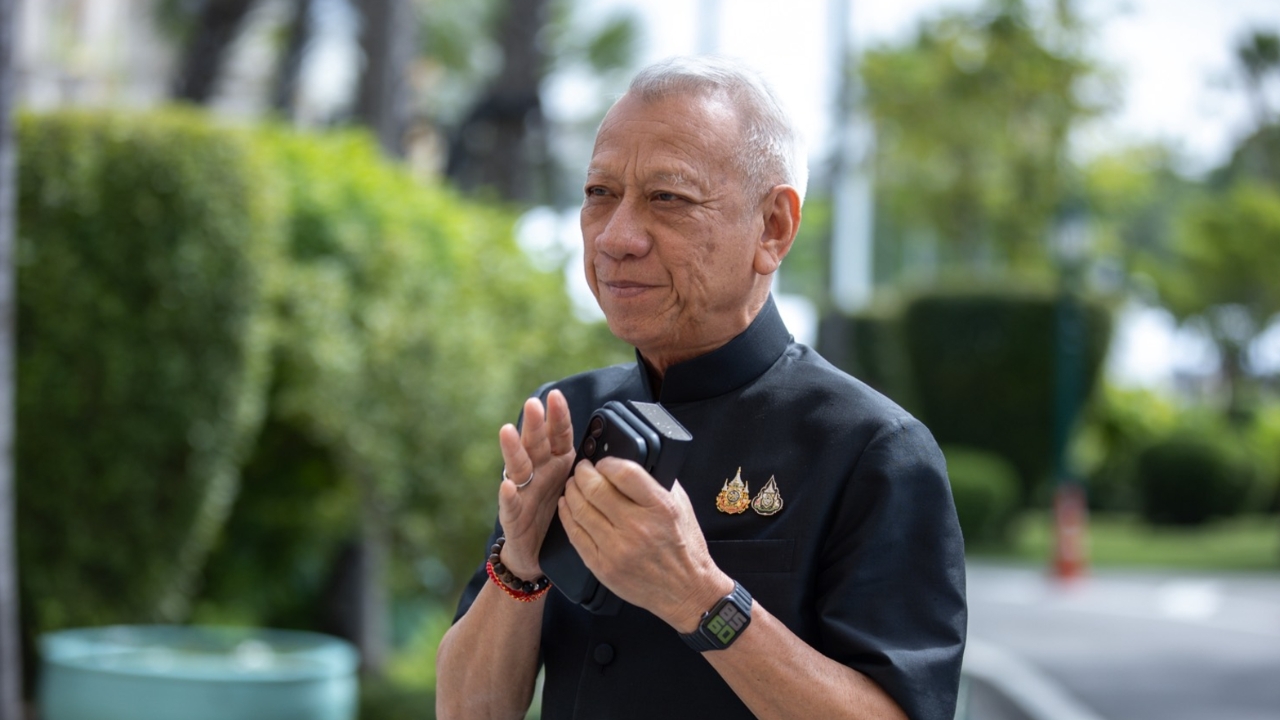
Deputy Prime Minister Phiphat Ratchakitprakarn declared the "Land Bridge" project is no longer proceeding, acknowledging the need to review plans and rename the project. He emphasized the necessity of deep-sea ports on both the Andaman and Gulf coasts connected by a rail system as the main axis, pointing out that Ranong and Chumphon still have the highest potential for development.
21 July 2026 GMT+7 Deputy Prime Minister and Minister of Transport Phiphat Ratchakitprakarn revealed the progress of the Land Bridge project, saying that currently the Land Bridge project will no longer proceed. He said the details and operational approach of the project will be reviewed to create clarity and gain acceptance from all parties, especially regarding the project name and related legal frameworks. The results of studies assigned to the task force by the Prime Minister will be awaited before finalizing the official policy.
Phiphat added, that from prior discussions, using the original project name may cause misunderstandings and concerns among many groups, so they are preparing to consider a more appropriate new name. . (This part contains only a single character likely a typo, so translated as a period.) He confirmed that some original concepts, such as drafting specific legislation or a bill as previously discussed, have no conclusions yet and require clear study results first.
. (This part is empty or a transition marker.) Prime Minister and Minister of Interior Anutin Charnvirakul has assigned further detailed studies, and after returning from a visit to the People's Republic of China, discussions will be held about developing ports on both the Andaman and Gulf of Thailand coasts, including the project's components and the type of infrastructure—rail, road, or other connections—linking them. A key issue is determining which system will connect both coasts. If rail is the main system, it must be designed to efficiently connect ports on the Andaman and Gulf sides. The idea of direct road or bridge connections remains unresolved and will await comprehensive study results.
He emphasized the need for thorough consideration because some ports have been operating for a long time without achieving targeted cargo volumes, requiring assessment of whether further investment is worthwhile. For example, Ranong port has been open for over 20 years but still handles limited cargo, reflecting that past development there may not have succeeded as expected. Therefore, any additional investment must be carefully evaluated to avoid repeating ineffective investments in areas lacking potential.
“We must consider the geography, topography, and hinterland capacity of the port areas. If the area is unsuitable, budgets should not be invested to avoid losses, as Ranong port has not grown as anticipated over the past 20 years.”
Phiphat further stated that the government policy remains clear to develop ports on both the Andaman and Gulf coasts, as previously mentioned by the Prime Minister. However, details on which port to build first and how to use rail as the main connector between the two coasts still require further discussion. Initially, following this concept, southern rail lines would branch to Ranong on the Andaman side and Chumphon on the Gulf side. Construction of the Andaman-side port is likely to start in Ranong, but the key unresolved issue is the investment model—whether it will be public investment or involve private partnerships.
“This issue must be discussed with the Prime Minister, and we must await study results from the task force assigned by him and from the Office of Transport and Traffic Policy and Planning. All information will be combined for joint decision-making to clearly set the project's direction. The Ministry of Transport has faced criticism when advancing the plan alone, so involving multiple agencies in study and review will enable more careful decisions and shared responsibility, rather than placing pressure solely on the Ministry of Transport.”
At the same time, Phiphat confirmed that despite reviewing project details, Ranong and Chumphon provinces remain the most viable areas for developing the Land Bridge. Previously, cooperation was signed for related agencies to survey suitability along the Andaman coast, including Satun, Trang, Krabi, Phuket, and Phang Nga. Preliminary surveys found many provinces faced space limitations or local opposition, such as Satun, Trang, and Krabi. Phuket has geographical constraints, and Phang Nga has several obstacles, making Ranong practically the most suitable area for developing a deep-sea port on the Andaman side.
“We do not want to prematurely indicate which province will be selected, as the task force must have the opportunity to conduct detailed field studies and compile data before discussing results again to finalize the most suitable area for the Land Bridge project moving forward.”