

The government announced the success of the “Thai Chuey Thai Plus” program, which has helped over 39 million people and generated more than 78 billion baht in economic circulation, distributing income to over 1.09 million retailers.
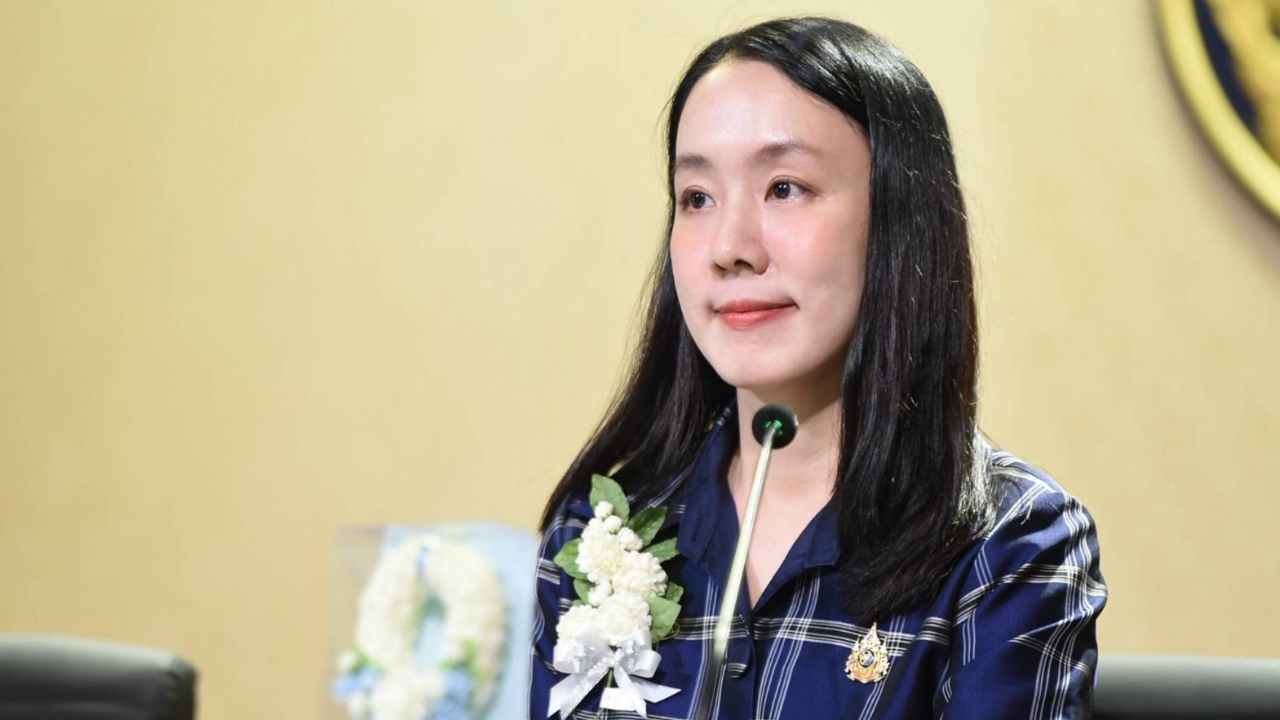
On 22 July 2026 GMT+7, Ms. Lalida Pertwiwatthana, Deputy Spokesperson of the Prime Minister's Office, revealed that the Cabinet acknowledged the progress of the “Thai Chuey Thai Plus” program. Operating under a budget exceeding 175 billion baht over four months, the initiative aims to alleviate living costs amid rising energy prices while stimulating the grassroots economy. The three sub-programs have collectively assisted over 39 million people and maintained continuous economic circulation.
The Deputy Spokesperson explained that Sub-programs 1 and 2 assist 13.18 million State Welfare Card holders by increasing welfare benefits by 700 baht, providing a total of 1,000 baht per person per month for four months. This covers essential expenses such as food and consumer goods, transportation, water, electricity, cooking gas, and additional disability allowances. From 1 to 30 June 2026 GMT+7, a total of 13.581 billion baht was allocated, with spending primarily through community “Thong Fah” shops, amounting to over 12.925 billion baht on consumer goods.
Regarding Sub-program 3, “Thai Chuey Thai Plus (60/40),” as of 19 July 2026 GMT+7 at 23:00, 26.04 million people have received benefits. This generated 78.142 billion baht circulating in the economy, with 33.176 billion baht (42%) contributed by the public and 44.966 billion baht (58%) by the government. Additionally, 1,092,158 stores have registered and are operational, with over 99% being small individual retailers. Restaurants, general stores, and “Thong Fah” shops are the most active participants.
Ms. Lalida stated that the funds from the program are distributed across all regions. Major cities in 22 provinces account for 63% of spending, led by Bangkok, Chonburi, Samut Prakan, Pathum Thani, and Nonthaburi. Secondary cities in 55 provinces represent 37%, led by Nakhon Si Thammarat, Ubon Ratchathani, Udon Thani, Ratchaburi, and Chiang Rai. This shows that the funds are not concentrated only in large cities but effectively stimulate local economies nationwide.
Regarding spending behavior, people used their benefits most during the first week of the month, with over 12 million users daily, totaling about 20 million transactions per day. Daily spending averaged between 2.2 and 2.8 billion baht before declining to about 0.5 to 2 billion baht after the first seven days. Spending was particularly high on Saturdays and Sundays. In the first month, 94% of users spent more than 800 baht of government co-payment, and 48% fully used the 1,000 baht benefit.
The Deputy Spokesperson added that the government promotes technology use to enhance small retailers’ capabilities through “Nok Kasip, the Retailer’s Companion,” an AI assistant in the "Tung Ngern" application. It summarizes and analyzes sales, identifies peak selling times, checks average raw material prices, and prepares sales reports to help retailers access formal financing in the future. As of 30 June 2026 GMT+7, over 640,000 stores have used the chatbot, and more than 440,000 have utilized the Sales Insight feature.
“The results of the ‘Thai Chuey Thai Plus’ program reflect that government measures have successfully eased citizens’ living costs while generating economic circulation for small retailers and the grassroots economy nationwide. Additionally, it promotes digital technology adoption among entrepreneurs to develop their businesses, enhancing competitiveness and strengthening Thailand’s economy in the long term. The government will continue to support the economy and improve citizens’ quality of life consistently.”