

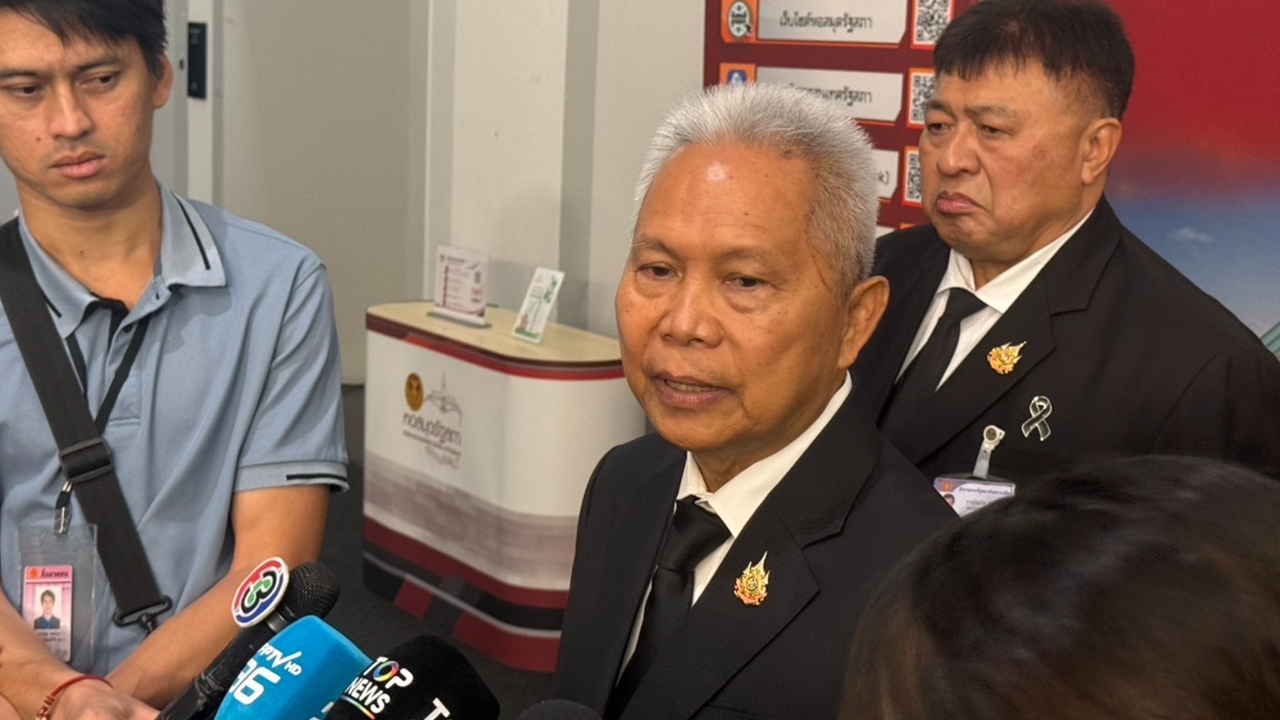
Sophon launched the Library Talk project aiming for the younger generation to apply moral principles, disregarding social pressure regarding the Sak Siam case, and reaffirmed adherence to the law.Tags: [Library Talk, Sophon Sarum, Sak Siam case, legal compliance, social pressure]
At 09:00 on 22 Jul 2026 GMT+7 at Parliament, Mr. Sophon Sarum, Speaker of the Parliament, presided over the opening of the Library Talk project titled “Su-Ji-Pu-Li: Four Keys to Learning and Self-Development in the Digital Era.” He delivered a keynote speech on “Su-Ji-Pu-Li as the Foundation of Reading, Learning, and Civic Development in the Digital Age” and presented online certificates to participants. Mr. Sophon explained that “Su,” or “Sutamayapanya,” in Buddhist terms means being a good listener, which leads to wisdom. “Ji” means thinking analytically and logically. With principles and reasons established, one moves to “Pu,” or questioning—being brave to think and express oneself—which leads to “Li,” or writing. These qualities are unique to Thai culture. During his schooling, he applied “Su-Ji-Pu-Li” to his studies. However, as times changed and people increasingly learned through new technologies, this principle was less used as an educational approach. Hence, the Library Talk project was created to respond to current needs and balance traditional learning with technology use.Tags: [Library Talk, Su-Ji-Pu-Li, digital learning, education, Thai culture]
Hope for Youth to Seek KnowledgeTags: [youth education, knowledge seeking, learning challenges]
The Speaker continued that the obstacle to “Su-Ji-Pu-Li” is technology, which makes finding knowledge easy but reduces diligence in research. Previously, people had to visit libraries to read, write, and record information, which fostered wisdom. Today’s event aims to clearly benefit student participants, enabling them to apply experiences in daily life. The “Su-Ji-Pu-Li” process is the heart of a scholar; those skilled in all four are complete scholars. Moreover, the Parliament’s library and museum are not just decorations but public places nurturing knowledge and skills. He hopes knowledgeable people will share suggestions and ideas to expand learning opportunities for students, including underprivileged and remote-area children.Tags: [education challenges, library, youth development, knowledge sharing, disadvantaged children]
After the keynote speech, Mr. Sophon organized activities for student participants, including a 15-line handwriting contest with a 2,000-baht prize, and an essay contest on “What I Gained from Participating Today,” with a first prize of 2,000 baht and two consolation prizes of 500 baht each.Tags: [student activities, handwriting contest, essay contest, educational prizes]

Unfazed by Social Pressure Over Sak Siam CaseTags: [Sak Siam case, social pressure, political controversy]
Mr. Sophon also commented on the opposition's collection of 50,000 signatures petitioning the Chief Justice to appoint an investigative panel on the National Anti-Corruption Commission’s (NACC) handling of the case involving Mr. Sak Siam Chidchob, former Minister of Transport, regarding nominee shareholding in Buri Charoen Construction Limited Partnership. He said such matters historically take more than a month or two. A panel of experts has been appointed, and once the order is finalized, the panel will review legal points from organizations like the Constitutional Court and NACC to form opinions for him to consider. He emphasized that the process is not delayed but follows committee procedures.Tags: [legal process, NACC, Sak Siam case, investigation, parliamentary statement]
Reaffirming Awareness of Roles and DutiesTags: [parliamentary duties, legal principles, role awareness]
When asked about social perceptions of possible conflicts of interest or political factors causing delays, Mr. Sophon said, “We should not base our lives on others’ words but on facts. Administration and legislation must be based on reason and law, not personal likes, dislikes, or emotional demands from any side. The Constitutional Court and NACC each have their own legal principles. I must decide how to proceed based on these principles. Everyone has tools; emotions should not guide decisions.” When pressed about social pressure, he said, “I have no worries or pressure because there is no conflict of interest. As Speaker, I follow legal principles. All Speakers come from political parties. Today, Bhumjaithai Party trusts me as Speaker. My role as a good party member is to be a good Speaker, unrelated to party bias. It depends on whether we can be good Speakers worthy of that trust, not serving any party. I must perform my duties to the best for Thailand as Speaker.”Tags: [parliamentary impartiality, conflict of interest, political neutrality, Speaker of Parliament, Bhumjaithai Party]