

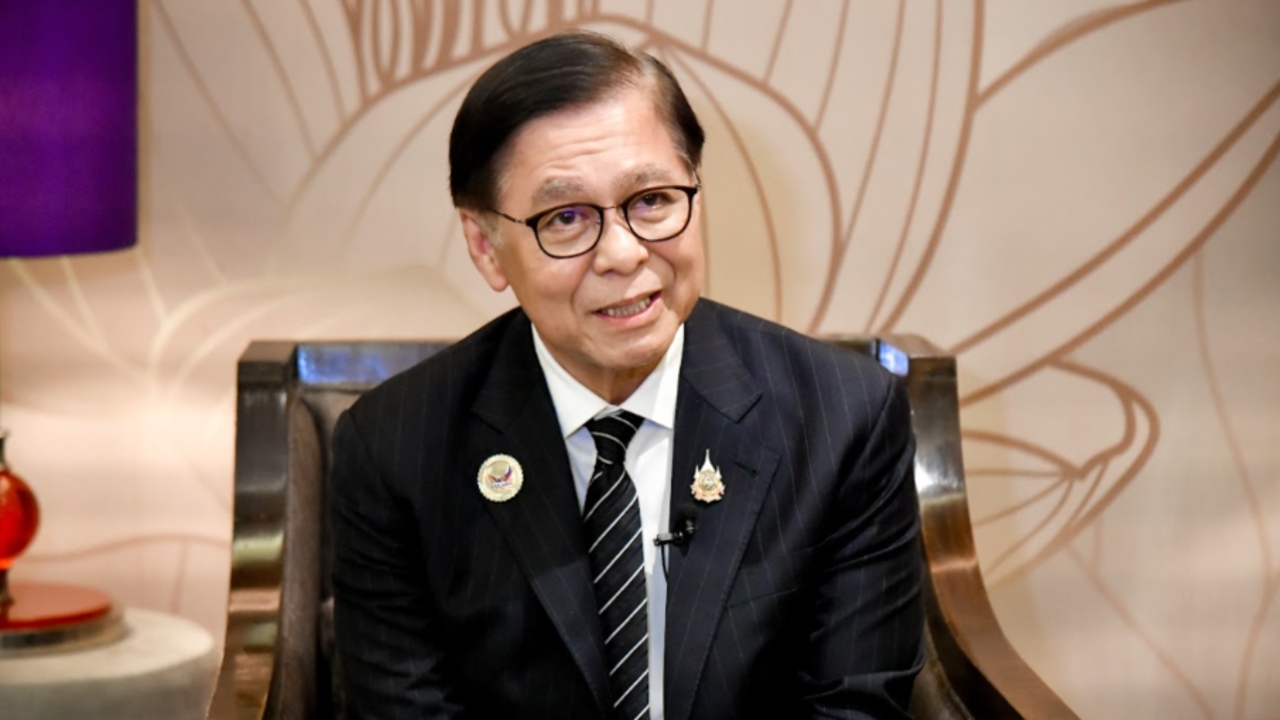
Sihasak pointed out that Cambodia has closed the door on negotiations after involving Thailand under UNCLOS, stressing that Thailand wants to proceed with bilateral talks on maritime and land borders. The formation of a new Joint Border Commission (JBC) is an internal matter and does not signal the opening of negotiation talks.
On 21 July 2026 at 21:30 local time in Manila, Philippines—one hour ahead of Thailand—Deputy Prime Minister and Foreign Minister Sihasak Puangketkaew spoke about attending the ASEAN Foreign Ministers’ Summit. The meeting reviewed the Thailand-Cambodia border situation and reaffirmed Thailand's commitment to the leaders’ discussions during the Cebu summit in the Philippines, where both countries agreed to conduct bilateral talks and build mutual trust before restoring relations. Thailand intends to return to maritime border discussions it previously proposed, suggesting both sides should talk before engaging other mechanisms. If maritime border talks begin, related land border topics might also be discussed at a technical level. However, Cambodia has closed the door to talks and moved to compulsory conciliation, which Thailand does not oppose but questions why Cambodia refuses prior bilateral discussions. Thailand insists it has not closed negotiation doors; rather, Cambodia has done so.
Regarding maritime borders, Thailand has consistently emphasized the desire for negotiations under the 2001 MOU, though progress has been lacking. Thailand’s intention is to hold talks under mutually respected rules, noting that when the 2001 MOU was signed, Cambodia was not yet a party to UNCLOS. Now that Cambodia is a party and both respect international law, Thailand questions why they cannot attempt negotiations.
If maritime border negotiations occur, land and border discussions might also happen to some extent. However, after Thailand’s proposals, Cambodia has not responded and instead seeks compulsory conciliation, despite voluntary conciliation still being an option. This decision by Cambodia effectively closes the door on land border negotiations.
When asked about the Cambodian Foreign Ministry's statement on 20 July affirming that both countries should negotiate land borders bilaterally and avoid involving the UNCLOS process, Sihasak responded as follows.
Sihasak said that the UNCLOS process still allows for dialogue before escalating to other mechanisms. Cambodia requested Thailand to allow meetings of the Thailand-Cambodia Joint Border Commission (JBC), but then refused talks under UNCLOS procedures, which he described as Cambodia's contradictory stance. He emphasized that Thailand wishes to hold bilateral talks on both land and maritime borders. Currently, the cabinet has approved the appointment of a new JBC chair and members, which is an internal technical matter for Thailand and does not mean starting negotiations with Cambodia. These are separate issues.
When asked about Cambodia’s call for land border talks amid ongoing border unrest causing Thai concerns, Sihasak said that JBC meetings address border demarcation, but current border situations involve more than demarcation; they include various incidents. Therefore, before demarcation meetings, measures must build Thai confidence and cooperation between both sides, such as joint mine clearance and tackling scammer networks, as outlined in the Thailand-Cambodia joint statement from Malaysia.
“JBC concerns technical border demarcation, but the situation we face is not technical; it is about border security. We must find ways to secure our borders and build mutual trust. If that trust exists, border demarcation efforts can progress. However, if problems like mines, scammer networks, and provocations remain unresolved and trust lacking, technical JBC negotiations will struggle to advance. JBC meetings do not resolve border security issues.”
Sihasak added that discussions also covered extra-regional situations and geopolitical competition, emphasizing ASEAN's commitment to regional rules. ASEAN’s existing framework is the Treaty of Amity and Cooperation in Southeast Asia, which includes ASEAN member states and dialogue partners outside the region. This framework is ASEAN's jointly upheld guideline to promote regional security and peace, including perspectives on the Indo-Pacific region, where ASEAN maintains an open and free approach.
He further noted that global turmoil requires ASEAN to look beyond its region. Although ASEAN is not a major player, it must express concern and encourage all parties toward negotiations. There is worry that despite ceasefire agreements, fighting might resume, affecting all countries. ASEAN cannot remain passive and must take a security stance that extends beyond its region, especially regarding the Middle East situation, which concerns all nations.