

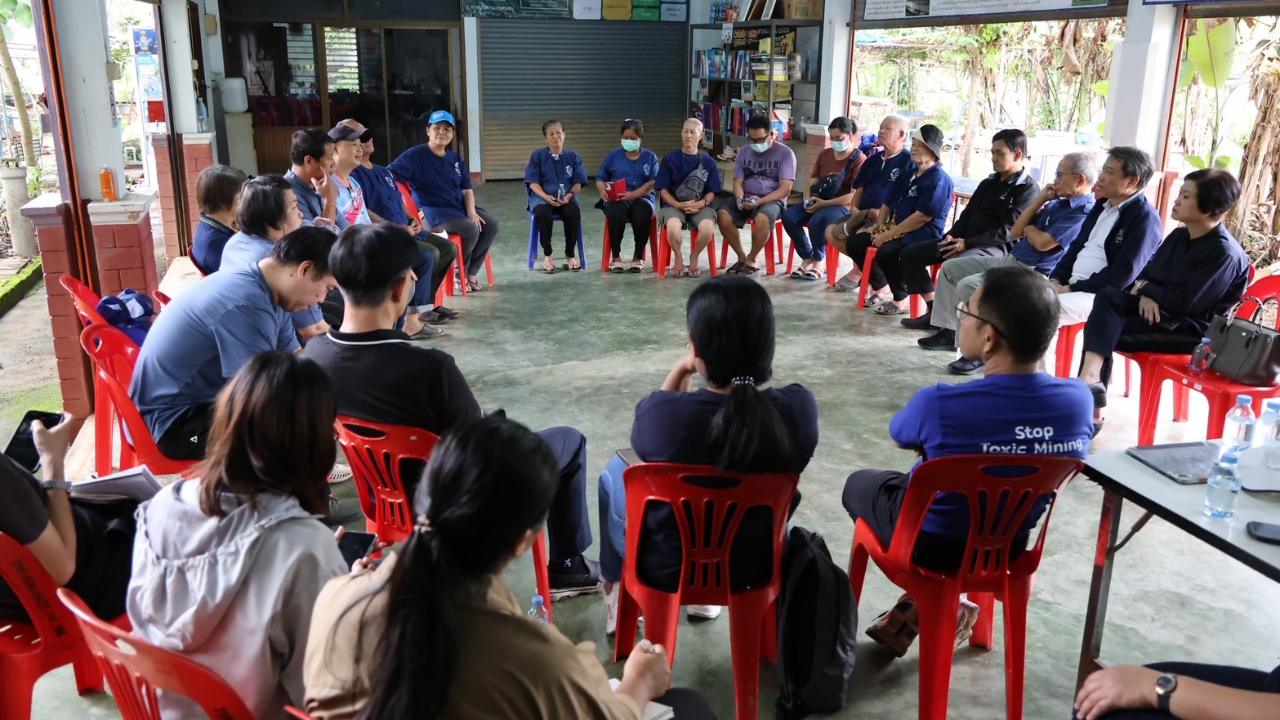
The National Health Security Office (NHS) led a team to Chiang Rai to hear the impacts of flooding and arsenic contamination in the Kok River, preparing to present proposals at the National Health Assembly.
On 22 July 2026 GMT+7, Dr. Suthep Phetmak, Secretary-General of the National Health Security Office, led a network team to Chiang Rai Beach, Ban Pang Ngiu, Rob Wiang Subdistrict, Mueang Chiang Rai District, Chiang Rai Province to monitor the ongoing impacts of the flood crisis and arsenic contamination in the Kok River, which have caused prolonged effects on local tourism operators and farmers.
During the visit to meet with Chiang Rai Beach business owners, Ms. Chaveewan Srichot, Chairwoman of the Chiang Rai Beach Vendors Club, revealed that from over 30 shops and river rafts previously, only 17 remain due to the compounded impact of the major flood and arsenic contamination crisis causing a sharp decline in tourists. She urged the government to urgently restore water quality and actively promote efforts to rebuild confidence.
Representatives from the Safe Food Agriculture Network and the Chiang Rai Beach Riverside Community (Hongli), along with Mr. Peerasak Somnat, village headman of Ban Pang Ngiu, stated this is a prolonged crisis leaving psychological scars on the community. Mr. Saksri Srirak, a member of the Rob Wiang Subdistrict Administrative Organization, added that the community agriculture center, developed over nearly 20 years, was completely destroyed by the major flood in September 2024. Although planting has restarted, produce cannot be sold due to consumers’ lack of trust in its safety.
Dr. Suthep Phetmak, Secretary-General of the NHS, said after hearing these issues that the NHS will bring all proposals to the 19th National Health Assembly in October to seek participatory solutions. The key is to move from abstract plans to concrete actions by rapidly gathering scattered data on soil, water, and agricultural products, integrating and publicly disclosing this information to the community to provide clarity. If safety standards can be certified and correct information communicated, it will reduce anxiety, restore consumer confidence, and help businesses and farmers revive the local economy.