

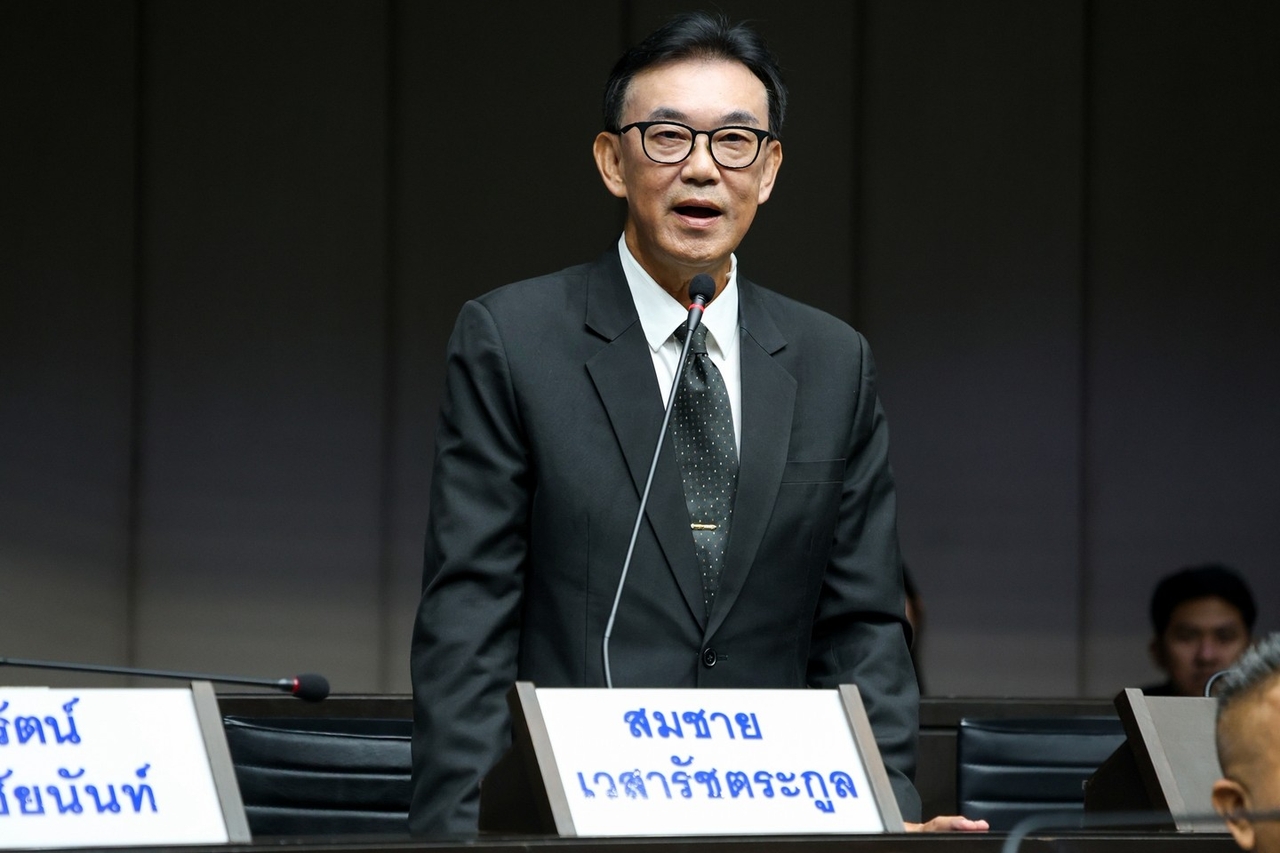
Councilor Somchai questions the Bangkok Metropolitan Administration (BMA) after being prohibited from photographing stray animal sterilization, exposing private firms that deceive by using pet cats and dogs as substitutes, raising concerns about TOR violations. Deputy Governor Tawida explains AI is used to scan for duplicate images and payments have been halted.
At 10:45 a.m. on 22 July 2026, at the Bangkok Metropolitan Council meeting room in the Irawat Pattana Building, Din Daeng, the BMA Council held its third ordinary session (first meeting). Ms. Phatraporn Kengrungrueangchai, Chairperson of the BMA Council, presided over the meeting, which included a live question from Councilor Somchai Vesaratchatrakul of Sai Mai District regarding plans and procedures for hiring private companies to sterilize and vaccinate stray dogs and cats against rabies.
Councilor Somchai stated that involving private companies to assist in sterilization and vaccination is beneficial due to the large number of stray dogs and cats in Bangkok. However, he believes councilors should be informed in advance to respond to public inquiries. He also noted that officials were unwelcoming and prohibited photography. Therefore, he asked whether the project regulations require notification of location, time, and follow-up within 10 days.
Governor Chadchart Sittipunt responded that stray dogs and cats pose a major problem in Bangkok. It is impossible to capture all strays and bring them to existing centers. Therefore, sterilization and vaccination must be done before returning them to their communities, gradually reducing their numbers. Many people mistakenly think animals are taken to centers, but that is not feasible.
Deputy Governor Associate Professor Tawida Kamolwet explained that this project is usually conducted through the Department of Health in collaboration with district offices and contractors. She apologized for the unwelcoming behavior of staff during Councilor Somchai's visit, promising to address it. She noted this issue has not occurred before and might relate to private contractors concerned about how images are shared publicly.
Associate Professor Tawida further explained that vaccination and sterilization separate pet animals from strays. The stray animal issue is more challenging, especially in inner Bangkok, because private contractors must keep the animals in the community longer due to the difficulty of capturing them and the need for overnight recovery to avoid harm. Thus, exact dates for sterilization and vaccination of strays are uncertain. For pets, operations occur daily, and the Department of Health provides monthly schedules to the BMA Secretariat at least two weeks in advance.
"We acknowledge the concerns raised by the councilor. Private contractors will notify us in advance about their weekly schedules and locations. We will strive to align these as closely as possible and inform the BMA Secretariat accordingly," Associate Professor Tawida stated. .
Councilor Somchai continued, emphasizing his focus on stray animals. As a cat owner, he understands they are hard to catch, but as a councilor, he was not allowed to take photos, despite regulations requiring notification within five days for stray animal operations.
"When I encountered private company officials, they were surprised to learn I am a councilor. The new staff didn’t recognize me. Of the 15 animals allocated, 14 were pet cats and one was caught on the spot. Locals argued about this. This does not comply with the TOR and is deceptive, concealing the Governor’s operation. Does the Governor still intend to pay this private company?" Councilor Somchai said. .
Associate Professor Tawida replied that before fieldwork, plans specify stray animal types. Veterinarians check for implanted microchips. Sometimes community leaders bring animals as part of a related project where familiar locals temporarily house animals before vaccination. Some animals are even kept at district offices. She promised to tighten Department of Health inspections accordingly.
She added that district offices must sign off on performance reports and verify that animal photos are not duplicates. She admitted duplicates occurred and payments have been suspended. Both human inspectors and AI perform two-stage duplicate photo checks. Photography is allowed after vaccination and sterilization but may be restricted during surgery at the veterinarian’s discretion.
Later, Councilor Somchai asked whether officials trust documents without verifying facts. He expressed frustration over repeated accusations of corruption against Bangkok. Residents argue over unequal animal quotas, and the public perceives the Governor as biased. He said he could not tolerate this because he supports Governor Chadchart and asked what the Governor intends to do.
Governor Chadchart said that allegations of corruption must be examined. He does not assume claims are always truthful but will investigate concerns raised by councilors, including whether animals were truly caught and if TOR was followed. Public disputes likely stem from misunderstandings about the project, given the large number of strays. Not all animals can be vaccinated and sterilized immediately. He promised to improve public communication accordingly.