

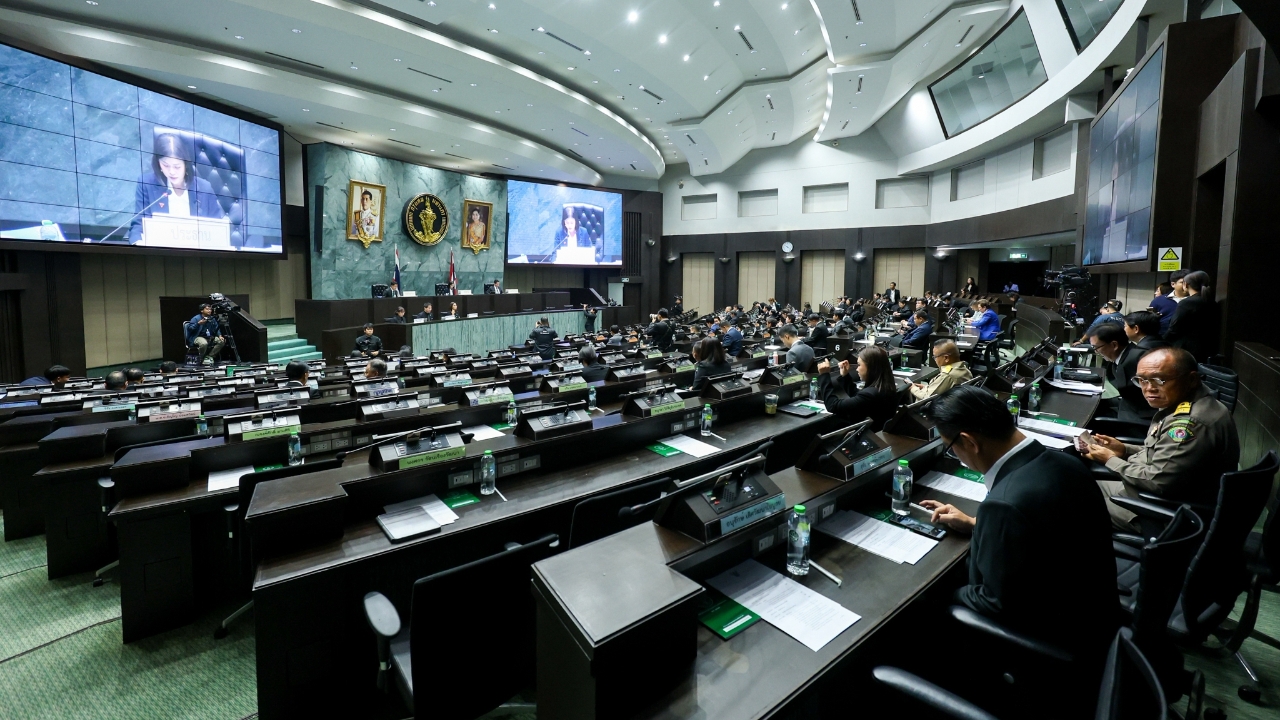
The Bangkok Metropolitan Council heatedly confronted the issue as Sai Mai councilor Somchai Wesaratchtrakul exposed private contractors substituting owned pets for stray animals during sterilization. Governor Chadchart is ready to verify the accuracy.
On 22 July 2026 at the Bangkok Metropolitan Council meeting room, Bangkok City Hall (Din Daeng), during the third ordinary session (first meeting), with Ms. Pataraporn Kengrungrueangchai presiding as council president, a live question was raised by Councilor Somchai Wesaratchtrakul of Sai Mai district regarding plans and procedures for hiring private companies to sterilize and vaccinate stray dogs and cats against rabies.
Mr. Somchai said that hiring private contractors to sterilize strays is positive due to the large number of stray animals, but they should inform councilors in advance to answer public questions. He noted that when he visited the sites, private contractors seemed unwelcoming and forbade photography. He asked about the protocols for notifying coordinates, locations, times, and follow-up within 10 days.
Governor Chadchart Sitthiphan explained that the issue of stray dogs and cats is significant; they cannot all be taken to shelters. Therefore, the approach is to sterilize and vaccinate them, then return them to their communities to manage population long-term.
Mr. Somchai reiterated at the council meeting, revealing facts from Sai Mai district: he found that from a quota of 15 animals, the private company sterilized 14 owned cats and only caught one stray on the spot, causing local disputes. This behavior does not align with the terms of reference, amounting to deception and concealment. He asked whether the BMA would still pay this company.
"I cannot tolerate this because I support Governor Chadchart and do not want the BMA blamed for corruption. Residents are fighting over unequal quotas, and feedback suggests the governor is biased. I want to ask how this will be handled," Mr. Somchai said.
Associate Professor Tawida Kamolwet, Deputy Governor of Bangkok, apologized for the inconvenience caused by staff, noting that private contractors might be concerned about photography. Regarding strays, catching them is difficult, so community leaders might bring animals for early recovery. She said she would instruct the Health Department to enforce stricter inspections. For payments, district offices must verify results before submission, including checking for duplicate photos.
"We admit duplicate photos were used, but the BMA has already suspended payments to that company. We employ both human and AI dual-layer photo scanning for verification. Regarding photography, the public and councilors may take photos after surgery or vaccination, but during surgery it is at the veterinarian's discretion," Associate Professor Tawida said.
Governor Chadchart concluded that the BMA government does not fully trust private documents. When council members raise complaints, they investigate both compliance with terms of reference and whether animals caught are truly strays. He also accepted the need to improve communication with the public to be more thorough and clear.