

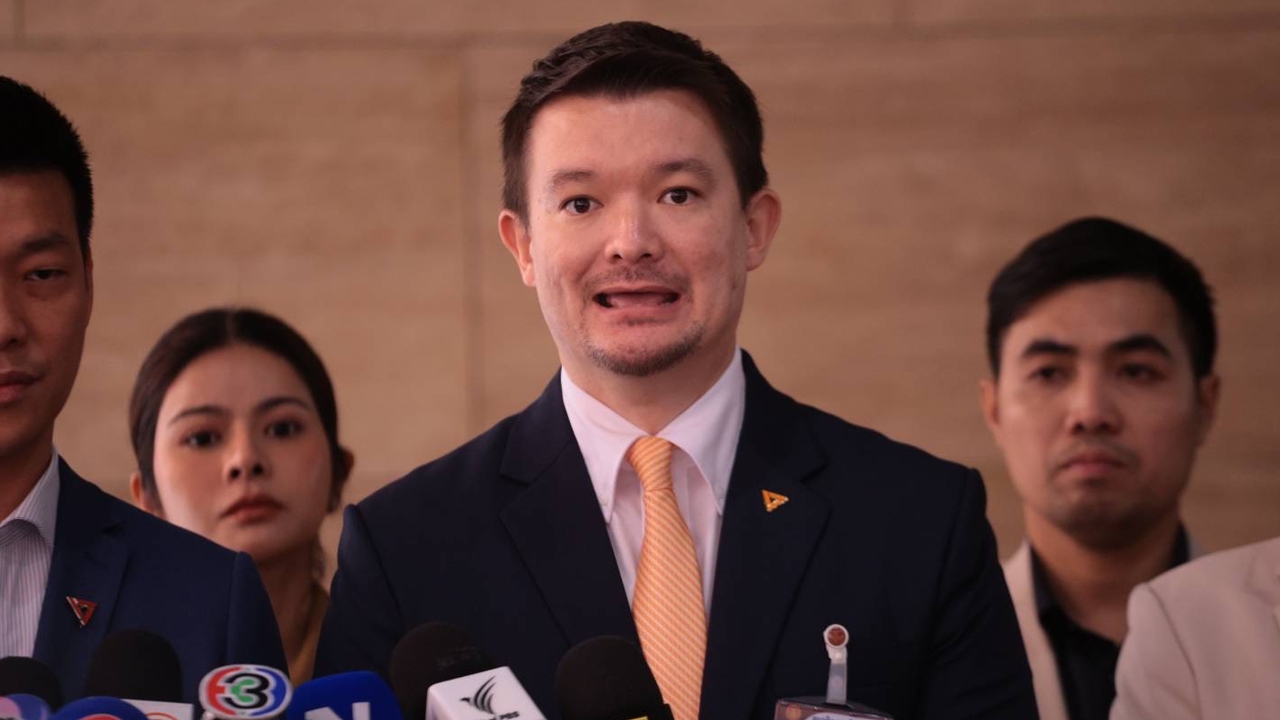
Phattharaphong criticized Prime Minister Anutin for letting the opportunity slip by and deliberately neglecting to discuss the issue of toxic rivers caused by mining with China, affirming that most of the mined minerals are destined for China instead of staying in the region.
On 22 July 2026, Phattharaphong Leelaphat, Chiang Mai MP from the People’s Party, spoke about Prime Minister Anutin Charnvirakul’s interview regarding cross-border water pollution during his visit to China from 16-20 July 2026. He said this was a missed opportunity by the Thai government because when asked by the media whether there had been discussions with China about toxins in the Kok River, the Prime Minister replied, “We did not talk with China because it is a problem between neighboring countries; we need to resolve it ourselves first.” As someone who has continuously monitored cross-border water pollution issues, Phattharaphong found Anutin’s answer superficial, since most of the minerals from these mines ultimately end up in China.
“As a member of parliament, I have debated in detail with data, including figures on mineral imports from Myanmar into Thailand before being exported to China, and statistics on China’s dominance in the rare earth mineral market through direct imports from Myanmar. Many of these mines are located upstream from Thailand. I have repeatedly raised these points in government debates and just last week submitted detailed information to the Chinese Ambassador to Thailand. The Chinese government already has this data, yet Mr. Anutin still treats the issue as a bilateral problem between two countries, missing the chance to engage China in jointly addressing it through the Lancang-Mekong cooperation forum,” Phattharaphong said.
He added that if the Prime Minister had done his homework, he would know this problem is not only bilateral between Thailand and Myanmar, but also that there has been no progress in managing it for a year. Even the terms of reference for the Thai-Myanmar joint working group remain unresolved. Thailand itself has not implemented any domestic measures and continues to allow the country to be a transit route for toxic minerals from Myanmar to third countries as before.
“It’s regrettable because if the government hadn’t done its own homework, it could have simply used the data the People’s Party has presented. But the government chose not to and remains indifferent to the impact on the people. If officials visited affected areas and listened to residents, they would understand this is not just an environmental problem but one that destroys livelihoods, health, and the way of life. The toxins from these mines accumulate in the bodies of Thai people, who gain nothing from these mining activities,” he said.
, “There is opportunity and power, but no action. The next question to ask is: what is the purpose of you being Prime Minister?”