

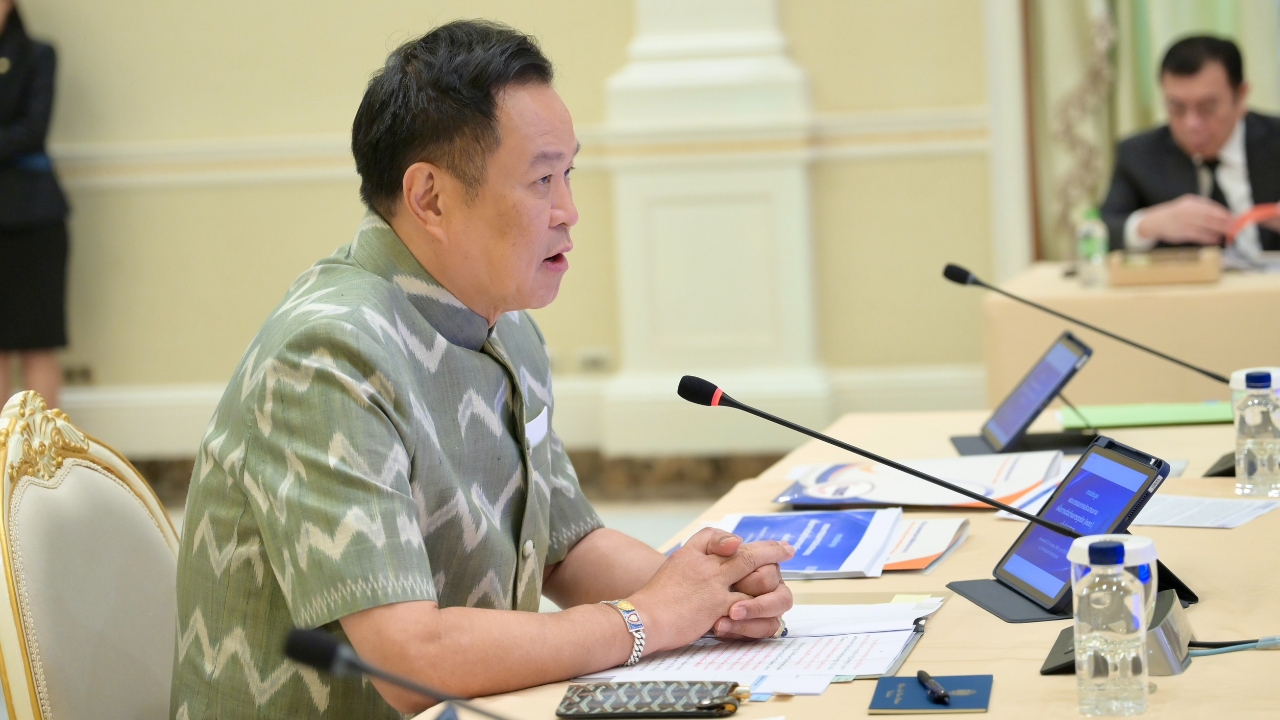
Anutin chairs the Coordination Committee for Anti-Corruption, advancing anti-corruption measures. He dismisses opinion polls measuring public sentiment, saying supporters claim no corruption while opponents accuse corruption. He insists on relying on credible evidence. Using exam fraud as an example, multiple investigation teams have been established, and he believes no one can influence these cases.
On 23 July 2026 at Phakdi Bodin Building, Government House, Prime Minister and Minister of Interior Anutin Charnvirakul chaired the first meeting of the Coordination Committee for Anti-Corruption (CCTC). He said that on the international stage, Thailand has gained trust and confidence. The core of reform is not just preventing corruption but upholding the rule of law, transparency, accountability, and verifiability of systems. While acknowledging system gaps, he views them as reform starting points, not failures. The government's goal is not to boost rankings based on public feelings, which are unreliable since supporters deny corruption and opponents claim it, lacking evidence. Instead, the focus is on verifiable references and evidence to ensure correct targets. Public sentiment polls about corruption, domestic or abroad, can harm the country's image if negative. Therefore, the emphasis is on strict prevention, prosecution, and enforcement, which the government has consistently pursued. It declared a stance against all forms of corruption, drug trafficking, scammer suppression, human trafficking, law violations, and money laundering. The Anti-Money Laundering Office reported asset seizures exceeding 40 billion baht since this government took office. Clear evidence exists, with agencies like the National Anti-Corruption Commission, the Office of the Auditor General, the Ombudsman, and the Office of Public Sector Anti-Corruption Commission conducting investigations, complaints, prosecutions, and punishments. Thailand has numerous responsible agencies in this field.


Anutin also cited local civil service exam fraud cases, noting some say the Department of Local Administration investigates itself, implying defendants investigate themselves, which is incorrect. There are agencies already involved, such as the National Anti-Corruption Commission, the Anti-Money Laundering Office, and the Office of Public Sector Anti-Corruption Commission. Currently, he appointed a committee chaired by Deputy Prime Minister Pakorn Nilprapunt to investigate, expand inquiries, and coordinate all units to maximize anti-corruption enforcement effectiveness. He believes no agency or individual can interfere in cases because parallel agencies work fully. This clearly demonstrates the government's intention to build systems, credibility, and comprehensive anti-corruption prevention and suppression. The Coordination Committee aims to be the main mechanism linking government, private sector, civil society, and academia, working on a shared data basis with aligned goals. It focuses on improving laws, regulations, processes, and technology use to reduce discretionary power, enhance transparency, and elevate anti-corruption from reactive fixes to sustainable systemic prevention.


The Prime Minister stated that this government fully supports the committee and urges all agencies to work with determination, courage to reform, and jointly establish new standards for the Thai public sector. The goal is for Thailand to have transparent governance and gain trust from citizens and international investors. He expressed his pleasure in collaborating with everyone in this anti-corruption effort and pledged full support to responsible agencies.
