

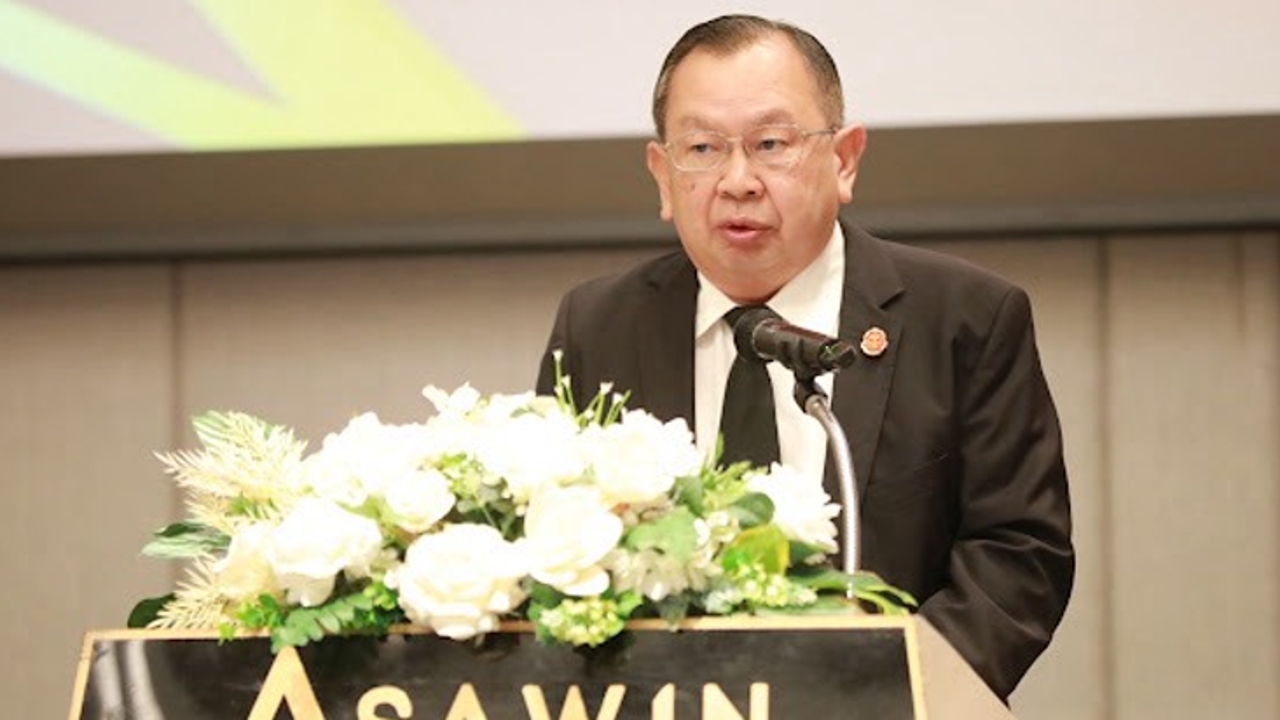
The Ombudsman hosted a seminar titled “Directions for Modern State Oversight,” emphasizing that recommendations must be practical and result in visible changes for the public. Pakorn revealed that the government is accelerating legal and bureaucratic reforms within four years to achieve these goals.
On 23 Jul 2026 at 09:00 at Asawin Grand Convention Hotel, the Ombudsman’s Office held its annual academic seminar under the theme “Mechanisms for Oversight of State Duties: The Key to Sustainable Good Governance.” The seminar was attended by executives, representatives from government agencies, independent organizations, partner agencies, and numerous academics who exchanged knowledge and experiences to elevate public service efficiency, enhance accessibility for citizens, resolve issues swiftly, and prevent recurring hardships.
Mr. Songsak Saichue, President of the Ombudsman, stated that the office has prioritized proactive work focused on preventing problems. Acting as a mediator between citizens and state agencies regarding legal authority, it systematically proposes solutions addressing root causes across all dimensions to improve state administration and sustainably benefit the public. The goal of oversight is not to find faults or criticize state agencies but to collectively improve administration and public services. Recommendations must be practical, reduce inequality, and produce changes that citizens can perceive in their own lives.
“The goal of oversight is not to find faults or criticize state agencies but to collectively improve administration and public services. Recommendations must be practical, reduce inequality, and produce changes that citizens can perceive in their own lives,” said Songsak. Mr. Songsak added.
Deputy Prime Minister Pakorn Nilprapunt discussed raising legal standards for sustainable transparency, stating that all sovereign power organizations, including independent bodies, share a single goal: oversight and checks and balances to maximize benefits for the public. Laws must be drafted with public consultation, serving as pre-legislative oversight rather than top-down decrees. After a law has been in effect for some time, its effectiveness must be evaluated to determine if objectives are met.
Pakorn further explained that while Thailand is advancing legal transparency, the critical challenge is not drafting laws but ensuring they change behavior and foster genuine respect for the law. This change must start within families and cultivate positive social attitudes, addressing root causes. Concurrently, legal and bureaucratic reforms involve leveraging technology as a data foundation and detecting wrongdoing through digital footprints. He emphasized reforming bureaucracy as essential for national progress—not only reducing expenditures but increasing transparency within the system. This must be achieved within the government's four-year term. He said, “I don’t know what will happen, but now that I am in a position to push this forward, I will do my best.”

Police General Sarayut Sanguanphokhai, Ombudsman, spoke on the “Effectiveness of Recommendations,” emphasizing that success must be measured by tangible changes experienced by citizens. In a keynote titled “Effectiveness of Ombudsman Recommendations for the Public’s Benefit,” he shared insights and experiences in protecting citizens’ rights and freedoms through fact-finding via field visits, gathering diverse opinions, and thoroughly verifying information. This process leads to analysis and recommendations based on law, academic principles, and facts, enabling state agencies to implement them concretely.
Sarayut added that the effectiveness of recommendations is not measured by the number of rulings or suggestions made but by their implementation, resulting in changes citizens can truly experience—improvements in problem-solving, enhanced quality of public services, transparent and efficient administration, and restored justice for the people.

He emphasized that creating effective recommendations is not solely the Ombudsman’s responsibility but requires cooperation from all ministries, bureaus, departments, state agencies, independent organizations, state enterprises, local governments, and all sectors to jointly drive recommendations into practice, elevating state administration and sustainably benefiting the public.
Sarayut concluded, “Recommendations are not the endpoint of our work but the beginning of change, which holds true value only when implemented so that citizens receive problem resolution and justice.”

Proposals to Elevate Work
Mr. Sujin Chaichumsak, Ombudsman, shared from his experience in administration and fieldwork that many injustices faced by citizens do not stem solely from officials’ conduct but also from legal and procedural limitations, government communication, and adherence to traditional practices over citizens’ hardships. This creates gaps that may undermine public trust and perceptions of fairness in bureaucracy. He proposed three ways to enhance work:
1. Utilize artificial intelligence (AI) and databases to analyze complaint trends and identify recurring problems across multiple areas. The Ombudsman can then prioritize these issues for systemic investigation.
2. Seek facts based on political science principles alongside legal science, considering both the law’s intent and citizens’ hardships, while promoting mediation as a crucial mechanism for delivering justice.
3. Build collaborative networks among agencies by linking the efforts of provincial governors, Damrongtham Centers, local administrative organizations, and relevant agencies to push the Ombudsman’s recommendations into concrete actions and resolve citizens’ problems effectively.
“Public fairness is not an abstract concept but means citizens receive dignified, equal, transparent treatment and assistance when interacting with government agencies. The Ombudsman must be an accessible central organization, a refuge for citizens denied justice, and a connector among all parties to efficiently resolve issues,” Sujin said. .
