

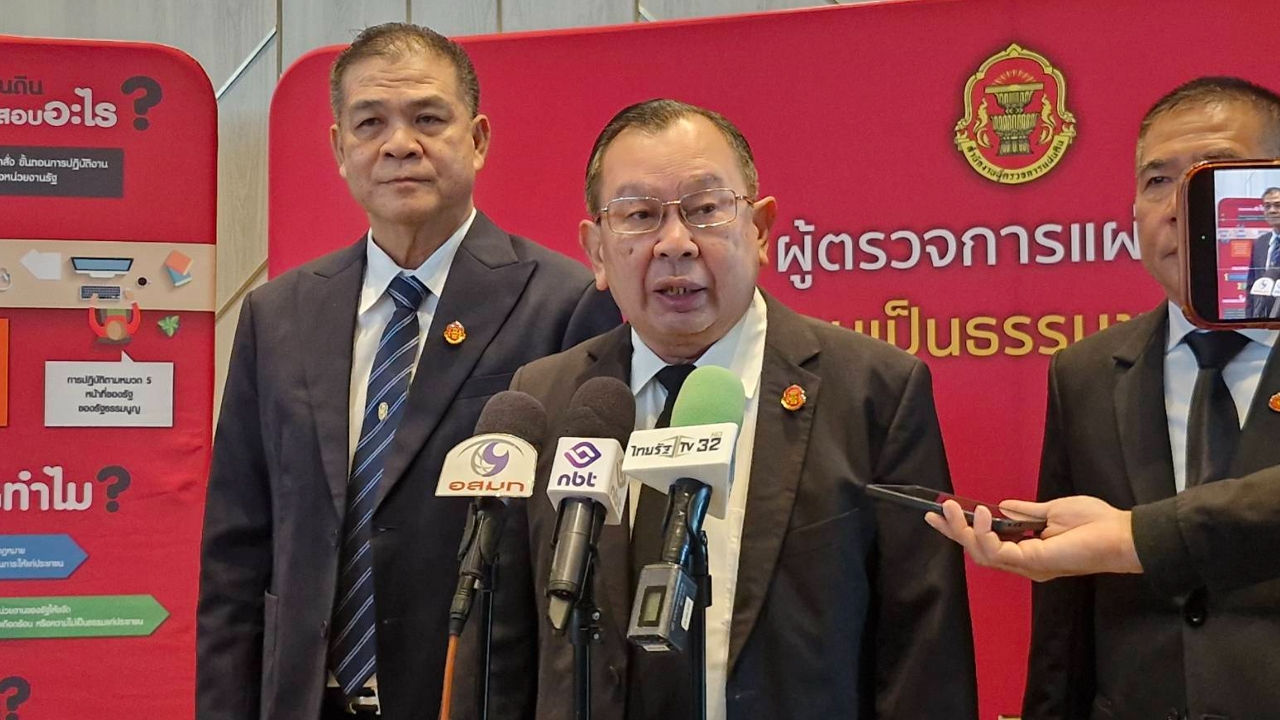
The Ombudsman is closely monitoring 10 provinces—tourist cities and agricultural 'red zone' areas—dominated by nominees, gray capital, and scammers. Huai Khwang district is identified as a central hub. Chairman Songsak is hastening coordination with government agencies to amend laws to impose harsher penalties.
On 23 Jul 2026 GMT+7 at the Asawin Grand Convention Hotel, Mr. Songsak Saichue, Chairman of the Ombudsman, spoke about progress in addressing scammers and nominee issues. Regarding scammers linked to neighboring and foreign countries, the Ombudsman has conducted site visits along border areas to recommend tightening cooperation with neighboring nations and relevant countries, expanding discussions from three countries—Thailand, China, Myanmar—to include Cambodia and Laos. Bilateral talks are also underway with countries where issues need addressing.
Regarding tracking nominee issues within Thailand, Mr. Songsak said that over the past year, following rulings, significant actions have been taken by the Ministry of Commerce, Ministry of Interior, and the Department of Lands, including legal amendments and announcements such as reviewing Thai shareholding proportions retroactively over three months. The Ombudsman is monitoring whether three months is too short and suggests extending this to 1-3 years. Meanwhile, the Anti-Money Laundering Office (AMLO) is revising laws per recommendations to include nominee offenses as money laundering crimes. The Department of Lands has proposed law amendments to the Cabinet to increase penalties; previously, nominees buying land faced fines of only tens of thousands of baht and land restitution. The new proposal includes land confiscation by the state, imprisonment up to 3 years, and fines up to approximately 3 million baht, applying to both Thai and foreign shareholders. This is currently being advanced. The Ministry of Commerce, together with police and related agencies, is scanning risk-prone areas nationwide for nominees and gray zones, such as Bangkok (Huai Khwang), Phang Nga, Surat Thani, and others.
The Ombudsman Chairman added that complaints continue to be received. Beyond following up on major proposals, complaints have come from tamarind farmers in Phetchabun about foreign capital involvement; issues with coconuts in Samut Songkhram, Samut Sakhon, Ratchaburi, and Phetchaburi; markets where foreigners are employees but have converted to true owners by using Thai nominees; and data from Phang Nga’s Khao Lak tourist area where many hotels are owned by foreigners. The Ombudsman has invited senior officials from various agencies to monitor, advise, and work together continuously.
10 Provinces Where Thai Nominee Networks Are Active
When asked about special watch areas classified as red zones, Mr. Songsak said that nominee and scammer issues along borders with heavy movement are significant, including networks using Thai nominees to bring Thais and foreigners to work abroad. Key agricultural areas include: Chanthaburi, Trat, Rayong, Chumphon, Samut Songkhram Samut Sakhon, Ratchaburi These areas are at risk of agricultural land falling into foreign hands, including: Phetchabun, Chiang Mai, Chiang Rai which have received complaints concerning longan cultivation. Additionally, many tourist sites, hotels, resorts, and residences are in nominee hands across various provinces. Huai Khwang district is viewed as a major command center for gray capital or nominees, and there will be joint monitoring with related agencies.
Asked whether these issues can be effectively addressed given recent adjustments and official involvement, Mr. Songsak said solving these problems is complex but the Ombudsman, as a constitutional body, is pushing for agencies to intensify efforts continuously for more concrete results. If corruption is involved, the National Anti-Corruption Commission (NACC) and related agencies will proceed. Preliminary data indicate involvement of both citizens and officials, which requires investigation. If confirmed, strict actions will be taken and cases referred to relevant authorities for corruption probes.