

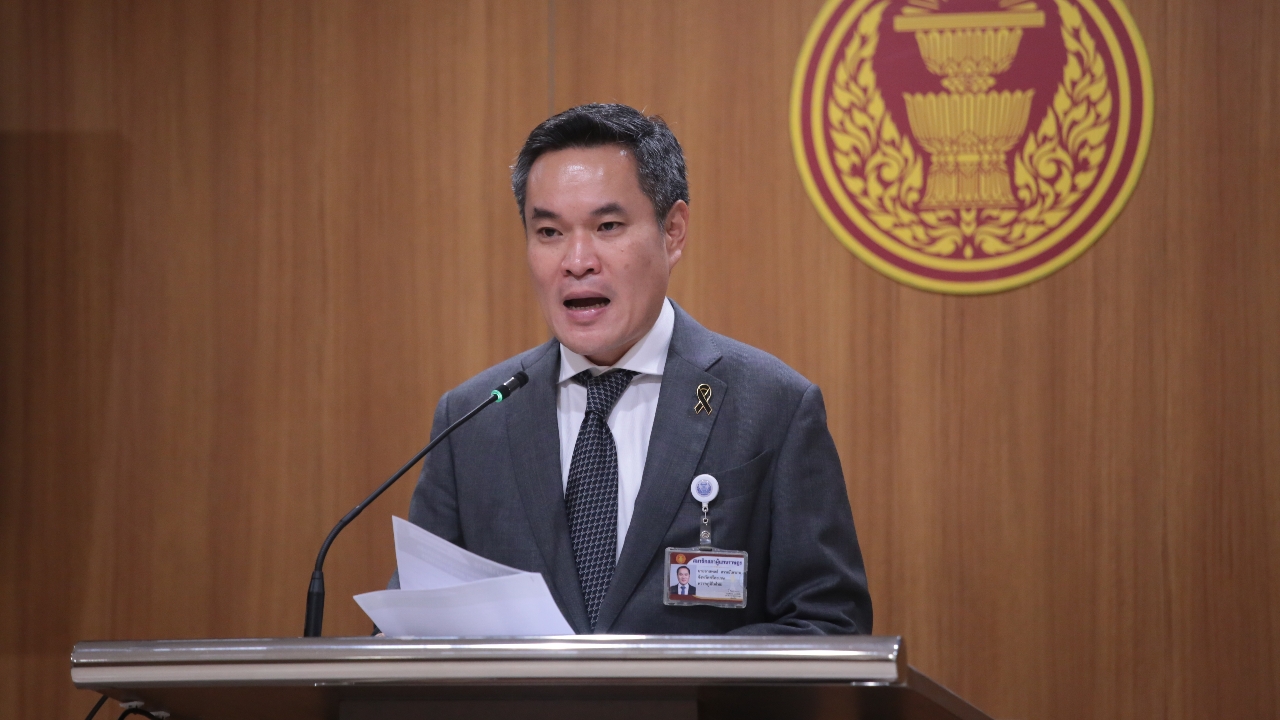
Asapol revealed that the National Anti-Corruption Commission (NACC) clarified the number of exam score changes involving 5,960 candidates does not align with data from the Central Committee on Local Government Employee Examinations (CCLGEE). They are preparing witnesses to exchange useful information and expressed concern that the NACC's 10-month investigation period into corruption is too lengthy, raising fears of evidence being tampered with.
At 10:15 a.m. on 23 Jul 2026 GMT+7, at the Parliament, the Anti-Corruption Commission Committee of the House of Representatives (ACC Committee) held a meeting chaired by Asapol Sonttraiphop, MP for Sisaket from the Bhumjaithai Party, in his capacity as committee chairman. The meeting reviewed the investigation into local government official exam corruption, inviting the Secretary-General of the NACC, representatives from the Anti-Money Laundering Office (AMLO), the Office of the Public Sector Anti-Corruption Commission (PACC), the Crime Suppression Division, the Anti-Corruption Division (ACD), and the Department of Special Investigation (DSI) to report progress on their respective investigations.
Later at 3:15 p.m., Asapol announced that the NACC Secretary-General's representatives reported progress on the corruption investigation regarding local government official exams. They identified 11 officials involved in the entire process, compared to the previous 10 suspects found in Bang Kruai District, Nonthaburi Province. They discovered that exam scores for 5,960 candidates were altered from failing to passing, a figure differing from the 5,924 candidates reported by the Central Committee on Local Government Employee Examinations (CCLGEE). It was found that the actions were organized as a network under the scope of work of Srinakharinwirot University (SWU), responsible for reviewing exam scores and submitting them to the CCLGEE for approval. Those 5,960 score alterations are considered violations. The NACC stated that any individuals who come forward with useful information during the investigation will be protected as witnesses. Private companies involved have also been questioned.
Asapol said the NACC revealed that during the inquiry, they found that senior executives at the local government organization (LGO) ordered one of the three suspects and Srinakharinwirot University to alter failing exam scores to passing. The ACC Committee urged the NACC to ensure the safety of suspects, fearing evidence may be tampered with. Meanwhile, the NACC has forwarded a list of over 200 suspects to the Anti-Money Laundering Office (AMLO) to investigate financial transactions. The NACC indicated the investigation process will take 10 months to identify the true offenders: three months to gather evidence, one month to analyze data, and six months for accused persons to respond. The committee felt this was too lengthy and suggested empowering the DSI or AMLO to expedite proceedings. However, NACC representatives said 10 months is the shortest possible timeframe. The NACC has invited other agencies to join the inquiry committee, considering this a high-profile case attracting public attention. The NACC will investigate criminal, disciplinary, and ethical violations.
When asked how high up the main perpetrators might be, Asapol responded that the NACC indicated involvement of department executives directing the university president and suspects via Line app. Regarding the Permanent Secretary of the Ministry of Interior and politicians, the NACC is currently investigating their possible involvement.