

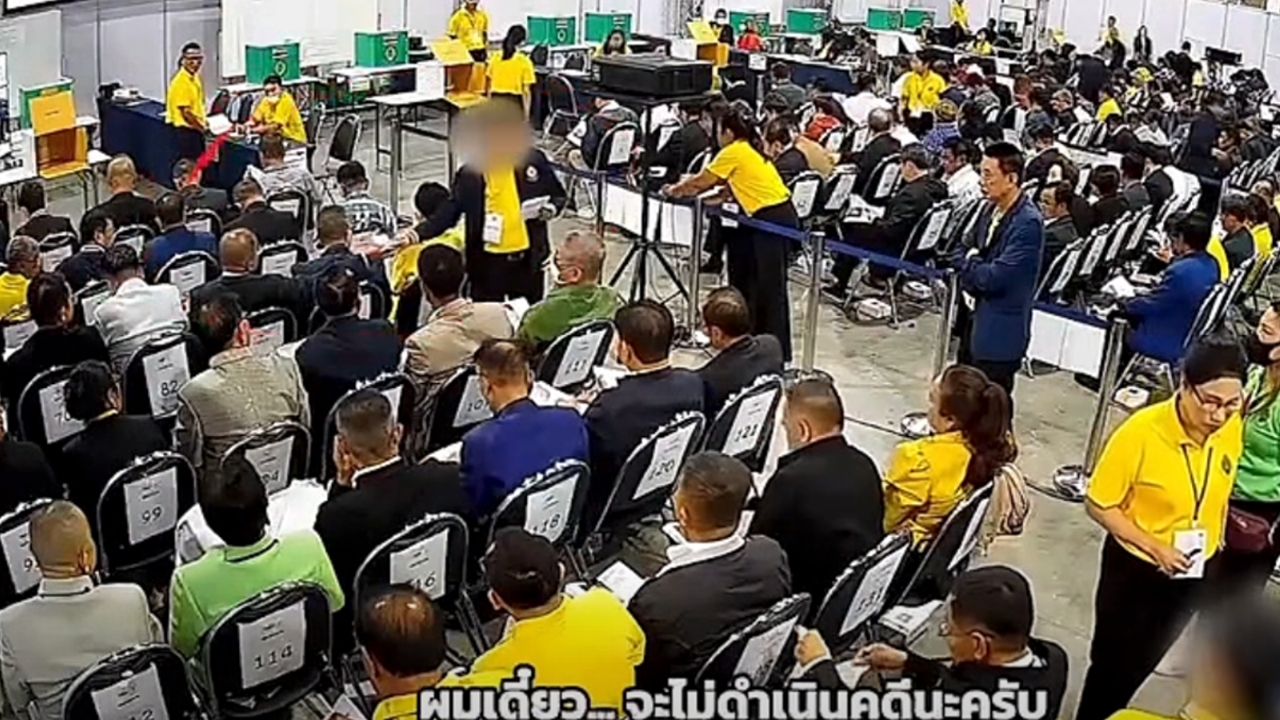
"Itim" posted a video claiming new evidence that Mongkol submitted a ballot to the Election Commission. He pointed out that not answering questions is itself an answer and stressed that public figures should clarify to society rather than evade or file lawsuits to silence critics.,
At 16:14 on 24 Jul 2026 GMT+7, Porit Watcharasindhu, a party-list MP from the Pachon Party, posted a video and message on Facebook saying: "New clip, 100% confirmation: One of the Senate candidates who submitted a ballot to the Election Commission is the Senate President, Mongkol Surasajja. One part states: Last month (15 Jun), I raised suspicion based on the candidate number and physique in the national Senate election video that one candidate submitting a ballot to the Election Commission while they were collecting ballots and warning candidates about potentially dishonest behavior was likely Mongkol Surasajja, now the Senate President. Afterwards, President Mongkol refused to answer media questions twice (17 Jun / 7 Jul) about whether he was the person in the clip, telling reporters to ask me instead. Actually, I believe that his refusal to answer directly was itself a confirmation. But today, I have received new footage showing Mongkol's face clearly, confirming 100% that the person in the clip is Mongkol Surasajja beyond doubt."
Avoiding an answer is another form of answer.
Porit posted that unanswered questions are a kind of answer. In investigating the Senate election fraud case over the past 1-2 months, we have seen information released from various sources such as videos of the Election Commission collecting ballots from Senate candidates, details about the fraud operation by province, witness testimony from four people at the opposition party's stage two weeks ago, and data compiled by iLaw earlier this week. These include several specific allegations directly naming senators, politicians, or Election Commission officials. But instead of publicly addressing or clarifying these accusations, many public figures choose to evade questions, deflect, sue the questioners, or spread unofficial news to intimidate investigators. The example of President Mongkol clearly shows that when a questioned person chooses to not answer questions, that is itself a form of answer. And if one day the evidence becomes publicly apparent without needing a response from you, it will certainly become much harder for you to answer then.
Additionally, Porit included a link inviting people to register to attend the opposition party's event for an in-depth briefing on further evidence in the Senate election fraud case (Part 2) this Sunday.