

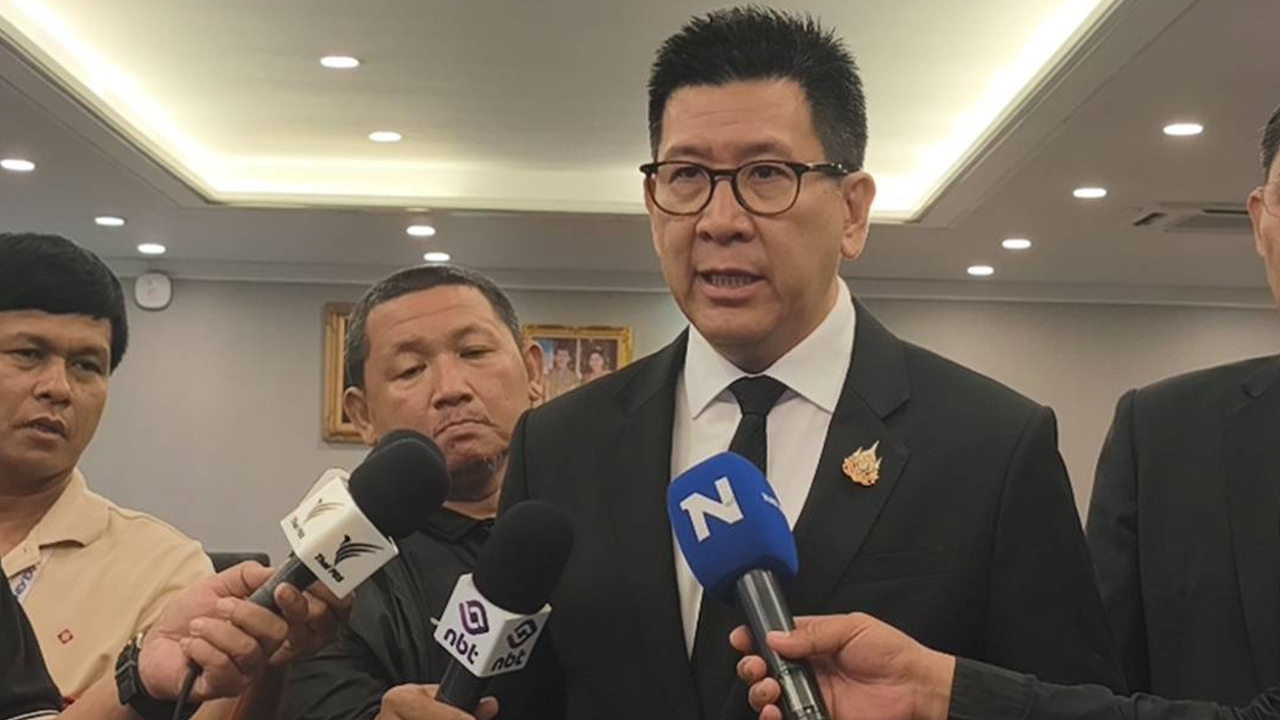
Deputy Prime Minister Akiniti Nitithanprapas noted that the U.S. tariffs have limited impact on Thailand because many product groups are exempted. He urged accelerated negotiations on the Indo-Pacific Economic Framework (IPEF) to reduce the tariff disadvantage against competitors, highlighting the forced labor issue as a challenge to elevate the country's standards.
On 24 Jul 2026 GMT+7 at Government House, Deputy Prime Minister and Finance Minister Akiniti Nitithanprapas spoke about the U.S. announcement of 12.5% import tariffs under Section 301 on more than 37 trading partners, including Thailand. He affirmed that the government is urgently assessing the impacts and is closely negotiating with the U.S.
Akiniti said he has coordinated with Deputy Prime Minister and Commerce Minister Supachai Sutthampan, who is directly overseeing the matter. Initially, he explained that many Thai private sector products are already exempt from tariffs, so the overall impact on Thailand is expected to be limited.
However, some products remain non-exempt, which the government must discuss thoroughly with the private sector to identify which industries are most affected and determine what measures are needed to support or enhance competitiveness.
Akiniti emphasized that the most crucial issue now is for Thailand to expedite negotiations with the U.S., as some cooperation frameworks remain unfinished, especially the Indo-Pacific Economic Framework (IPEF). Some countries have completed talks and secured a 10% tariff rate, while Thailand is still pushing for a conclusion.
"The important thing is that we must quickly negotiate with the U.S. because other countries that have finished negotiations received a 10% tariff rate, but Thailand has not yet. Minister Supachai is actively working on this," Akiniti said. ,
The Deputy Prime Minister and Finance Minister said that if Thailand can negotiate swiftly, the tariff impact will decrease. At the same time, the government should use the U.S. focus on forced labor as an opportunity to reform and raise the country’s standards to align with international norms.
Akiniti explained that improving labor standards and production processes should not be seen merely as foreign conditions but as a vital opportunity to enhance Thailand’s long-term competitiveness. When Thai standards match those of competitors, trade costs from protectionist measures will decline, allowing Thai businesses more room to compete.
Regarding the broader impact, Akiniti estimated it would affect only certain sectors still lacking tariff exemptions but could not yet specify all affected product groups. Particularly, food and other industries require clearer data before conclusions.
Akiniti said that moving forward, there will be joint meetings with secretarial teams and relevant agencies to definitively assess the overall economic impacts on Thai exports, industry sectors, and business competitiveness, before outlining negotiation approaches and additional support measures.
"We need to fully review which product groups are truly affected. But overall, I think the impact will be limited since many items are already exempt. For the rest, we must urgently continue negotiations," Akiniti said. ,