

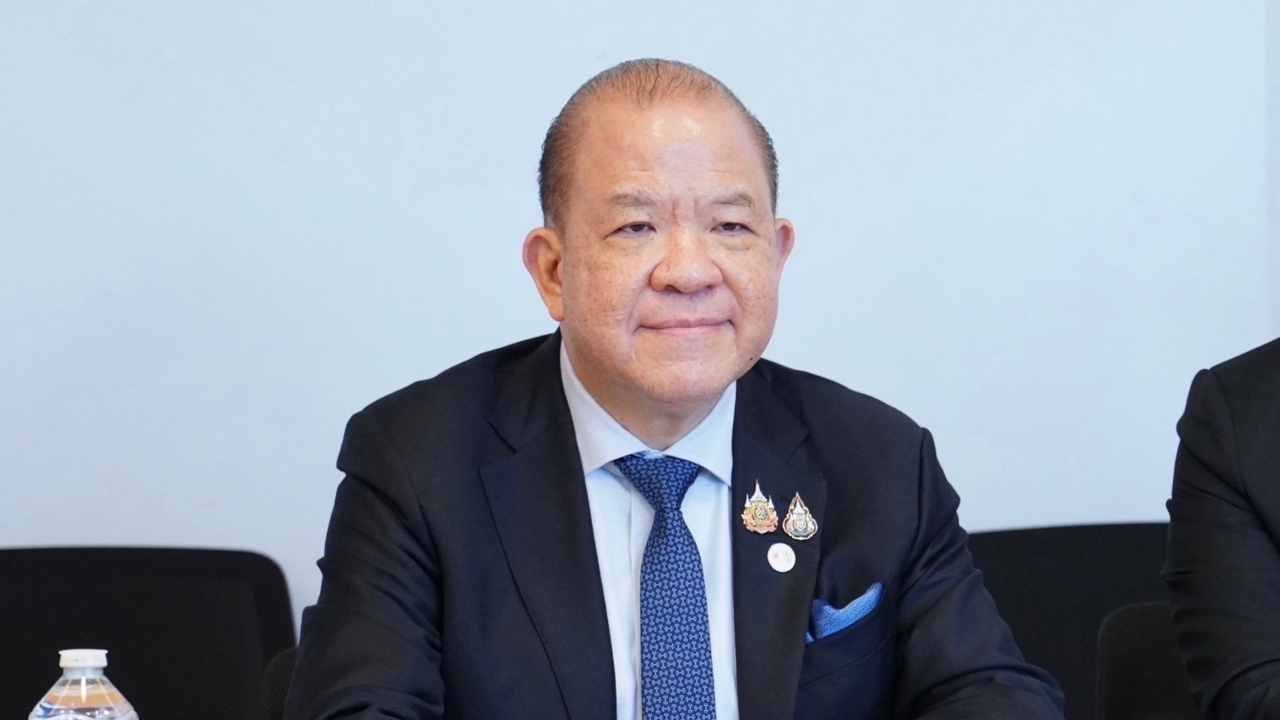
“Pichai” criticized that Thailand is being charged the highest 12.5% tariff by the U.S. due to delayed negotiations, urging urgent correction. He warned this could worsen the first-half trade deficit exceeding 1.1 trillion baht and suggested Supachai involve the permanent secretary of commerce to aid negotiations.
25 Jul 2026 GMT+7 Mr. Pichai Naripthaphan, former Minister of Commerce, said the United States announced a 12.5% tariff on Thailand, the highest rate, citing allegations of forced labor. Thailand faces a 12.5% tariff, equal to China and Vietnam, while Malaysia, Indonesia, and the Philippines are charged 10%. This will reduce Thailand’s competitiveness, impact exports, and also affect investment decisions due to tariff rate differences influencing where to invest.
Pichai further revealed that although exports in June grew by 20.74%, Thailand’s imports expanded even more, by 50.28%, resulting in a very large trade deficit of 1.1 trillion baht in the first half. By the end of 2026, the trade deficit could increase further, potentially becoming the highest ever in history, significantly impacting GDP. Thailand also faces twin deficits—both budget and trade deficits—which signal deteriorating economic conditions.
In the first six months of 2026, Thailand had a trade surplus with the U.S. of 33.04 billion USD but a trade deficit with China of 46.22 billion USD. This is likely a factor in the U.S. imposing the high tariff rate on Thailand and could lead to further tariff increases if the U.S. suspects Thailand of transshipment or circumvention—i.e., rerouting Chinese goods to avoid U.S. tariffs. Given these figures, Thailand would find it difficult to deny such claims. When he was minister, Pichai strictly addressed these issues and stressed urgent correction; otherwise, Thailand could face additional tariff increases from the U.S.
He emphasized that Thailand must urgently negotiate to resolve problems with the U.S. He recalled having repeatedly warned the government to accelerate negotiations under Section 301, but only recently saw Deputy Prime Minister and Minister of Commerce Supachai Sudthapan meet briefly with USTR Jamieson Greer in May and start negotiations in June with Deputy USTR Rick Switzer—a concerning and unusual signal from the start. Ultimately, the outcome confirmed his earlier concerns.
Drawing on his experience negotiating trade with foreign countries and being the first to contact USTR Jamieson Greer directly before Greer assumed the role, he noticed irregularities in the negotiations from the outset. Thailand must find urgent solutions. He also warned Supachai against the misconception that the U.S. can be compelled, noting that even President Donald Trump had to show respect, which is untrue. The U.S. had previously expressed dissatisfaction to him on this matter.
. (No additional text in this part) He expressed confidence that Mr. Wutthikrai Leewiraphan, the permanent secretary of commerce, can provide significant assistance. The government should heavily rely on Wutthikrai, as they previously negotiated with Katherine Tai, former USTR under President Joe Biden, to remove Thailand from Section 301. Wutthikrai was also instrumental in the last tariff negotiation with USTR, where Thailand secured a 19% rate, equal to other countries. Therefore, Wutthikrai will be key in resolving this issue due to his extensive experience, along with Ms. Chotima Iamsawatthikul, Director-General of the Department of International Trade Negotiations.
Additionally, Thailand must expedite free trade agreement (FTA) negotiations with multiple countries simultaneously, especially the Thailand-EU FTA. Prime Minister and Minister of Interior Anutin Charnvirakul recently met EU business groups seeking to accelerate completion, which should have concluded by late 2025 as agreed. However, Deputy Prime Minister and Minister of Commerce Supachai only met Maros Sefcovic, EU Commissioner for Trade and Economic Security, in June, much later than expected. The 10th negotiation round is scheduled for late September.
He warned from experience with the Thailand-EFTA (Switzerland, Norway, Iceland, Liechtenstein) FTA that closing deals is very difficult because tough issues are reserved for late-stage negotiations. Therefore, the Deputy Prime Minister and Minister of Commerce must personally engage if they want success, hoping to conclude the deal by the end of 2026.
There are also FTAs with South Korea, UAE, UK, and ASEAN-Canada, among others, that should be completed this year to help Thailand catch up with Vietnam, which has FTAs with over 60 countries. This is a key reason why Vietnam’s exports and investment have surpassed Thailand’s by a wide margin.
However, as previously warned, managing the Ministry of Commerce is not easy and has become very difficult. Relying solely on promotion and content creation is insufficient. Besides addressing severe problems in agricultural products like coconut, mango, longan, durian, mangosteen, and rice, and dealing with rising living costs beyond the issue of 40-baht meals and mobile vendors, another critical matter is international trade negotiations. These are crucial for Thailand’s broader economic picture, as the country heavily depends on foreign trade, exports, investment, and tourism.
He reiterated previous warnings and recommendations by setting four key performance indicators (KPIs), all of which remain problematic:
1. Agricultural product prices, which have fallen sharply for many types, leading many farmers to seek assistance.
2. Trade negotiations, including the Thailand-EU FTA that should have been completed, and the heavy tariff issues with the U.S. that require urgent resolution.
3. The influx of low-quality goods into Thailand and the growing problem of nominees, which have increased recently.
4. Maintaining export growth levels: in 2025, exports grew by 12.9% with almost no trade deficit. Although export growth is maintained this year (despite the Commerce Minister’s own criticism of Thailand’s export structure), the trade deficit has worsened sharply due to soaring imports. Thailand’s trade deficit has already exceeded 1.1 trillion baht in just six months, requiring urgent negotiations to reduce the gap with China.
In closing, Pichai offered encouragement to the Deputy Prime Minister and Minister of Commerce to expedite problem-solving and succeed, as the livelihoods and quality of life of the people, along with the country’s competitiveness, depend significantly on the successful management of trade and economic affairs by the Ministry of Commerce.