

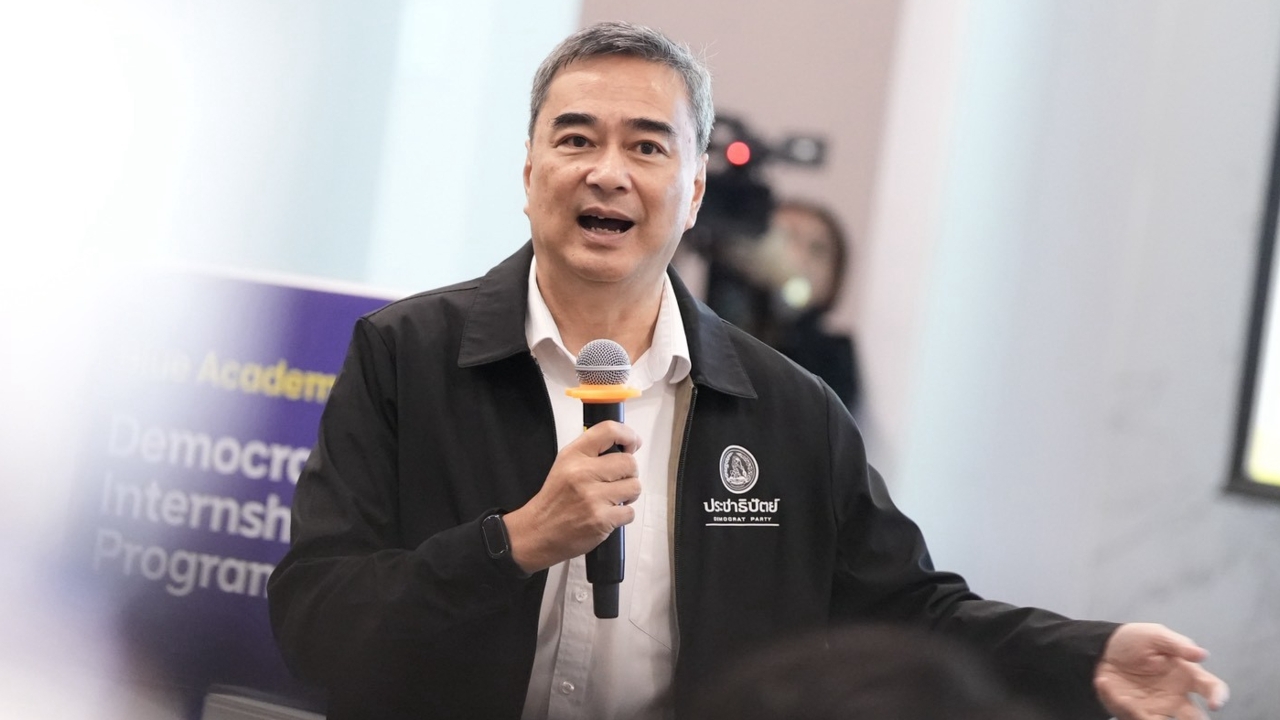
“Mark” criticizes politicians for suing to silence “Yingchip” of iLaw as improper, stressing that public figures must be open to scrutiny. He advises the government to address the southern conflict through a two-pronged approach: negotiations alongside strict law enforcement.
25 Jul 2026 GMT+7 Mr. Abhisit Vejjajiva, Member of Parliament via party-list and leader of the Democrat Party, gave an interview at the parliament regarding the case of the Bhumjaithai Party leaders suing Mr. Yingchip Achjananont, project manager of Internet Law for People's Rights, or iLaw, after iLaw revealed the names of nine individuals involved in the Senate vote-rigging case. He said no one wants to be sued, and the disclosures can be seen in the Election Commission's (EC) charges. He noted he had previously debated that the EC had filed charges against the named individuals, and everyone is aware of the EC and Department of Special Investigation (DSI) inquiries implicating certain persons.
Therefore, public figures should come forward to clarify rather than hasten legal proceedings. Society is currently concerned about the EC's investigation process, including the special subcommittee formed, amid reports that no one was found guilty—contradicting public knowledge because evidence such as financial trails, hotel stays, and images of ballot use on Senate election day has been presented.
Mr. Abhisit continued that if defamation is proven, rights can still be exercised. However, he believes those who disclosed the information did not do so for amusement but based on data from relevant agencies. The accused must explain that they were not at the alleged locations on the specified days. The released information is already somewhat known, especially at the prosecutor's level, which sent the case back to the DSI, identifying seven involved groups including politicians and political parties interfering in the matter.
When asked whether political party leaders filing lawsuits constitutes harassment or a gagging tactic, Mr. Abhisit said it is their right but emphasized that public figures should be accountable. Using lawsuits to intimidate or cause fear in oversight is improper.

Additionally, Mr. Abhisit commented on resolving the unrest in the southern border provinces, saying the incidents have caused losses among officials. He noted warnings since the shooting of an MP about attempts to normalize violence again. Although the government has set up a new peace talk committee, talks must not imply acceptance or tolerance of violence against officials or such behavior. Legal measures must be enforced decisively.
He urged the government not to rely solely on force in response to violence, nor to neglect dialogue. If talks occur, it should not mean overlooking security measures. Protection and safety for officials must go hand in hand with finding a balanced solution.
Regarding whether the government’s appointment of a peace talk committee shifts the burden solely onto them, the Democrat Party leader said he understands the committee is trying to work, but the opposing side sends signals or other actions that should not happen. Therefore, clarity is needed, and both dialogue and strict legal measures must be enforced.