

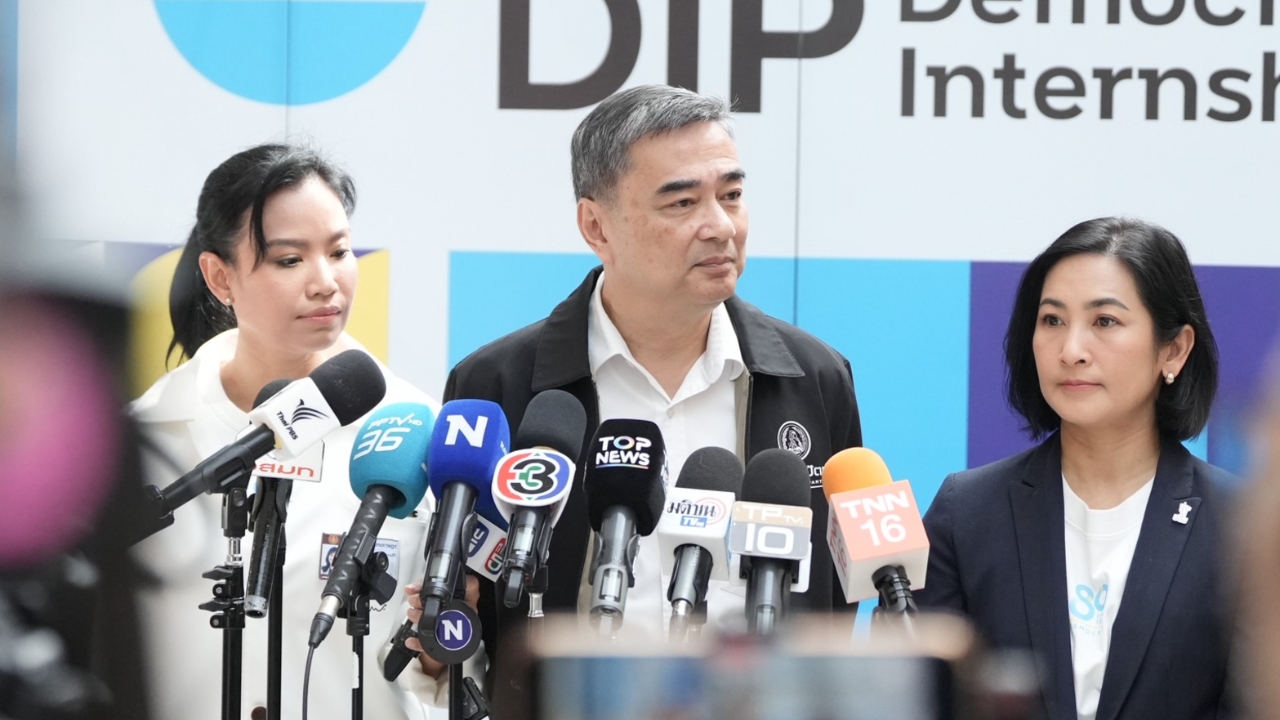
Abhisit points out that the government’s oil price reductions are insufficient, effectively shifting the financial burden onto the public through the oil fund. He criticizes the Energy Minister for thinking only about short-term gains before proceeding with energy restructuring.
On 25 July 2026 at the parliament, Mr. Abhisit Vejjajiva, leader of the Democrat Party, addressed energy price issues, expressing expectations from the Energy Ministry's statement to tackle structural problems. However, he noted concern that after several months, oil issues have drifted away from structural solutions. Instead, the minister negotiated with refineries to reduce refining fees to 2.40 baht per liter, which is very low given that refining fees are normally much higher. Previous discussions about fixed formulas or future windfall taxes have vanished, replaced by opaque negotiations with unknown calculation bases. The Democrat Party insists that reducing refining fees to 2.40 baht per liter is too low and can be further reduced if the government is serious, combined with excise tax adjustments. This would reduce the need for large financial interventions, as currently the oil fund bears the burden. Comparing the refining fee reduction to 2.40 baht with the fund's compensation of 7-8 baht per liter shows that the public is effectively bearing the cost.
Mr. Abhisit added that the electricity situation is similar. The Democrat Party has debated adjusting electricity tariff formulas during periods of high natural gas prices, but no action has been taken. While the government is obligated to assist low electricity users, which the party supports, the funding source has not been officially announced. Initially, it seems the government is seeking funds from the electricity authority, which does not address excessive benefits to certain consumers amid volatile energy prices. This contrasts with the minister’s statement in parliament that future policies will move beyond short-term perspectives to structural reforms. Mr. Abhisit urged transparency regarding progress on these issues, noting concerns from the oil and electricity cases where initial attempts targeted heavy users, reflecting a focus on short-term gains rather than true structural reform to ensure fairness.
When asked if the Energy Minister, formerly of the Democrat Party, has been consulted or advised, Mr. Abhisit jokingly said, "Many have been part of the Democrat Party." He continued that while they do meet and discuss, the party wants systematic approaches because their proposals are clear, especially amid volatile energy prices like natural gas and crude oil. Their structure favors those in the middle who gain unusually high returns. Internationally, such situations lead to systematic levies to support the public. Although the government itself has acknowledged problems with large capital interests, a structural issue, it remains unclear whether any significant changes will occur.