

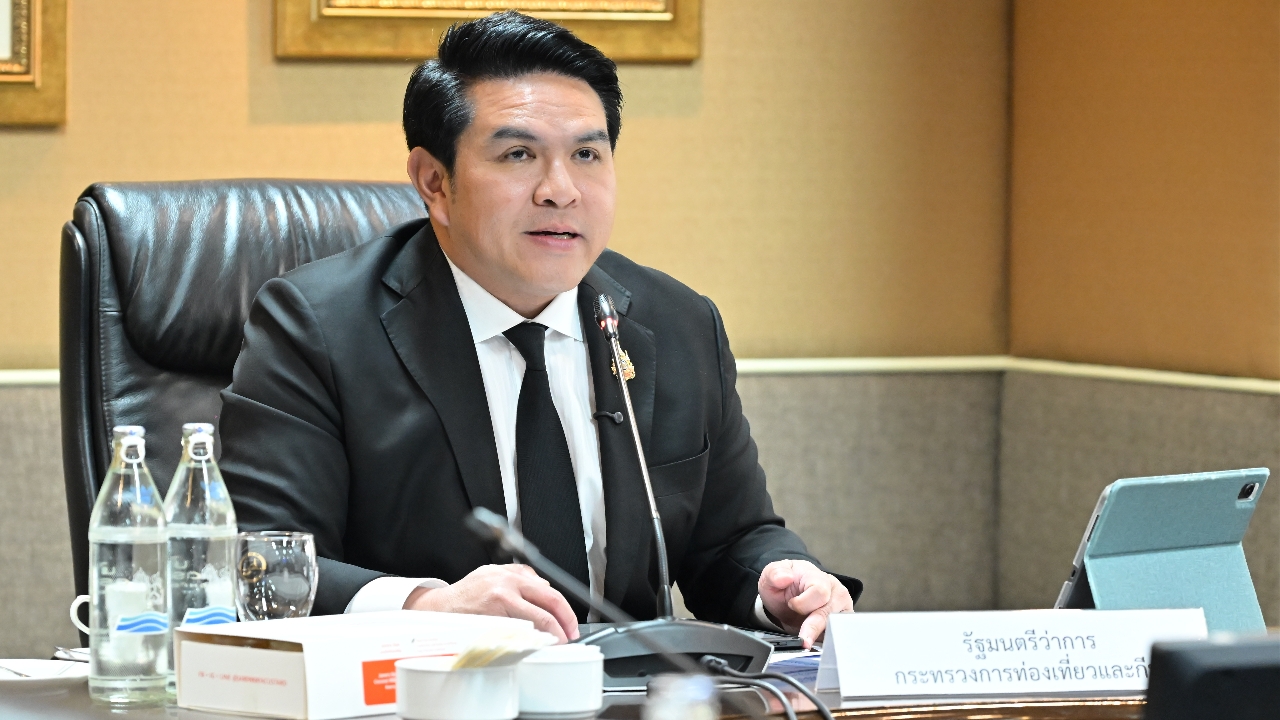
The Minister of Tourism and Sports met with the Tourism Authority of Thailand (TAT) board, delivering seven proactive policies and launching three major projects—"Thai Teaw Thai Plus," "Fly Thai," and "Air Connect"—to boost high-season tourism, while promoting "Tomorrowland" to establish Thailand as a global Event Hub.
At 13:30 on 27 July 2026 GMT+7, Mr. Surasak Phanjaroenworakul, Minister of Tourism and Sports, attended a meeting to deliver key policies to drive Thailand's tourism industry to the board members and senior executives of the Tourism Authority of Thailand (TAT). The aim was to elevate Thailand to a meaningful and high-value travel destination that effectively responds to global changes.
In this meeting, the Minister of Tourism and Sports presented seven important policies and operational guidelines under the concept “Tourism for All, Tourism for the Future: Thai Tourism for Everyone Toward a Sustainable Future.” These include:
1. Prioritize quality over quantity (Value over Volume): Focus on enhancing high-value, quality tourism rather than relying solely on tourist numbers, to drive sustainable economic growth and offer meaningful travel experiences to visitors.
2. Promote income distribution to local areas: Support and encourage tourism to secondary cities and 55 target communities nationwide to spread economic opportunities and strengthen grassroots development.
3. Encourage year-round travel through concrete market stimulation frameworks: Implement key projects to boost domestic tourism and support the high season, including:
- Thai Teaw Thai Plus or Co-pay Project: Stimulate domestic travel to strengthen internal resilience, assist tourism operators, and distribute income across all regions.
- Fly Thai All the Feelings Project: Collaborate with six domestic airlines to offer benefits and discounted airfares for 400,000 seats to Thai citizens, reducing travel costs amid global oil price volatility.
- Thailand Air Connect Project: Work closely with airlines and marketing partners to maintain flight stability, increase flight frequency and seat availability through both charter and commercial flights, to accommodate tourists worldwide.

4. Propel Thailand as a global event hub: Prepare to host the world-class music festival Tomorrowland Thailand from 2026 to 2030, a key mechanism to enhance competitiveness, attract high-quality tourists, and provide opportunities for Thai artists, creatives, and entrepreneurs to showcase their talents globally. The event is expected to generate a net economic value of 3.458 to 5.301 billion baht annually, with no fewer than 127,500 foreign and 22,500 Thai attendees.
5. Manage the transition period for the TAT’s transfer to the Ministry of Culture: Since TAT operates as a state enterprise under the TAT Act, it can continue its mission without interruption. TAT is tasked with being the main coordinator to drive the tourism ecosystem, ensuring no gaps during the handover, and working closely with both ministries to draft ministerial regulations clearly defining responsibilities.
6. Enhance governance and organizational efficiency: Develop TAT into a high-performance organization that earns trust and serves as the foundation of the tourism industry by using budgets transparently and delivering measurable outcomes in revenue, competitiveness, and improving citizens’ quality of life.
7. Prepare Thailand for the future: Assign the TAT board to oversee long-term operations to build on and address the country's future needs, while fostering resilience and readiness to respond to rapidly changing global situations.
"The synergy between stimulating the domestic market, attracting global events, and managing the organization with good governance will be the key to sustainable growth of Thai tourism, enabling it to meet all challenges and maximize benefits for the economy and all Thai people," said the Minister of Tourism and Sports. The Minister of Tourism and Sports stated.