

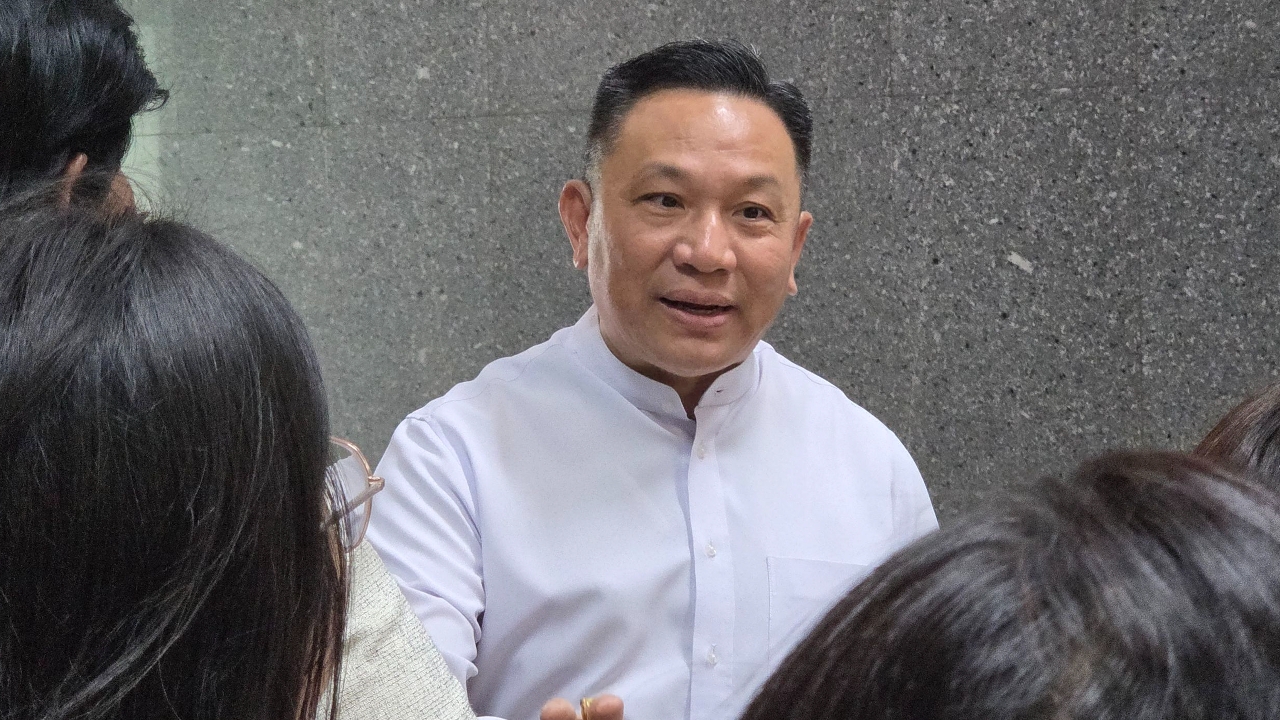
Nirat revealed progress in resolving local government exam fraud by reorganizing the score rankings after finding 5,925 cases of score tampering. Meanwhile, 11,030 candidates who passed honestly have already been appointed without issues. He noted that next week the Central Committee on Local Staff Examinations (CCLSE) will discuss procedures for candidates in three groups.
On 28 Jul 2026 GMT+7 at the Ministry of Interior, Mr. Nirat Pongsitthaworn, Deputy Permanent Secretary of the Ministry of Interior and Acting Director-General of the Department of Local Administration (DLA), disclosed updates on handling the local civil service exam fraud under Action 8 as mentioned by the Prime Minister. He noted that since December 2025, and in the South in February 2026, from 400,000 nationwide applicants, nearly 279,949 candidates took the exam, with 55,193 announced and appointed.
In that roster, abnormalities were discovered indicating the exam process was compromised, leading to cancellation of results and use of the correct exam list. This time, no rechecking of answer sheets occurred. Police and the National Anti-Corruption Commission (NACC) had arrested and investigated the contracted company with Srinakharinwirot University (SWU), confirming the answer sheets had been checked since that day, with scores updated simultaneously and digital signatures recorded.
Mr. Nirat added that the CCLSE meeting had initially certified another list of 55,193 appointees sent to various posts. After the fraud was exposed, the correct list of 50,064 candidates was used, including 49,268 who genuinely passed, and 5,925 whose scores were altered. Of these, 5,129 originally failed but had scores changed to pass, while 790 had passed but had scores altered to improve their rank. The entire list will be republished using the original scores without new rechecking. The CCLSE chairman signed off on this between 17–27 Jul 2026 GMT+7. The DLA employed personnel alongside machines for a second review to minimize errors.
Mr. Nirat further stated that Action 9 will involve calling the CCLSE again next week to set procedures for the three candidate groups: the second group includes over 5,000 candidates whose scores were raised from below the passing mark but have been appointed; notifications will be sent to the Central Committee on Local Officials and Staff (CCLOS) in each province. The third group includes those who passed legitimately but had unnecessary score changes to improve rankings. Although this may delay matters, the process is now on the right path.
Mr. Nirat also addressed the suggestion from the chairman of the NACC committee to blacklist Srinakharinwirot University (SWU) for incomplete work, noting ongoing discussions due to widespread damage affecting many people. Consultations with the Office of the Council of State, the Comptroller General's Department, and the Attorney General's Office are underway to determine lawful measures that achieve objectives and prevent further harm.
The first group consists of candidates who passed the exam and whose scores remain unchanged after the new announcement. These candidates, over 10,000 in number, continue their government service normally. Although the ranking order has been rearranged, the 11,030 candidates all passed fairly with no issues affecting their status.
Among the previously appointed 14,988 candidates, including examinees and those involved in tampering, over 5,000 whose scores were below the standard will lose their appointments or face termination. Specifically, 5,129 who failed outright but were appointed—more than 3,000 of these will have their appointments revoked.
Mr. Nirat explained that following the CCLSE's establishment of procedures for the three candidate groups in Action 10, the matter will be submitted to the Central Committee on Local Officials and Staff (CCLOS) for acknowledgment of both old and new lists and approval of the procedures after implementing the new list. Then, notifications will be sent to provincial committees along with the relevant candidate lists, informing local administrative organizations, municipalities, and subdistrict administrative organizations (SAOs) on how to proceed with each individual according to differing legal grounds.