

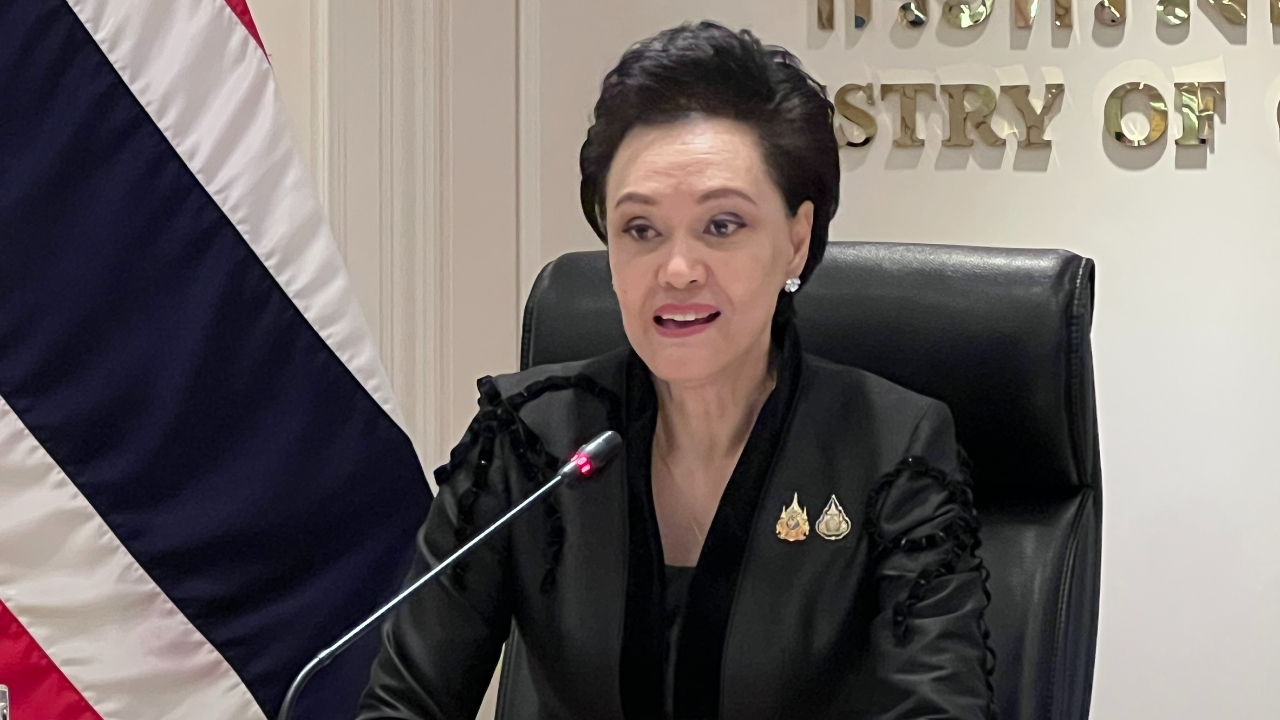
Supachai confirms that the U.S. 12.5% tax is not final, speeding up submission of appeal data to avoid competitor disadvantage, and stresses rejection of conditions harming the public.
On 28 July 2026, Ms. Supachai Suthamphan, Deputy Prime Minister and Minister of Commerce, revealed progress in tax negotiations with the United States following her visit and discussions with multiple U.S. agencies, particularly regarding the Section 301 tax measures, which took effect on 24 July, aiming to clarify the situation for businesses and the public.
Ms. Supachai explained that originally the U.S. had set retaliatory tariffs against Thailand at as high as 36% due to trade deficits, but Thailand swiftly negotiated a joint agreement reducing the tax to 19%. However, changes in U.S. law now apply Section 301, investigating Thailand on two points: forced labor (initial tax set at 12.5%) and excess production capacity.
She confirmed that the 12.5% rate is not an increase from the previously understood 10%, nor is it a final decision. Thailand has submitted both written and oral clarifications, affirming that targeted industries such as automotive, rubber, machinery, and electronics operate at 75–90% capacity, not below 60% as alleged.
Thailand’s negotiation goals include three main points: to cap total tax rates at no more than 19%, to ensure tax rates do not exceed those of competitors, and to expand the list of tax-exempt products (Annex 3) as much as possible. Currently, Thailand has over 2,120 exempted items, covering about 50% of Thai exports to the U.S.
Regarding non-tariff measures (ART), the government insists on a 'red line'—not accepting conditions that impact the rights and quality of life of citizens, especially prohibiting imports of meat containing red meat growth promoters, even if neighboring countries allow it. Additionally, Thailand is fast-tracking legislation banning imports produced by forced labor (HRDD) for parliamentary consideration in August to address U.S. concerns.
Thailand also informed U.S. counterparts that over 30% of the U.S. trade deficit with Thailand results from U.S. companies operating production bases in Thailand and exporting goods back to the U.S. The government supports Thai private investment in the U.S., which currently exceeds 19.3 billion U.S. dollars, with plans to invest an additional 5.5 billion dollars.
Ms. Supachai concluded that despite facing tax measures, Thai exports in the first half of the year grew better than expected. Therefore, the government raised the export growth target for this year to 8%, with the Thailand team continuing negotiations to protect the country’s and Thai businesses’ long-term interests.