

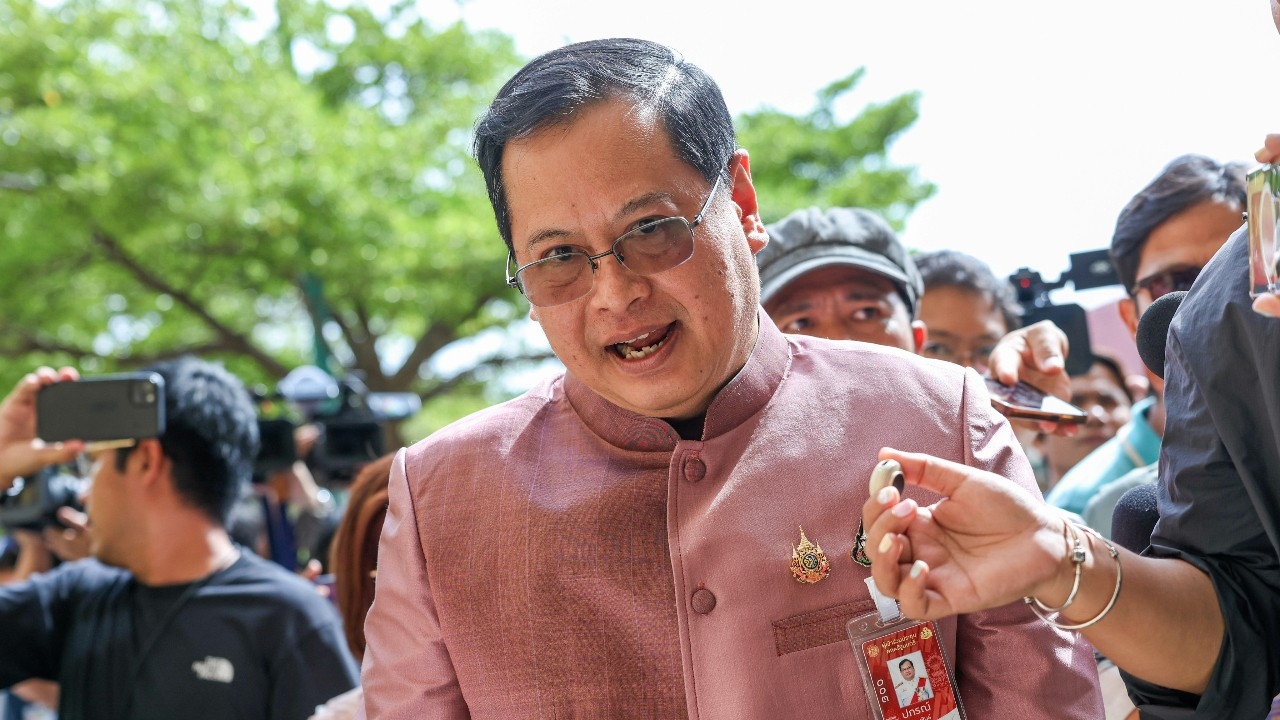
Deputy Prime Minister Pakorn revealed that the government is preparing to consider dissolving central agencies in the regions after discovering overlapping duties with provincial governors that waste budget. He also plans to scrutinize local executives' salary bases after some were found set excessively high, exceeding those of ministry permanent secretaries, while pushing forward the hometown tax policy.
On 28 July 2026, Deputy Prime Minister Pakorn Nilprapunt disclosed that the government is preparing a major overhaul of the local civil service system. Recently, the Office of the Public Sector Development Commission (OPDC) is set to propose to the Cabinet the dissolution of central agencies located in the regions. Currently, many government agencies have branches in various provinces, causing duplication of authority with provincial governors. Importantly, establishing such offices in this manner lacks legal backing under the state administration regulations.
Pakorn said that previously, the OPDC board clearly resolved to transform these branch offices into online and computer technology services for the public, replacing physical regional offices.
This initiative is seen as restructuring the bureaucracy to be more streamlined, reducing redundancy, and correcting illegal practices. The government has prepared packages to support personnel previously assigned to regional positions, including transfers back to central offices or voluntary early retirement programs.
"Establishing central agencies in regional areas is actually illegal because there is no legal basis. We will propose to the Cabinet to end these roles and instead use online systems to replace numerous costly branch offices. The world has changed; the need for physical branch offices has greatly diminished as we can now use computer technology to handle documents instantly. This also helps prevent corruption more effectively with standardized nationwide oversight," Pakorn said.
Meanwhile, the government is also considering reforming local executives' compensation structures after finding significant disparities in salary bases and benefits that heavily impact the central bureaucracy. Recently, data showed that municipal clerks and subdistrict administrative clerks in several areas receive salaries and compensation higher than ministry permanent secretaries, who oversee important policies and activities nationwide.
This unfairness arises because local government organizations have autonomy in setting their own income criteria, which do not align with the standards of the Civil Service Commission, unlike central government officials. Therefore, the government plans to assign the Comptroller General's Department to develop a central accounting system to control work standards and local budget spending to ensure cost-effectiveness and transparency according to modern administrative policies.
"How is it possible that municipal clerks earn more than ministry permanent secretaries, who are responsible for the entire country and massive duties? Hence, a major adjustment is needed, including adopting technology and reducing personnel to necessary levels so the entire structure aligns with verifiable management standards. We aim to reform working methods to fit the changing world with neutral accounting standards so the government can verify that budget spending is cost-effective and truly benefits the public," the Deputy Prime Minister said.
Additionally, Pakorn mentioned advancing the hometown tax policy under the government’s agenda, stating that this approach will incentivize large companies to support small localities with incomes below 25 million baht, which still face many developmental challenges.
This measure also allows the private sector to deduct donations from taxes and promote urban development. For example, contributions can be calculated as part of an organization's carbon footprint under agreements. The transformation of local development will focus on building a circular economy and improving quality of life, rather than merely constructing roads as in the past, aiming for long-term sustainability.
The government believes this approach will help reduce the inequality gap between large, high-income localities and small localities, enabling equal access to public services that genuinely meet local needs.