

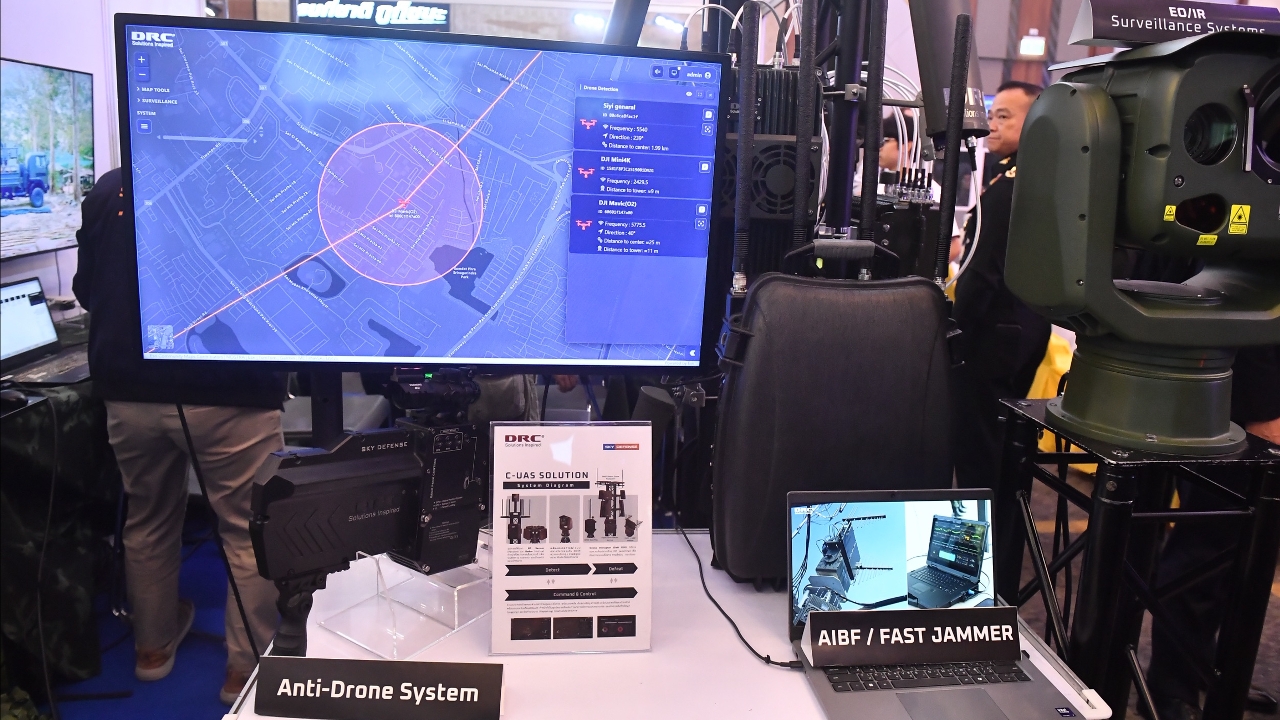
The Prime Minister supports the military's use of Made in Thailand products to create jobs, accelerate the development of the national defense industry, foster advanced technology, and reduce reliance on imports, enhancing self-sufficiency.
On 30 Jul 2026 GMT+7, Ms. Ratchada Thanadirek, spokesperson for the Office of the Prime Minister, revealed that Prime Minister Anutin Charnvirakul prioritizes upgrading Thailand's defense industry. He aims to transition Thailand from merely a supplier to a developer and producer of its own security technologies. He also supports the use of domestically made products, Made in Thailand, to keep security-related funds circulating within the Thai economy, create jobs, develop personnel, and enhance the capabilities of Thai entrepreneurs.
The Prime Minister's spokesperson said he has continuously monitored progress in the defense industry. Recently, he received a report on the highly successful THAIDEF-EX 2026 event held from 8–10 July 2026 GMT+7. The event featured 112 Thai exhibitor booths, attracted over 4,000 visitors, and facilitated 53 business matches valued at no less than 500 million baht. This demonstrates that Thailand's defense industry is advancing as a value-adding sector in technology, investment, and exports.
The Prime Minister has therefore instructed relevant agencies to rapidly build on the event's success by supporting research and development of technology, weaponry, and innovations produced by Thais. He urges the military and security agencies to increasingly select domestically produced products to create opportunities for Thai entrepreneurs to grow and enter the global defense industry supply chain.
The Ministry of Defense has actively implemented this policy under Defense Minister General Udom Boonmetha-charoen's directive. He ordered units under the Ministry and the armed forces to consider using Made in Thailand products alongside the Offset Policy for compensating arms imports and the setting of Local Content ratios. This approach aims to enhance technology transfer, upgrade Thai industry, and build skilled personnel in engineering and innovation to support future industries.
Ms. Ratchada also noted that the government's commitment extends to international cooperation. During the official visit of the Defense Minister to Malaysia on 13–14 July, both countries discussed expanding collaboration in the defense industry, including linking supply chains, exchanging technology, and jointly developing capabilities.
Additionally, both sides plan to build on cooperation from the First Win wheeled armored vehicle project and seek opportunities for collaboration on aircraft maintenance with Malaysia's AIROD company. These efforts aim to enhance the capabilities of Thai entrepreneurs, integrate technologies, and expand opportunities into foreign markets.
Looking ahead, Thailand and Malaysia have agreed to promote signing a memorandum of understanding on defense cooperation during the General Border Committee (GBC) meeting between Thailand and Malaysia at the end of this year. This will lay the foundation for long-term collaboration in research, technology development, and joint defense industry advancement.
Ms. Ratchada added that an MOU has been signed between the Ministry of Higher Education, Science, Research and Innovation (MHESI), the Ministry of Defense, and the Ministry of Industry. The goal is to support research and development of security technologies with dual-use applications—both military and commercial—leading to actual production and use for national security, public benefit, and commerce. This initiative aims to enhance private sector competitiveness, reduce imports, and promote high-tech industry growth.
“The government views the defense industry not only from a security perspective but as a high-tech sector capable of generating innovation, quality personnel, and economic opportunities for Thai entrepreneurs. Supporting the military’s use of Made in Thailand products, alongside expanding cooperation with neighboring countries, will help circulate funds domestically, increase self-reliance, and develop a high-value export industry in the future, thereby strengthening both national security and the country’s economic resilience,” Ms. Ratchada said. .